


October 31, 2022, 10:03 am | Read time: 3 minutes
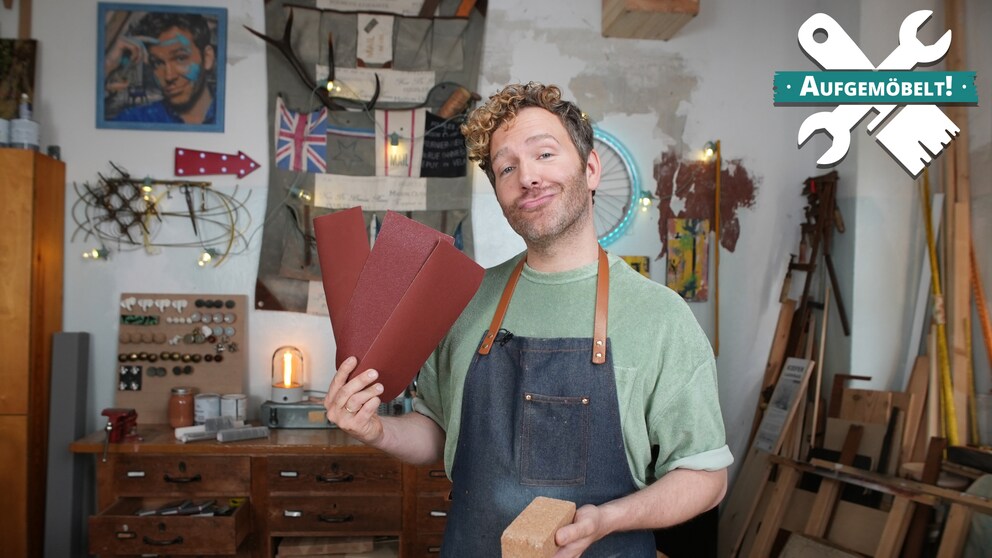
Refurbishing old furniture, giving it a new shine, or even a completely new function–that’s exactly what our myHOMEBOOK series “Revamped” is all about. In this video, DIY expert Thomas Klotz shares important tips on sanding wood.
A chair, a dresser, or a table–old wooden furniture has a special charm. However, they occasionally need a new sanding to shine in their former glory. Upcycling expert Thomas Klotz knows the best approach. Together with myHOMEBOOK, he shows the best tools for sanding wood, what to watch out for, and how to proceed.
Sanding Wood–What You Need
To sand old wooden furniture, you don’t need much. It depends a bit on the size of the furniture and how much time you have or want to spend:
- Electric sanding machines–they work much faster, but are also more expensive
- Sandpaper and sanding block–much cheaper, but require more time and effort
Related: Sandpaper–what’s the difference between grit and spread?
The Most Important Tips for Sanding Wood
First, consider why the furniture is being sanded. Is it a rough tree slice that needs to be smoothed? Or is the old varnish on the wooden dresser being removed and prepared for a new coat? Depending on your goal, different things need to be considered. Here are the key tips and information:
- For sandpaper, the rule is: The higher the number on the paper, the finer the grit.
- When sanding wood, always start with a coarser grit and gradually move to a finer one.
- Always sand in the direction of the wood grain to avoid scratches.
- A very coarse grit is only used if the surface is still rough-sawn and it’s hardwood. Otherwise, you risk working fine lines and cracks into the wood. A coarse 40-grit is only advisable if you want to remove dents, deep scratches, or grooves.
- If you just want to remove the old varnish and then repaint, a light sanding is sufficient. The varnish doesn’t need to be completely removed, just the surface prepared.
Intermediate Sanding
Will the wood be stained or varnished afterward? Then all the varnish must be removed so the wood can absorb the new pigments. An intermediate sanding is also advisable.
- For intermediate sanding, the wood is first sanded normally–up to a very fine grit. Then, the wood is moistened with a damp cloth. After a few hours, once it’s dry, you can sand it again. Moistening raises the wood fibers that were flattened by sanding. If you skip the intermediate sanding, the fibers may rise after staining or varnishing, resulting in a rough surface.
- If you only want to wax or oil the wood after sanding, intermediate sanding is not necessary, as the fibers won’t rise again.
You can also see the detailed tips in the video!
Also in “Revamped”: