


January 14, 2026, 2:11 pm | Read time: 2 minutes
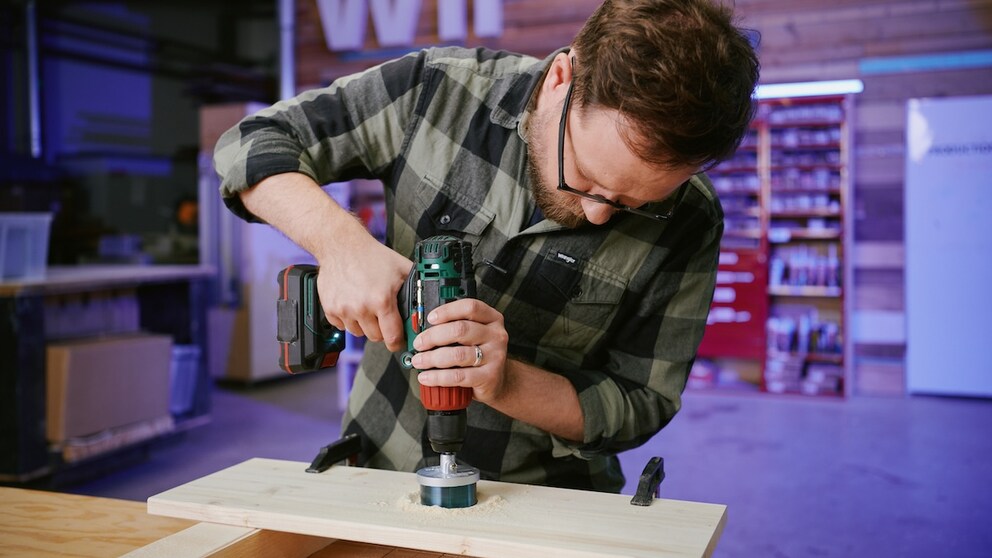
When traditional drills reach their limits because the desired hole is simply too large, the hole saw comes into play. This versatile tool allows for precise cutouts with a large diameter–whether in wood, drywall, or even metal. myHOMEBOOK editorial director Felix Mildner explains on “Easy DIY” how to properly use a hole saw.
Follow myHOMEBOOK on WhatsApp now
When to Use a Hole Saw
Standard drills are excellent for smaller holes. However, if you want to drill larger holes, such as for outlets or pipe penetrations, you need special accessories. A hole saw set provides the solution: It can be easily used with a cordless screwdriver or a drill and allows for drilling with a significantly larger diameter. In hardware stores, a hole saw–often available in a set with various diameters–can be purchased for little money.
Polishing with a Cordless Drill–It’s That Easy

What to Consider Before Drilling
What to Consider When Buying
Before the first use, you should, of course, choose the right hole saw for the project–as there are some differences. A key criterion is the diameter. Hole saw sets usually offer a selection of saw blades in different sizes. Equally important is the appropriate material of the saw:
- Wood and soft materials: Most hole saw sets are designed for wood. They can easily handle not only wood panels but also drywall and plastic.
- Metal: For more demanding tasks, there are special sets suitable for hard materials. These variants can reliably cut through metals.
Also interesting: How to Drill into Tiles in 4 Steps
How to Properly Use a Hole Saw
A typical hole saw set consists of a centering drill and several interchangeable saw blades. To drill a hole, connect the drill with a saw blade of the desired size–usually via a threaded connection.
For better power transmission, some models have small bolts on the centering drill. These are screwed into designated holes in the saw blades and ensure a stable hold during the drilling process. Then, the entire unit is clamped into the drill or cordless screwdriver.

Prefer Working at Low Speed
“Working with a hole saw may require some practice. It’s important to start drilling at a low speed and gradually increase it. Ideally, make a test drill before working on the actual piece. Also, the centering drill should be positioned as perpendicular as possible to ensure a clean hole.”