


November 5, 2025, 12:37 pm | Read time: 2 minutes
Whether in furniture making, renovating, or small DIY projects–sanding is almost always involved. Anyone who has sanded by hand for an extended period knows: Using just sandpaper quickly becomes uneven and tiring. A sanding block can make the job easier–and you can make one yourself in just a few steps. Felix Mildner, editor-in-chief of myHOMEBOOK, explains how to do it on “Easy DIY.”
Why a Sanding Block is Useful
The advantages are literally in your hands: A sanding block distributes pressure evenly across the sanding surface, the paper tears less quickly, and edges are finished more cleanly. Additionally, the block is easier to handle, which is especially helpful for larger surfaces or edge sanding.
Make Your Own Sanding Block–Simple Instructions
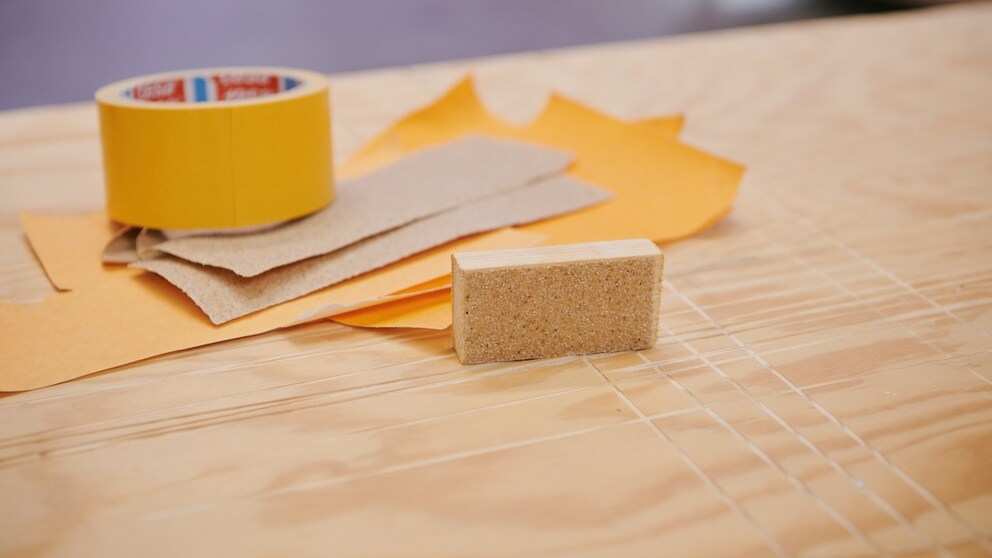
Of course, you can buy sanding blocks in various sizes and materials–such as cork, wood, or plastic, often with clamping devices or Velcro systems. But a homemade sanding block is not only cheaper, it can also be perfectly tailored to your needs. For example, you can attach sandpaper of different grits on both sides. You will need:
- a piece of wood, about 4 × 2 × 1 inches (alternatively, a building block)
- double-sided tape
- sandpaper (possibly different grits)
- if necessary, a saw and sandpaper to round off the edges
Here’s how:
- Prepare the wood: If necessary, cut the wood block to the desired size. Then slightly round the edges so it fits comfortably in your hand.
- Apply adhesive surface: Cover one side of the block with double-sided tape.
- Attach sandpaper: Then cut the sandpaper to size and press it firmly onto the tape. Depending on your preferences, you can also attach sandpaper to the other side. Done!
Tip: When the sandpaper wears out, you can simply peel it off and stick on a new one. And if you sand frequently, you can prepare several blocks with different grits–saving time and ensuring you always have the right tool on hand.

A Practical Helper for DIY Projects
“A sanding block is a small but extremely useful tool for sanding. Made from a simple piece of wood, it is not only sustainable but also customizable–and sanding becomes much easier.”