


December 17, 2025, 1:57 pm | Read time: 2 minutes
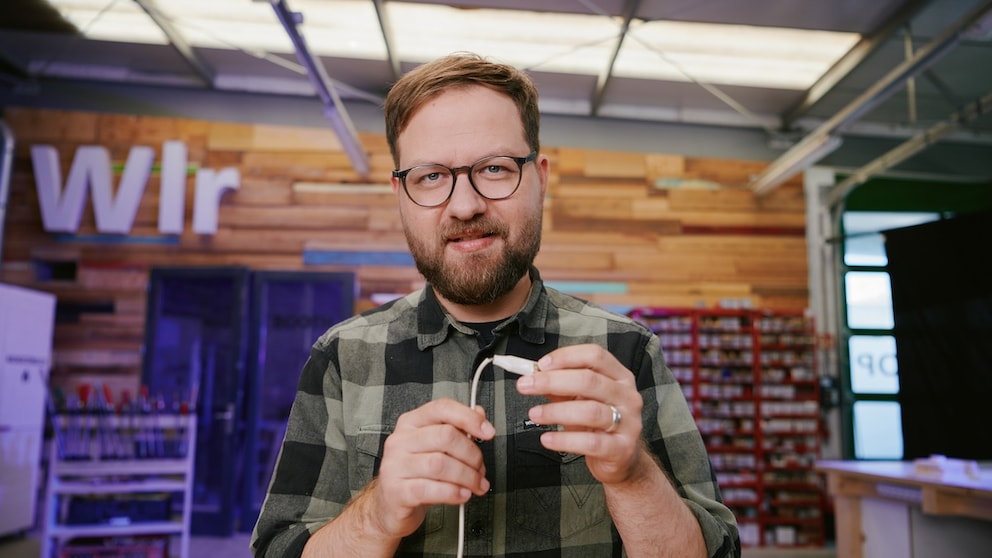
Thin charging cables for phones often break easily: A weak spot forms at the junction with the plug, and soon after, the cable becomes unusable. But it doesn’t have to be that way! A simple trick can prevent cable breakage, as myHOMEBOOK editor-in-chief Felix Mildner demonstrates in “Easy DIY.”
Follow myHOMEBOOK on WhatsApp now
Prevent Cable Breakage with a Simple Trick
It doesn’t take much to protect a cable from breaking. You likely already have the necessary items at home. Essentially, all you need is a ballpoint pen. Specifically, it’s about the spiral spring inside it. Additionally, some electrical tape helps further stabilize the area.
Here’s how to do it:
- Unscrew the ballpoint pen and remove the spiral spring inside.
- Wrap the spring around the affected area. This requires some dexterity, and it’s easiest with a twisting motion.
- Finally, wrap some electrical tape around the area. This keeps the spring in place and provides additional protection for the cable.
Note: If the cable is already damaged or broken, it’s better to replace it. The trick is primarily for preventing cable breakage, not for repairs.
Tips to Make Cables Last Longer
Besides the cable trick, there are other measures to extend the lifespan of a charging cable. High-quality cables generally last longer than cheaper ones. Pay attention to the following tips:
- Roll cables correctly: Incorrect winding is one of the most common causes of cable breakage. Therefore, roll the cable loosely and not tightly around the plug. Also, always roll the cable in the direction it naturally turns. This best preserves the inner core, known as the “soul.”
- Avoid stress at the plug: Cables often break right behind the plug. So, when unplugging, grip the plug, not the cable itself. Also, avoid stretching or pinching the cable.
- Avoid heat or sharp edges: A cable should not be run through windows, under doors, or along sharp edges for extended periods. Also, avoid exposing it to extreme temperature fluctuations.