

August 2, 2023, 2:54 pm | Read time: 8 minutes
If you enjoy gardening, chances are you’ve held a Gardena product in your hands at some point. The traditional company from Ulm has been considered one of Germany’s most innovative for decades and is a pioneer in developing new systems for the gardening sector. In 2007, the Swedish Husqvarna Group acquired the Swabian manufacturer. Since this summer, Klaus Endres has been the head of Gardena for Germany, Austria, and Switzerland. He spoke with myHOMEBOOK as part of the “Top Leaders” series about gardening trends, sustainability, and his own gardening preferences.
myHOMEBOOK: The company from which Gardena later emerged was founded in 1961. So, you celebrated the 60th anniversary right in the middle of the coronavirus pandemic and simultaneously achieved more than a billion in sales. Is the boom for Gardena still ongoing?
Klaus Endres: “We weren’t exactly thrilled about the coronavirus pandemic either. To be completely honest, we would have gladly done without it. Of course, one could say that due to the specific conditions that prevailed at the time, the garden business experienced a special boost. But even in the years before, it was already evident that the topic of gardening had gained importance. ‘Outside is the new home’–that was a well-known phrase that was often mentioned even before the pandemic. In part, sales were anticipated, and a significant increase did indeed occur, to be completely honest. Now that the pandemic is over, consumers have also shifted their focus back to other topics. Travel, for example, has become very important. We actually expect a ‘post-pandemic business development’ this year and maybe next year as well.”
Gardener Is Not the Same as Gardener
Since the 1960s, Gardena has been supplying German garden owners with products. What has changed in their demands since then?
“You have to distinguish between different types of gardeners. There’s the passionate gardener who does a lot of things manually, is very detail-oriented, talks to the plants, and wants to treat them exceptionally well. This person is truly dedicated, spends a lot of time in the garden, takes the hose in hand, and spends half the day caring for their plants. This is indeed one of our major target groups, and we certainly want to provide them with products that meet their needs.”
Those are the more traditional gardeners …
“On the other hand, we also have people who are more tech-savvy and want to save more time for themselves by using technology to free up their schedules. That’s where products that are very relevant to us come into play, such as those that allow the consumer not to think about whether and how much they need to water their garden, thanks to our Smart System, which we introduced in 2016.”
»The Trend Is Toward Tech Affinity
But is there a trend in one direction?
“If we look at the topic of robotic lawn mowers–there are very technically oriented products–they are growing a bit faster for us than traditional lawnmowers. This means the trend is indeed more toward tech affinity. On the other hand, there is a trend toward self-sufficiency or self-cultivation.”
So people are less inclined to mow the lawn themselves …
“Not everyone, at least. There are fewer, let’s put it that way.”
Related: Which Robotic Lawn Mowers Perform Well in Tests
„We Definitely Don’t Want to Promote a Throwaway Society“
Gardena has been recognized multiple times in the past as one of Germany’s most innovative companies. In which area is the next big innovation expected?
“We will, of course, continue to develop the smart sector. But you have to detach yourself a bit from fixed schedules when bringing new products to market. Everything is dynamic. It can also happen that you accelerate development when you see there is a demand from customers. We are very flexible in this regard – and a lot has already happened in the past.”
Like in the area of irrigation …
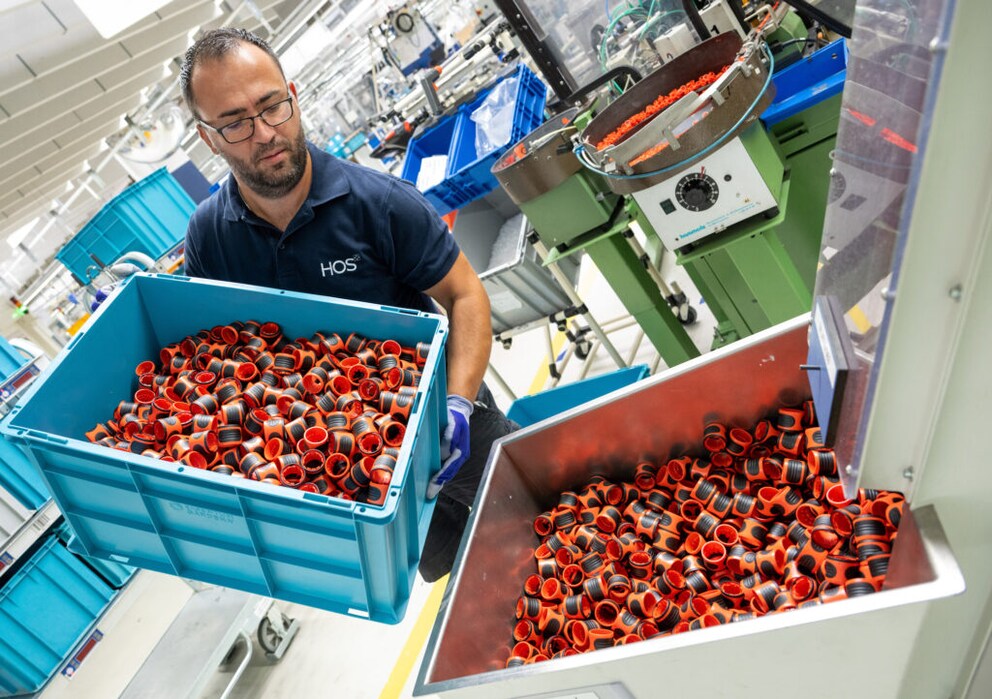
“The weather forecast, which can be integrated into the irrigation cycles, is really great. It’s also sustainable. If you know it’s going to rain tonight and the system doesn’t turn on the irrigation and skips that cycle, you save a lot of water. Sustainability is a big trend for us, and we want to stay on it. Last year, we started to bring the first cross-category series for the ambitious gardener to the market with ‘Ecoline,’ which consists of recycled materials. This means the products are made of more than 65 percent recycled plastic. Sustainability is a big trend, and we want to stay on it.”
Also interesting: 4 Methods to Collect Rainwater in the Garden
You want to be part of the sustainability movement. At the same time, your products contain wear parts, and surely Gardena has no interest in making devices that last forever …
“We definitely don’t want to promote a throwaway society. Gardena brings products to the market that are very durable. That’s why we have no problem offering long warranty promises. Many of our products have a 25-year warranty – and we stand by that. Our service call rate is very low, meaning the complaint rate is low. Additionally, our products are repairable. You can have them repaired at various places, or if necessary, at Gardena itself. The product is sent in and repaired by the after-sales service in Ulm. There are also spare parts that you can buy. With those, you could also perform a repair yourself. We really do everything to ensure that the products don’t just get thrown away and replaced.”
»Subscription Model? What the Future Holds, I Can’t Say
Many device manufacturers are now working with subscription models for smart devices. Is something like that conceivable for Gardena?
“We always have the end consumer in mind and want to satisfy their needs as best as we can. With the Gardena Smart System, we really only use the data to improve the system. We don’t use it for any advertising purposes or anything like that. What the future holds, I can’t say, but it’s certainly conceivable that we might venture into the area of subscription models at some point. But as of today, we have no such plans.”
Another trend is artificial intelligence. What role does AI play at Gardena?
“There are dedicated teams within the Husqvarna Group, to which we belong as Gardena, that are working on AI. Currently, we are still in the early stages, and there is a lot of experimentation. But we are firmly convinced: If used wisely, AI will be beneficial for us and for the end consumers. That’s the most important thing.”

»We Must Face Climate Change
Water conservation is becoming increasingly important, not least due to the recent frequent dry summer periods. This also impacts garden irrigation. How is Gardena responding to this?
“The weather is becoming more extreme and harder to predict. This is obviously related to climate change. We must face this, of course. If we have green spaces and want to continue expanding them – and I think we should – then we need to supply those areas with water. And we must try to do this as efficiently as possible. The plants need the water to grow and thrive. But we must not be wasteful with it. And that’s where we come in.”

“The Traditional Lawn Sprinker Is a Thing of the Past!”—Expert

Which Robotic Lawn Mowers Will Perform Well in 2025
„There Are Still Very Few Households That Have a Robotic Lawn Mower“
But to really save water, you almost have to garden smart, right?
“For the machine, it’s actually easier to save water. After all, a person doesn’t really know how much water the plant actually consumes and what the moisture level in the garden is. Our Smart System app is a real help there. Watering only happens when it’s really necessary.”
What’s next after Smart Gardening?
“Right now, we’re focused on making Smart Gardening more well-known. We still have a household penetration that is very low. By the way, the same goes for robotic lawn mowers – there are still very few households that have a robotic lawn mower at all. Many people are still using traditional lawnmowers, including gas-powered mowers.”
Related: The 12 Best Battery-Powered Lawn Mowers Compared
»We Have Withdrawn From the Russian Market
Let’s talk about the fact that you have withdrawn from the Russian market. What markets are particularly exciting for you now?
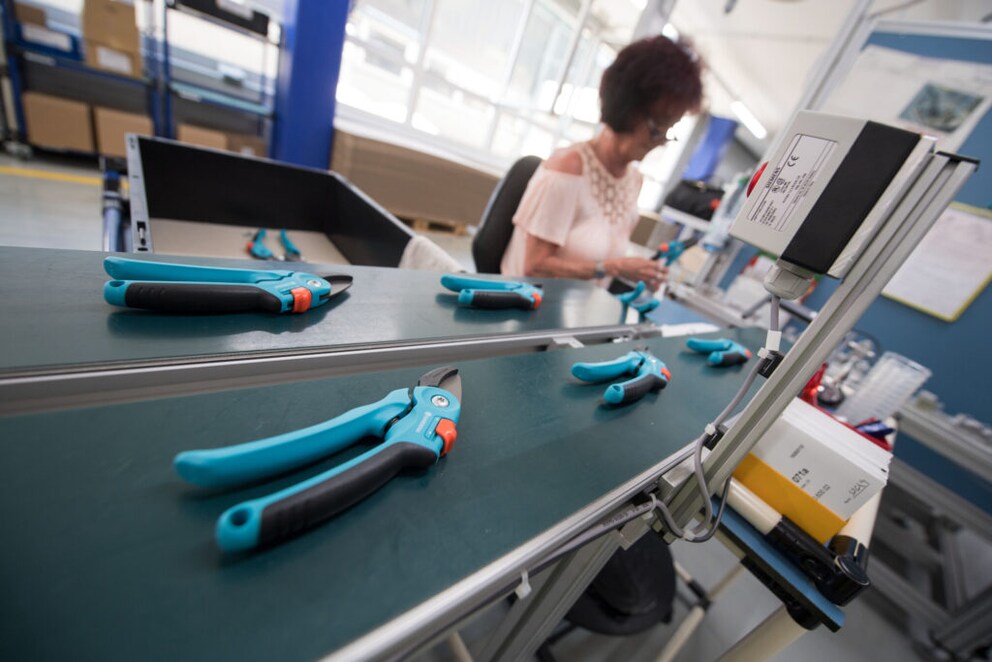
“We are proud to manufacture in Germany, the Czech Republic, Sweden, the United Kingdom, and the USA. China is not mentioned, but surely some components come from there. For example, the blades of a battery-powered garden shear also come from Niederstotzingen, near Ulm.”
And the rest?
“The rest – the products are electric, after all – do come partly from the Far East.”
But you are reluctant to communicate that. Is there a reason for this?
“Our unique selling proposition is – especially in the areas where we are very strong – that we come from Germany. That’s why we communicate in the direction of ‘Made in Germany.'”