

December 14, 2022, 5:11 am | Read time: 5 minutes
Housing in Germany is becoming increasingly expensive. New constructions are often high-priced condominiums–unaffordable for most people. However, there are now more and more alternative housing options. One such option has now emerged in Frankfurt.
Affordable housing has become a rarity in many parts of Germany. To counteract this, alternative housing forms are increasingly emerging, some even supported by cities. This includes communal living. A housing group in Frankfurt has now achieved just that. With the help of funding for communal construction, they have built a house. How the concept works and what advantages and disadvantages it has.
Around 17.50 euros rent per square meter
“We are very convinced that the topic is gaining importance,” says Birgit Kasper, head of the State Advisory Office for Communal Living in Hesse. According to surveys, around 30 percent of the population would like to live communally. Currently, however, there are only an estimated 200 to 250 housing groups in Hesse.
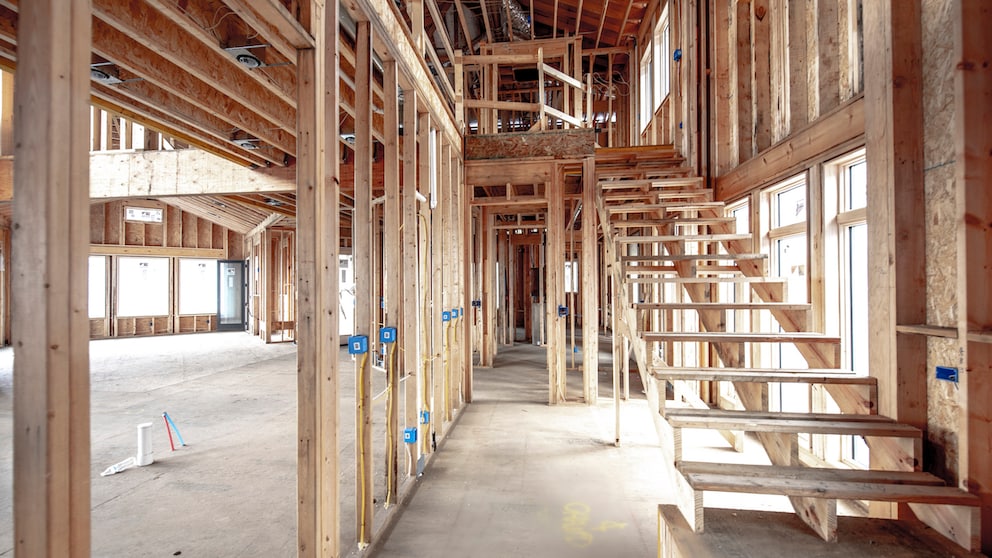
“Living Sufficiently Together” is the name of the group that will move into a new building in Frankfurt in the summer of 2023. The topping-out ceremony was just held for the building, which–except for the staircase that stood alone on the site for months due to a construction halt–is made entirely of wood. Eleven adults and just as many children share a communal kitchen, balconies, laundry room, and a small garden.
The families’ apartments are small–four rooms over 80 square meters–but the rent, at around 17.50 euros per square meter, is comparatively low for a new building in Frankfurt. On the neighboring property, an investor is building high-priced condominiums. The four-room apartments there are 108 and 132 square meters and cost 1.2 and 1.7 million euros.
The difference is made by a mix of funding and legal form. The site, which had been vacant for years and is located directly on a noisy arterial road, comes from the city of Frankfurt’s property fund: The city awards these parcels under leasehold specifically to communal housing projects. Not the highest bid, but the best concept wins the contract.
“Cities thus directly influence urban development,” says Kasper: If they give the property to the highest bidder, they automatically generate high rents because companies have to refinance the costs. If they give it to a building group, they support housing forms that make city life cheaper and more social.

How Much Cheaper Rural Homeownership Is

The most important questions and answers about the housing entitlement certificate
Demand bypasses families
The “Living Sufficiently Together” group also had to develop a concept and compete against other groups. “The market completely bypasses the needs of families,” says Elias Athanasoglou, chairman of the housing group, about the group’s motivations. The members of the housing group were willing to make do with less space to reduce costs, and they wanted more places for encounters–hence the term “sufficient” in the name.
There are fundamentally different options for building groups, as Kasper explains. The advisory office most recommends cooperative models or rental house syndicates. “You have a lot of responsibility, but you can also shape a lot.”
“Living Sufficiently Together” decided against founding their own cooperative. “That was too risky for us,” says Athanasoglou. They involved a housing cooperative, which acts as the developer and owner of the building. The members of the housing group acquire shares in the cooperative and are tenants in their apartments–under special conditions: They have cost security and cannot be terminated for personal use.
Also interesting: Buy or rent? The pros and cons at a glance
Cooperatives don’t have to make a profit
According to Kasper, there are about a dozen such young cooperatives or rental house syndicates in Frankfurt alone. The Frankfurt Housing Cooperative (WBG), which built the house for “Living Sufficiently Together,” has 770 members and 30 properties with 660 apartments, according to its own information. The most important difference from commercial investors, says WBG board member Cora Lehnert: “We don’t have to make a profit and are solely committed to our members.” Through the leasehold, the purchase price can also be written off for 99 years and does not have to be repaid with interest as quickly as possible.
“Such small projects are important for a big city,” says Frankfurt’s planning director Mike Josef (SPD). Building groups give the city “impulses” and offer “blueprints”–in the case of the community on Friedberger Landstraße for climate-friendly construction and a social community. “We need more of that.” However, Josef adds, “it takes perseverance. You have to deal with a lot of resistance and setbacks.”
To help new housing groups learn from the experiences of others, a network for communal living was founded in Frankfurt in 2005. Since 2021, activities have been expanded statewide. Around 100 groups have joined the network.
Frankfurt has played a pioneering role in Hesse, says Kasper, but other federal states were ahead nationwide. Meanwhile, such projects, funding structures, and advisory services exist in most cities. However, there is also demand in rural areas, Kasper believes, although the situation is different there: “In the city, there are many interested parties and few plots. In rural areas, there are many suitable properties, but the housing groups still have to discover them.”
With material from dpa