


July 25, 2024, 9:14 am | Read time: 4 minutes
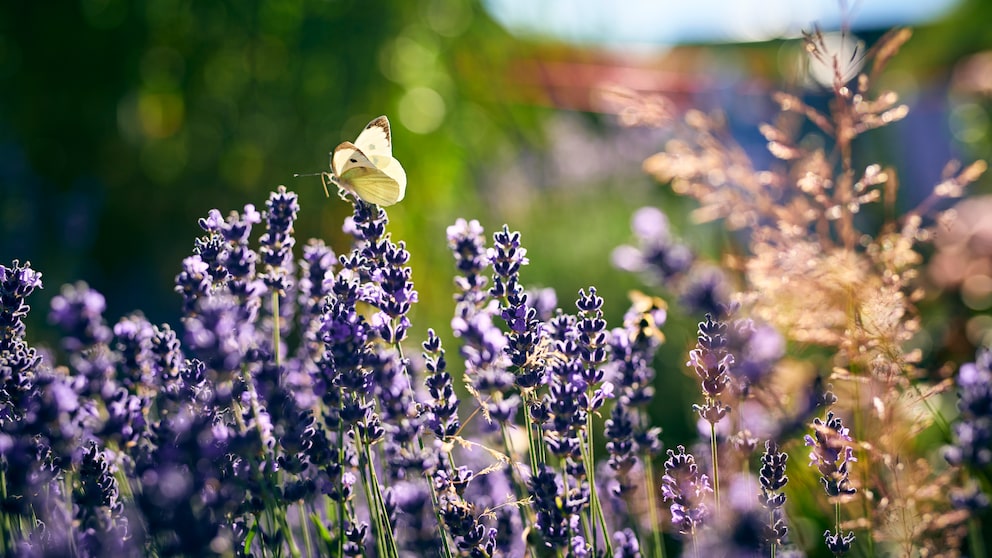
Lavender enchants with its fragrant blooms and is an easy-to-care-for semi-shrub for the garden or balcony. myHOMEBOOK author Marike Stucke offers tips on how this Mediterranean plant can bloom persistently and frequently.
A garden without lavender? Hardly imaginable in our regions. In almost every garden, at least one lavender plant blooms during the summer months, enchanting not only us with its flowers but also attracting numerous bees, bumblebees, and butterflies. While in some gardens, lavender produces sparse blooms, in others, the plant is bursting with purple, white, or pink flowering shoots. Here, true lavender experts seem to be at work. But with our tips, even beginners can successfully care for lavender and ensure a multitude of long-lasting lavender blooms.
1. Poor Soil
While many flowering plants such as roses, hydrangeas, or rhododendrons have very specific soil requirements, lavender is a true survival artist. Very nutrient-rich soils are actually detrimental to it; it prefers poor soil. Therefore, lavender should never be fertilized with commercial green plant fertilizer.
Only in extremely poor and sandy soils is it recommended to sprinkle horn shavings in the planting hole when planting. If the garden soil is rather heavy and rich in humus, it can be mixed with sand. A high nutrient content in the soil can weaken lavender’s winter hardiness and lead to fewer blooms the following year.
The Best Plants for Sandy Soil

6 Ornamental Plants for Beginners
2. Proper Pruning for Perfect Lavender Blooms
The key to a magnificent and more frequent lavender bloom is proper pruning–or rather, prunings. Lavender plants should ideally be pruned twice a year.
- The first pruning occurs in spring when no more severe frosts are expected. At this time, lavender can be cut back by up to half, as long as the woody parts are not pruned. This prevents the plant from becoming too woody and falling apart over time. It also promotes a compact growth and the development of many new shoots, where the flowers will eventually form.
- At the end of July or the beginning of August, the second pruning is necessary. For this, generously remove the faded flowers. This is also known as the one-third method. Specifically, one-third of the entire lavender plant is trimmed. This encourages a new, vigorous growth of the shrub and ensures a profusion of blooms until September.
3. Ideal Location
Lavender originally comes from the Mediterranean region and therefore prefers warm and sunny locations. Even though lavender is winter-hardy in our regions, a good location leads to more splendid and long-lasting lavender blooms.
For this, sunny locations against sheltered house walls or walls are ideal, as the stone usually heats up more in the sun than the surrounding area. In southern Europe, lavender often blooms as early as May, depending on the variety, because it gets warmer much earlier there. A very sunny and warm location can also lead to an earlier and thus longer blooming period for lavender in Central Europe.
Sheltered house walls are also ideal because they usually have well-drained, sandy, or gravelly soil, which provides good drainage. Well-drained soil is essential for lavender, as it does not tolerate waterlogging.

Low Lavender Hedge in a Sunny Front Yard
“For those with a sunny front yard that should be as low-maintenance and drought-resistant as possible, a low lavender hedge is the ideal planting. For this, plant small lavender shrubs in a row along the path at 30-centimeter intervals and cover with a sand-soil-gravel mix. Water only initially until the plants are well established. With proper care (prune twice a year, water and fertilize sparingly, sunny location), a few lavender plants will become a dense, continuously blooming hedge in a few years, requiring almost no work and also serving as a magnet for all kinds of pollinators.”