



April 7, 2026, 11:41 am | Read time: 4 minutes
A dense, vibrant carpet of plants can not only be visually appealing in the garden but also offer practical benefits. Ground covers protect against weeds, retain soil moisture, and ensure that even challenging areas are quickly greened. Particularly interesting are fast-growing species that can conquer large areas in a short time while remaining low-maintenance. Below, myHOMEBOOK presents five ground covers that enrich any garden with their rapid growth and versatility.
Follow myHOMEBOOK on WhatsApp now
Fast-Growing Ground Covers
1. Cushion Phlox
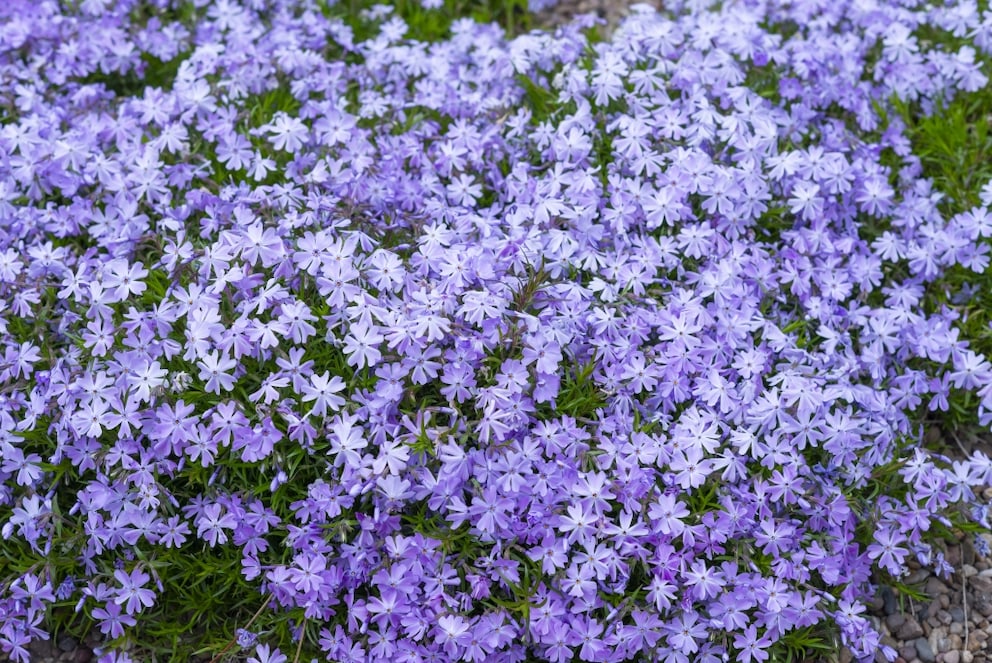
Cushion Phlox, also known as carpet phlox, is part of the flame flower family and originally hails from North America. The plant grows creeping and has minimal requirements for soil and location. It can be used almost anywhere. However, it thrives particularly well in rock gardens, on slopes, or under shrubs where other ground covers might struggle.
In spring, Cushion Phlox forms dense carpets of red, white, or violet flowers. Due to its origin, carpet phlox is winter-hardy here and retains its dark green, needle-like leaves even in the cold season.
Also interesting: 7 low-maintenance ground covers that are also edible
2. Periwinkle
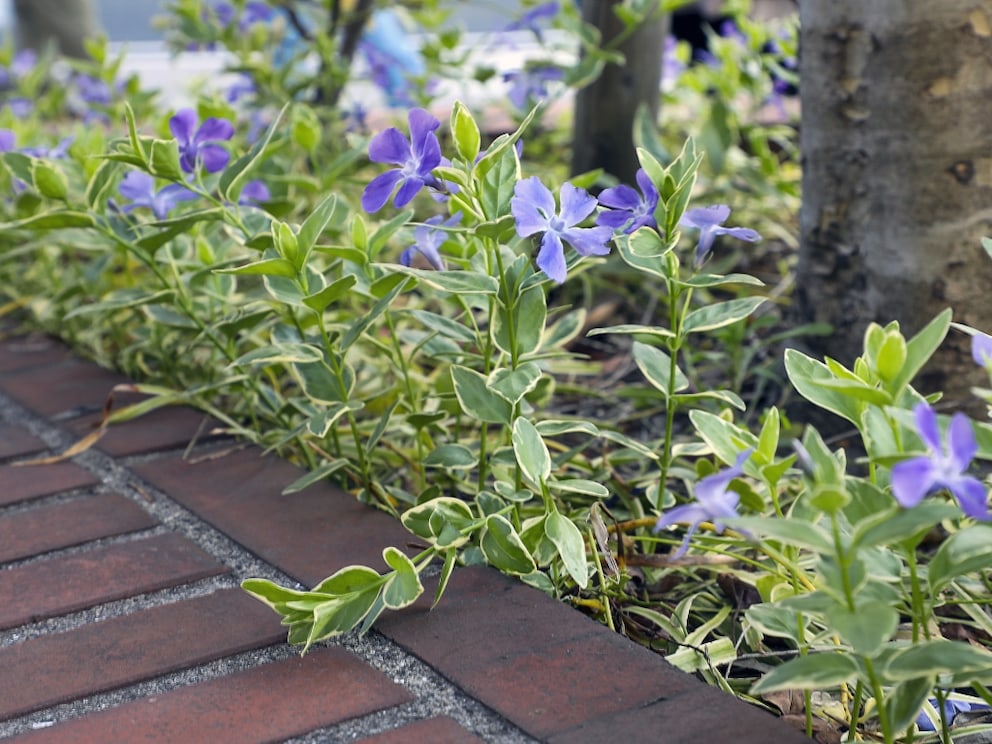
Periwinkle comes in both small and large varieties. The large periwinkle differs from its name only by having larger leaves and flowers as well as longer shoots. Once planted, the large periwinkle spreads into a dense carpet up to 6 inches high, quickly greening especially shady areas.
The small periwinkle is overall a bit smaller and not quite as fast at covering bare areas. In April and May, and occasionally in the fall, periwinkle bears violet or white flowers. Even in winter, periwinkle, true to its name, remains dark green.
3. Cotoneaster
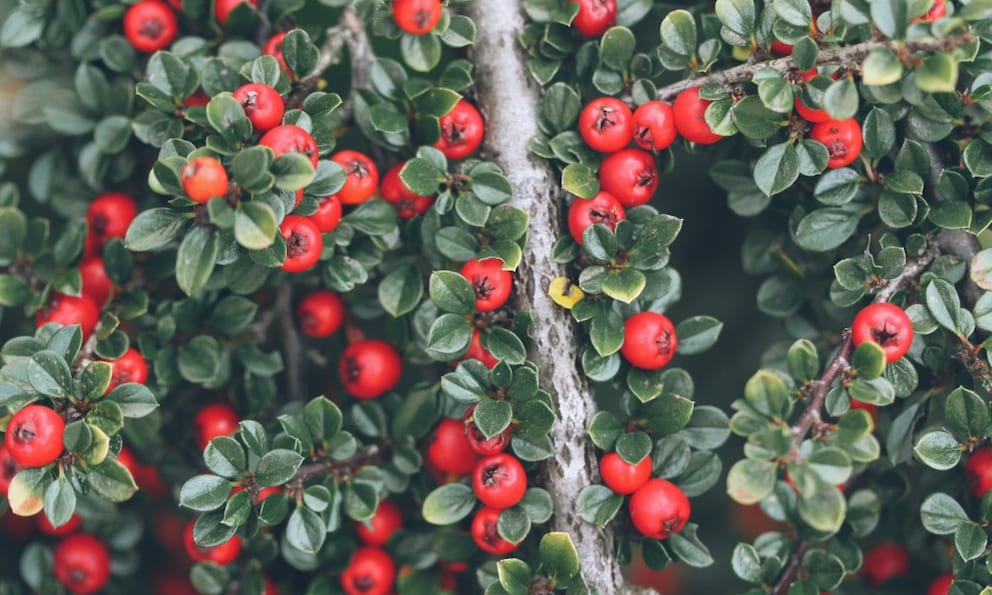
Ground-covering, winter-hardy, and an important plant for flora and fauna: that’s the cotoneaster. It is also known as rock cotoneaster or cotoneaster. Creeping cotoneaster species prefer to conquer rock gardens, walls, or stone bed borders. They root in the gaps, creating a new habitat. The fine white, red, or pink flowers attract many pollinating insects from June onward.
Once the red fruits, reminiscent of mini rose hips, have ripened, they provide an important food source for birds well into winter. Since blackbirds particularly enjoy the fruits, the cotoneaster is also called the blackbird bread tree. Creeping cotoneasters are winter-hardy and evergreen, quickly conquering rock gardens and other less hospitable garden corners.
4. Ivy

Ivy often spreads on its own in shady and slightly wild gardens. If not regularly contained, it can become a nuisance, spreading massively in hedges, shrubs, or on house walls.
However, if you just want to green a bare area under a tree easily, ivy is a great choice. The evergreen plant quickly spreads its long shoots, which develop roots upon contact with the ground. Regularly trimmed, ivy remains manageable and low-maintenance. The fine flowers are an important nectar source for many insects.
5. Mazus

Mazus also forms a dense, flowering, and evergreen carpet as a fast-growing ground cover, bearing blue-violet, bell-shaped flowers in May.
Originally from the Himalayan region, Mazus is accordingly resistant to weather extremes such as severe frost or drought. Only in the height of summer does the evergreen plant occasionally need a little water.

Ground Covers for the Lazy
“Neatly raked beds without weeds: For many gardeners, a desirable sight in their own garden, but also labor-intensive to maintain. Ground covers are therefore the perfect plants for ‘lazy gardeners,’ or those who prefer a green garden that requires little maintenance and less water. The flowers also provide pollinators with an additional food source. Fast-growing ground covers like cotoneaster feed many birds well into winter. The species presented are not only for the lazy but also for the smart gardener.”