


November 25, 2025, 4:37 am | Read time: 4 minutes
Plants typically need light to grow. However, some plants don’t like having a grow light overhead. myHOMEBOOK gardening expert Franka Kruse-Gering introduces five plants that prefer less light in winter.
Why Some Plants Need Light in Winter–and Others Hardly Do
In winter, the balance of light and temperature changes significantly: Days become shorter, the sun is lower, and the natural growth of many plants slows down. Sun-loving species—such as Mediterranean herbs or flowering plants—rely on intense light energy for photosynthesis and to produce new leaves or flowers. If they lack light in winter, they largely stop growing or lose leaves because they would expend more energy than they can gain.
Shade plants, on the other hand, have adapted to low light conditions. Their leaves contain more chlorophyll and can draw sufficient energy even from diffuse or indirect light. Additionally, many of them enter a dormant phase during the cold season, growing little and thus requiring less light. This ability makes them ideal companions for dark winter months—they stay green even when there’s hardly any sun outside.
These Plants Need Little Light in Winter
Even though the sun rarely makes an appearance in winter, there are some plants that thrive with little light. The following selection highlights five popular species that remain healthy and green even in dark corners.
1. Snake Plant
The snake plant (Sansevieria) epitomizes a low-maintenance plant. It stores water in its thick, upright leaves and requires minimal care. It thrives surprisingly well even in dark corners. It should be watered sparingly—too much moisture quickly leads to root rot. While the snake plant prefers a bright location, it can handle darkness in winter wonderfully for a few weeks.
2. ZZ Plant
The ZZ plant (Zamioculcas) lives up to its name: It forgives almost everything—from drought to lack of light. Its glossy, dark green leaves store moisture and energy, keeping it stable even in the dark season. It feels comfortable in rooms with north-facing windows or far from daylight sources. Its growth is slower in winter, but it remains decorative and vital. It’s important not to water it too often—once a month is usually enough. Too much water is the only danger for this nearly indestructible plant.
3. Cast Iron Plant
The cast iron plant (Aspidistra) is an elegant, traditional plant that was popular in Victorian salons—then and now due to its remarkable resilience. It loves shade and tolerates room corners where little light falls. Its long, deep green leaves grow slowly but reliably. It handles temperature differences and irregular watering with ease. It’s the ideal plant for those who want greenery in the room but don’t want to care for it daily. It doesn’t like drafts—otherwise, it’s nearly indestructible.
4. Chinese Evergreen
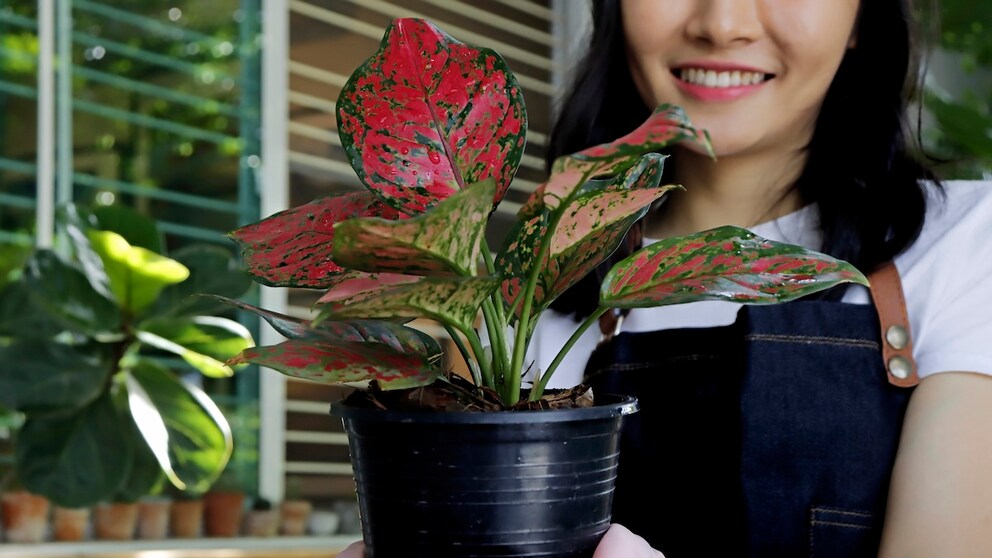
The Chinese evergreen (Aglaonema) brings color to dark rooms. Its leaves shimmer in various shades of green, often with silvery or reddish patterns. Originally from the shady floors of tropical forests—where hardly any sunlight reaches the ground—it thrives wonderfully in low-light locations in winter. It’s important to keep it evenly moist without water standing in the pot. The Aglaonema loves high humidity, making it particularly comfortable in bathrooms or kitchens.
5. Peace Lily
The peace lily (Spathiphyllum) is not only an elegant presence but also a silent air purifier. With its glossy, dark green leaves and white, sail-like flowers, it looks sophisticated and fresh—even in rooms with little daylight. In winter, the peace lily reduces its growth but remains lively and decorative. It prefers evenly moist soil without waterlogging and responds positively to occasional misting of the leaves. Especially nice: Even in the dark season, the peace lily can occasionally produce flowers if conditions are right.