


October 19, 2023, 12:44 pm | Read time: 5 minutes
Plants beautify our homes, lift our spirits, and can even be useful. However, they are usually limited to rooms with sufficient light, while low-light areas are often neglected. But it doesn’t have to be that way!
Not all houseplants need a lot of light. Some thrive in less illuminated areas and are perfect for adding life to the hallway or even the bathroom. The good news: Many plants that require little light also need minimal care and attention. myHOMEBOOK presents six plants that would feel comfortable even in the pantry.
1. Devil’s Ivy (Epipremnum aureum)
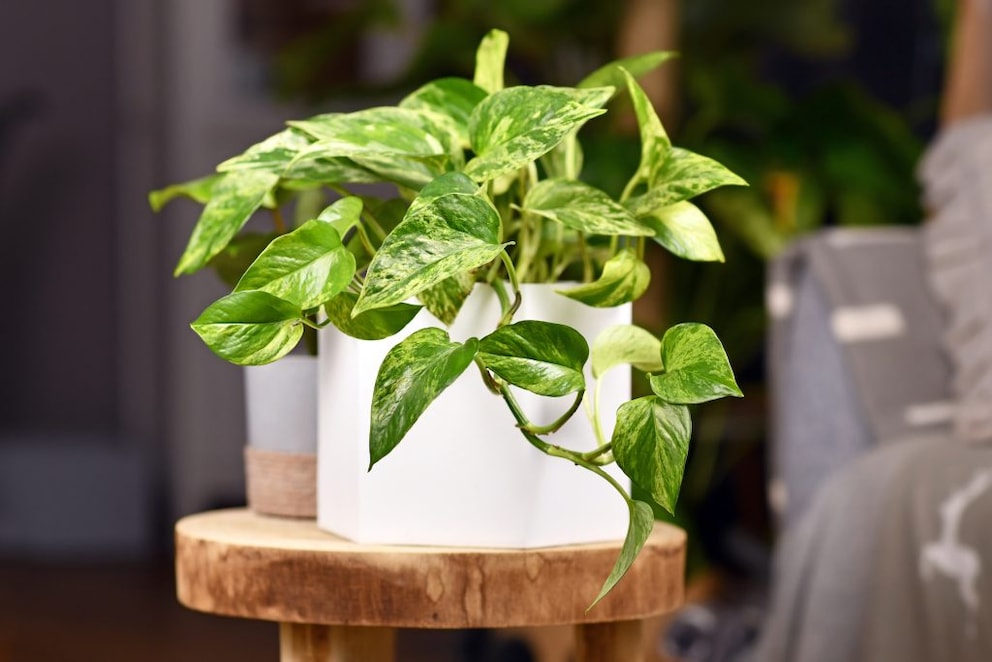
The Devil’s Ivy can be placed anywhere in the home. It likes shade as much as bright spots. Originally, the plant comes from Australia and Asia. With its climbing vines, it becomes a real eye-catcher in any room. It only needs water when the top layer of soil is dry, and it appreciates fertilizer every two months from March to August. To do it a favor and mimic its tropical home, you can occasionally spray it with lukewarm water. Caution: It doesn’t handle drafts well, which can cause brown, spotty, or wilted leaves.
Also interesting: 9 popular shade plants for gardens and balconies that bloom beautifully
2. Rubber Plant (Ficus elastica)
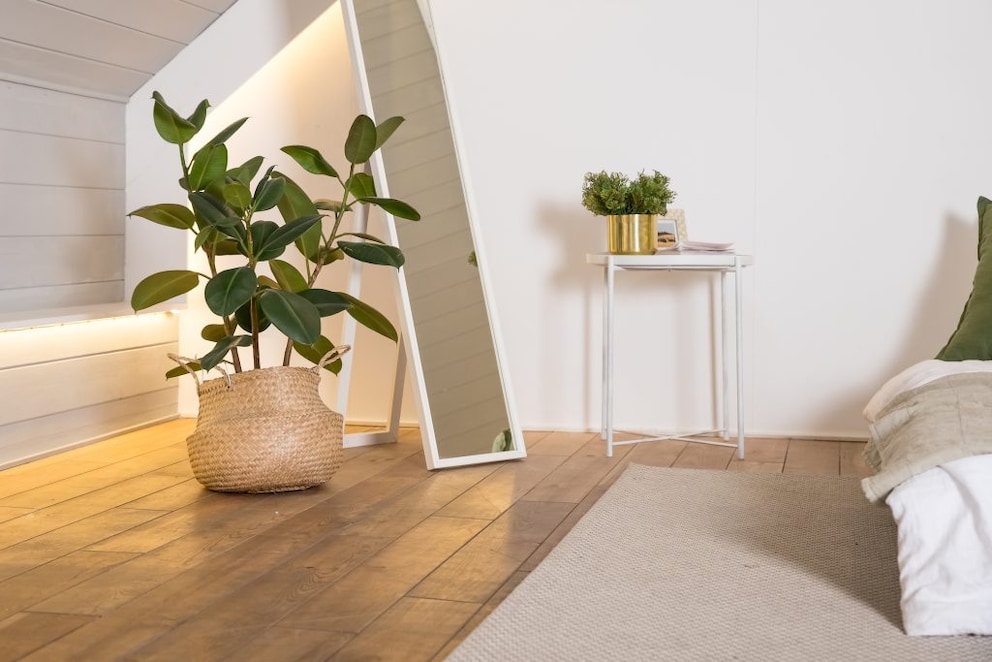
The Rubber Plant is also among the houseplants that do well with both little and a lot of light. It also has its weaknesses with drafts, which it unfortunately cannot tolerate. Additionally, temperatures should not fall below 64 degrees Fahrenheit. In the ’80s and ’90s, it was seen in many living room corners, and now it’s making a comeback.
As a houseplant, the Rubber Plant can reach a considerable size, so you should carefully consider whether you can provide it with enough space. It can grow one to two meters tall and up to one meter wide. It only needs water when the top layer of soil is dry. You can support it with fertilizer in spring and summer, ideally giving it some green plant fertilizer every two weeks.
3. Dragon Tree (Dracaena)
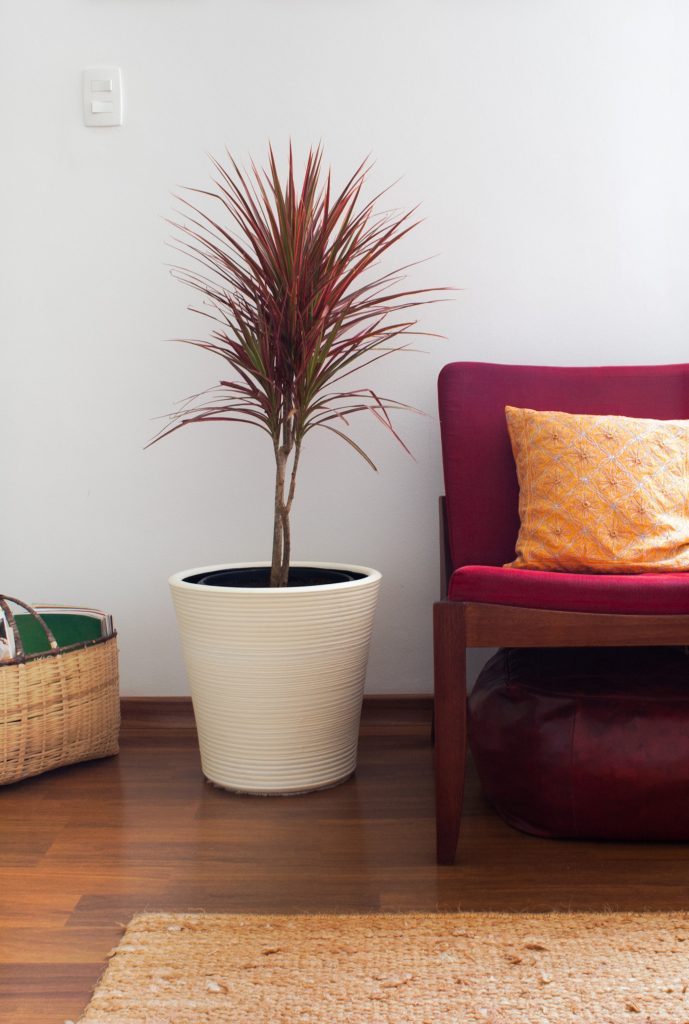
The Dragon Tree is a welcome guest in many homes. Its long, sword-like leaves make it particularly attractive. These don’t always have to be green; they can also have a reddish hue.
However, the leaves are also the catch. Not every plant copes well with low light. The darker the leaves, the darker the corner can be where the Dragon Tree stands. The plant is not only very decorative but also useful. The Dragon Tree filters pollutants from the air and improves the room climate. Caring for the Dragon Tree is very simple. In summer, watering once a week is sufficient, and in winter, a bit less.
4. Peace Lily (Spathiphyllum wallisii)
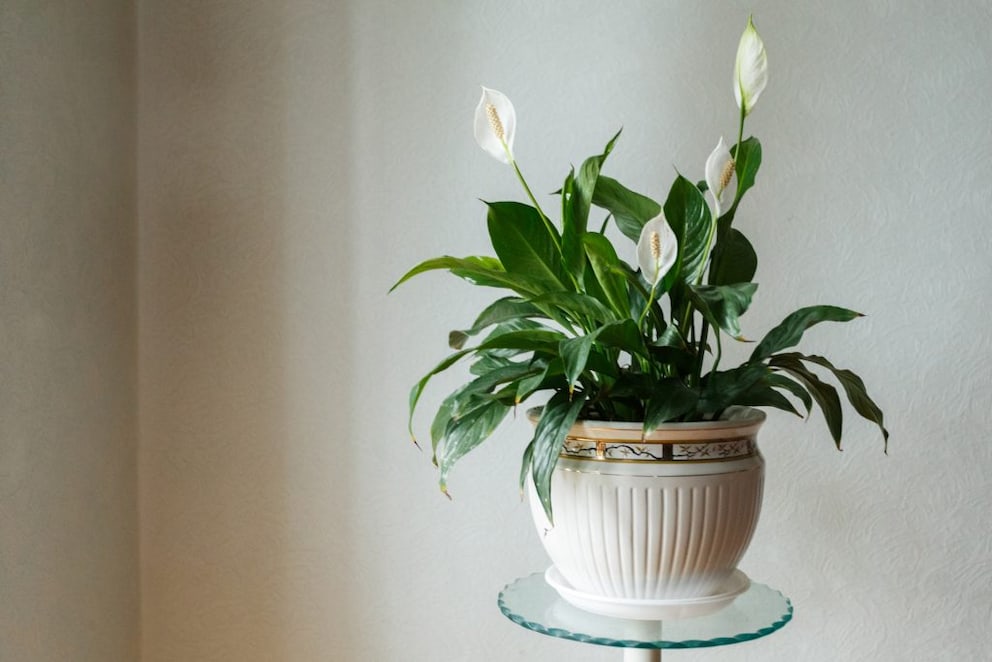
The Peace Lily, also known as Spathiphyllum, impresses with its simplicity and understated elegance. It is a plant that performs well even with little light. On one hand, it is a flowering plant that produces beautiful white blooms. On the other hand, the Peace Lily cleans the air by filtering out formaldehyde.
It should be noted that this plant is toxic to humans and animals. Consumption can cause nausea, vomiting, and diarrhea. The flowers and pollen can trigger allergic reactions. Fortunately, the plant does well with little light, so it can be placed on a shelf or in a back corner of the room. Since the Peace Lily likes high humidity, it can even be placed in the bathroom. When watering, ensure the soil remains moist. Even during winter dormancy, make sure the root ball doesn’t dry out.
Note: If the Peace Lily is too bright or exposed to direct sunlight, it won’t produce flowers.

9 Plants Perfect for the Bedroom
The Best Spots for Houseplants in Your Home
5. Calathea (Calathea roseopicta)
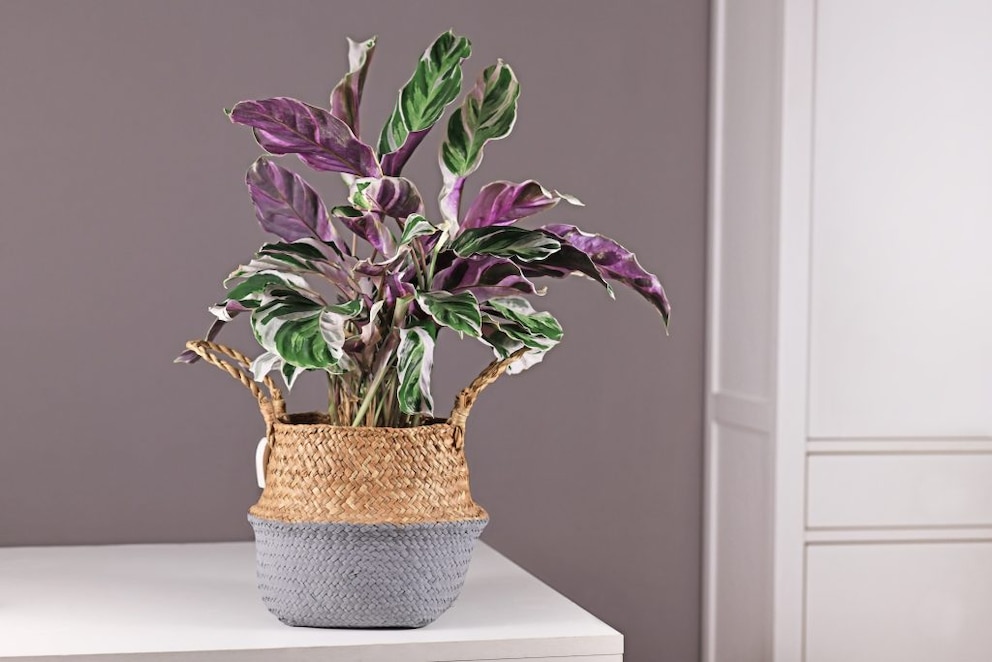
The Calathea, also known as the Prayer Plant, is quite demanding, but it also requires little light. Originally growing in Brazil, it is sometimes referred to as the Brazilian leaf beauty. Those who wish to cultivate it indoors must invest a bit in care, as the Calathea is very demanding. While the plant needs little light, it requires very high humidity and almost constant temperatures between 73 and 77 degrees Fahrenheit. The best place for it would be a heated conservatory, a display case, or the bathroom.
Furthermore, the Calathea is sensitive and doesn’t handle changes well. Sudden temperature shifts or a new location with more or less light can cause damage. Since the plant has large leaves that evaporate a lot of water, the Calathea needs plenty of water–but waterlogging should be avoided. It’s best to use rainwater, as tap water should be dechlorinated before watering.
When it comes to fertilizing, it’s a bit more forgiving; during the main growing season from March to August, it suffices to give it some liquid fertilizer every two weeks. In winter, you can skip it altogether.
6. Spider Plant (Chlorophytum comosum)
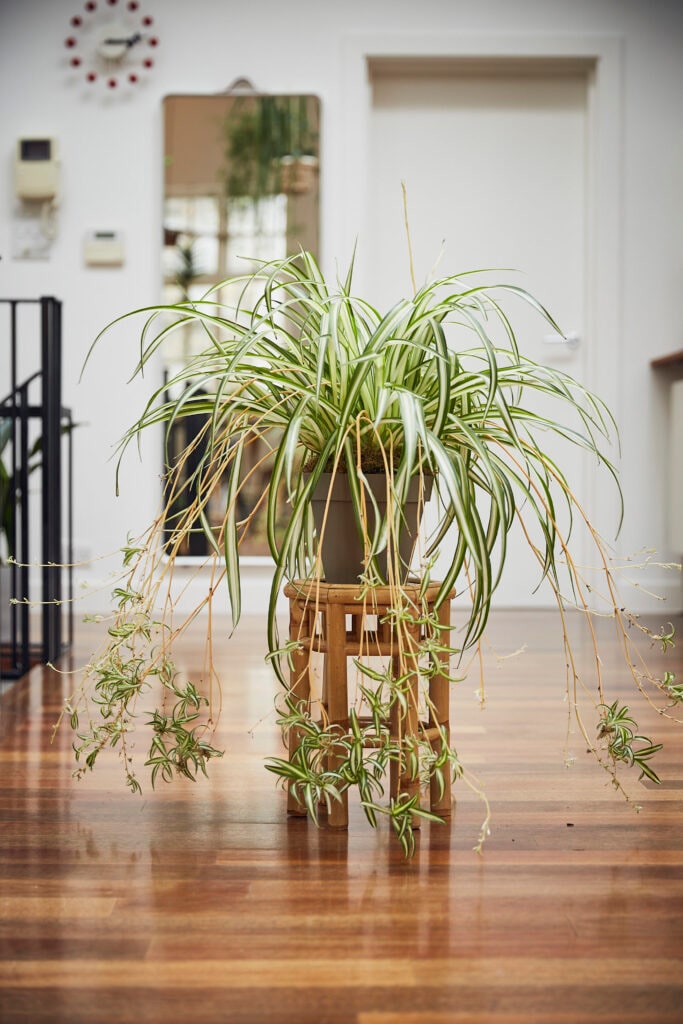
The Spider Plant is a true classic and extremely popular. It is very undemanding and forgives care mistakes. It’s no wonder it stands forgotten on a filing cabinet in every other office. During its growth phase from spring to fall, make sure it is watered regularly. However, since its roots can store water, it can also survive a temporary dry spell.
Its propagation is also very easy. The so-called plantlets that form on some of its leaves can simply be planted. Its impressive, small, white flowers can appear throughout the year.