


April 27, 2026, 11:02 am | Read time: 3 minutes
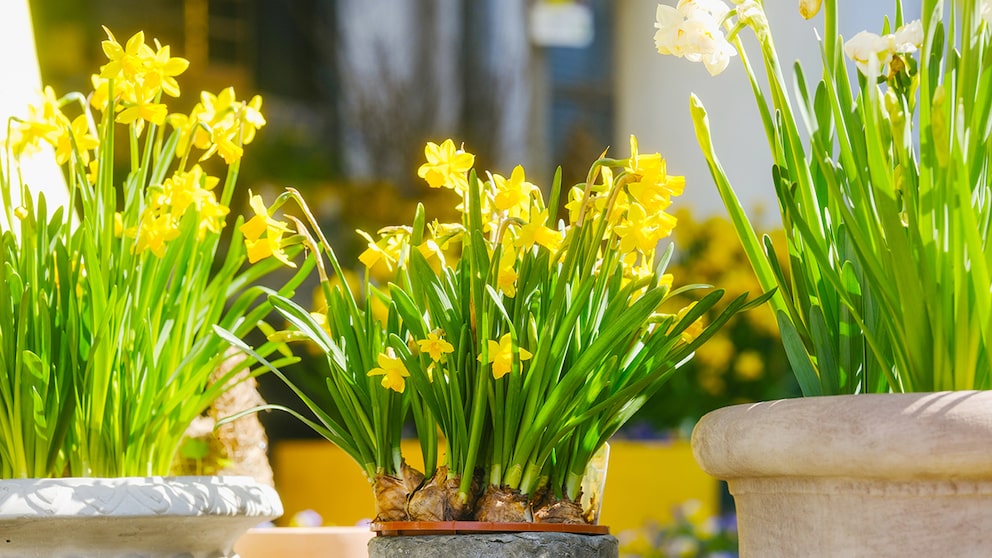
Daffodils quickly bring color to the garden and balcony in spring—but just as quickly, the blooms are gone. What remains are wilting flowers and increasingly unsightly foliage. Many then wonder: Can it be discarded, or is it still worth caring for? Especially with potted daffodils, the question arises whether they should be planted out. The good news: With proper care, the bulbs can often be saved—and bloom again next year. myHOMEBOOK gardening expert Franka Kruse-Gering explains how to handle faded daffodils and when digging them up might be worthwhile.
Remove Faded Blooms, but Leave the Foliage
Once the daffodils have faded, only the old flower heads should be cut off initially. This prevents the plant from unnecessarily expending energy on seed formation. The foliage, however, must remain—even if it quickly becomes an eyesore.
The leaves now take on a central role: They continue photosynthesis and transport the reserves formed in the process to the bulb. Cutting them too early weakens the plant. The result may be that the daffodil doesn’t bloom at all or only weakly next year. Therefore, the foliage should only be removed once it is completely yellowed and dried out.
Should You Plant Daffodils Out of the Pot?
Those who have bought or received daffodils in a pot can continue to cultivate them in the container after blooming. However, this is only ideal to a limited extent. In a pot, the soil dries out faster, nutrient supply is limited, and the bulbs are often very cramped.
Therefore, planting them out is usually the better solution. In a garden bed, the bulbs have more space, are better nourished, and can establish themselves long-term. Those with a garden should take advantage of this option.
The right timing is crucial: Daffodils can be planted in the bed even with green foliage. There, they can settle in peacefully. Alternatively, one can wait until the foliage is completely yellowed and plant the bulbs later.
When Planting Out Is Especially Worthwhile
Planting out is particularly worthwhile if you want to keep the daffodils permanently in the garden. In a bed, the chances are significantly higher that they will sprout again next spring. Some varieties even multiply and form larger clusters over time.
Visually, this is often the better solution: Instead of unsightly pots, the plants can settle in the garden undisturbed—for example, among perennials or under shrubs, where the yellowing foliage is less noticeable.
When You Should Keep Faded Daffodils in the Pot
Those without a garden can also continue to care for daffodils in a pot. In this case, continue watering after blooming (but less), possibly lightly fertilize, and let the foliage die back completely.
Afterward, the bulbs are stored dry and cool until they are potted again in the fall. However, the bloom next year is often weaker than with freshly purchased plants.

How to plant and care for tulips properly
Can You Still Plant Early Bloomers Now?
How to Proceed with Planting Out
To plant out, carefully remove the daffodils from the pot and place them in the bed. A well-drained soil is important, as the bulbs do not tolerate waterlogging. After planting, water lightly—more care is usually not necessary. If the plant still has green foliage, it should remain until it naturally yellows.
Care for Faded Daffodils in the Garden Is Similar
Daffodils in the bed are uncomplicated. Remove wilted blooms, but leave the foliage. You can fertilize if desired, but it’s not necessary. Only when the leaves are completely dried out should they be cut off. If needed, the bulbs can be divided later if they are too crowded.