


August 11, 2025, 12:04 pm | Read time: 4 minutes
Orchids (Orchidaceae) are among the most diverse and fascinating plant families. Their striking and often symmetrical flowers naturally draw attention. Additionally, unlike most other plants, many orchids prefer tight pots. However, even tropical houseplants need to be repotted occasionally. This often causes headaches for hobby gardeners, as the orchid’s bloom frequently fails to appear after repotting.
Repotting Can Stress Orchids
The orchid is generally considered a sensitive plant. Changes in location, light conditions, or climate may require it to adjust initially. “Repotting is stressful for the plants,” explains Bernd Treder from the German Orchid Society when asked by myHOMEBOOK. The bloom would be delayed or might not appear at first.
This way, the orchid can conserve energy and focus on regenerating its roots. What many hobby gardeners initially worry about is actually a clever survival strategy.
Related: How to Repot Orchids Correctly
Root Damage During Repotting
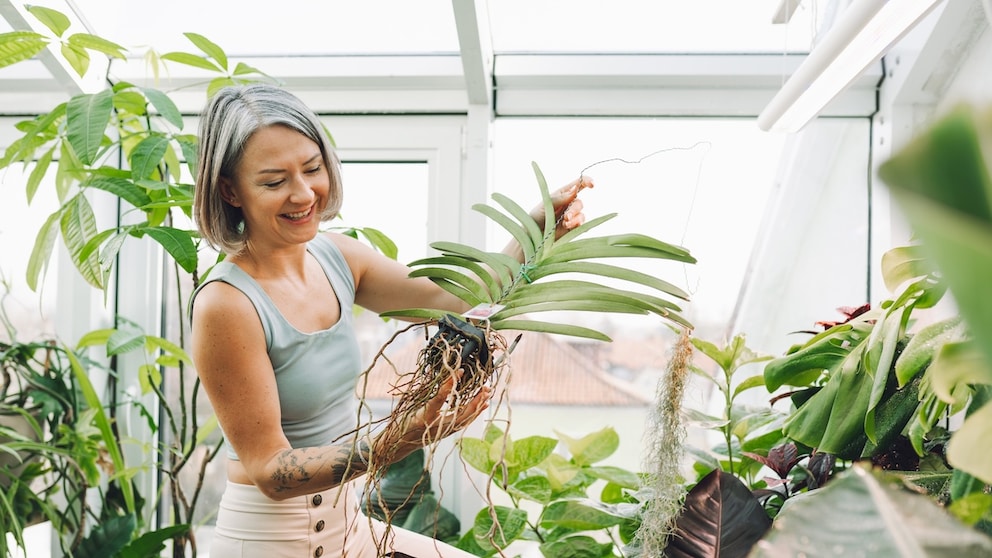
When repotting orchids, it’s important to remove diseased roots. These are easily identified by their soft, brown, or even mushy appearance. “It’s also inevitable that roots will be damaged during repotting, which impairs water and nutrient absorption and thus reduces blooming capability,” says the expert.
Small injuries can occur when cutting and removing the old substrate. “Dead or rotten roots should be removed with a disinfected knife,” Treder advises. The roots, or rather the healing of the wounds, then take priority, and the bloom is initially absent.
Tip: Hobby gardeners can dust the cut surfaces with cinnamon or activated charcoal. This can help prevent infections.
Pay Attention to the Right Substrate
Several mistakes can occur during repotting. For instance, it’s important to use the appropriate substrate. Using soil that is too dense, moist, or nutrient-rich can negatively affect the orchid’s root health. Only with healthy roots can the orchid also produce flowers.
It’s better to leave conventional potting soil aside. A more suitable option is an airy substrate containing pine bark or coconut fibers. Charcoal and perlite can also be included in the substrate. As with the right substrate, “The plants need time to adjust to the new substrate and the new pot,” Treder notes.

What Causes Yellow Leaves in Orchids

How to Repot Houseplants Correctly
Timing Is Crucial
When repotting an orchid, the bloom can be influenced in two ways. The ideal time for repotting is after blooming. The orchid is usually in its resting phase and naturally does not have a bloom.
“Repotting during the blooming period should be avoided.” Just before blooming is also off-limits. Ignoring this factor risks the plant dropping its buds and flowers and not forming new ones for a while.
Important: The ideal time to repot an orchid is shortly after blooming. However, it may be necessary to repot during blooming if the plant appears sick. Especially in cases of root rot, prompt action is needed to replant the orchid in new soil.
Proper Care for Orchids After Repotting
If no blooms appear after repotting the orchid, hobby gardeners should give the sensitive plant some time. However, they can support it with proper care. At the same time, “Repotting during the blooming period should be avoided,” the expert emphasizes.
Good, airy orchid substrate is important. “Ensure sufficient light without direct sunlight and stable temperatures.” To prevent root rot, orchids should be watered sparingly: “In the first few days after repotting, the plants should only be misted,” Treder explains. Once the plant is acclimated and begins to grow, it can be supplied with special orchid fertilizer.

Fascination with Orchids
“Although I don’t want to place an orchid on my windowsill, I find the plants incredibly fascinating. Particularly interesting—and I’m sure many would agree—are the flowers. Without question, they look amazing! But there’s a reason for that: Behind it lies a sophisticated pollination strategy. Many orchid species, about a third of the over 25,000 species, mimic the appearance and scent of female insects. This way, they attract males, which then pollinate the flowers. Disappointing for the male insects, but incredibly clever of the orchids!”