


June 7, 2023, 11:18 am | Read time: 3 minutes
More is better, or so they say. However, in some moments in life, it’s not wise to follow this advice. When it comes to fertilizing plants, too much of a good thing can harm the plant.
People often invest heavily in good fertilizer for their favorite plants. Yet, in the end, the plant still looks worse by the day. What could be the reason? The fertilizer might actually be the problem, specifically the amount. When fertilizing, it’s possible to overdo it, leading to overfertilization. We show how to counteract if a plant has been overfertilized.
Overview
Recognizing Overfertilization in Plants
More doesn’t always mean better. Overfertilization is mentioned when the water has evaporated from the soil, but too many nutrients remain. Additionally, interactions between individual nutrients can occur. For example, if the phosphate content is too high, the plant can no longer absorb iron or manganese. With too much nitrogen, the plant produces lush leaves but no longer flowers or fruits. Overfertilization in plants can be identified by specific characteristics.
- Overfertilization can be recognized by the so-called “spoon leaf” effect. In this case, the leaves curl upwards from the edges.
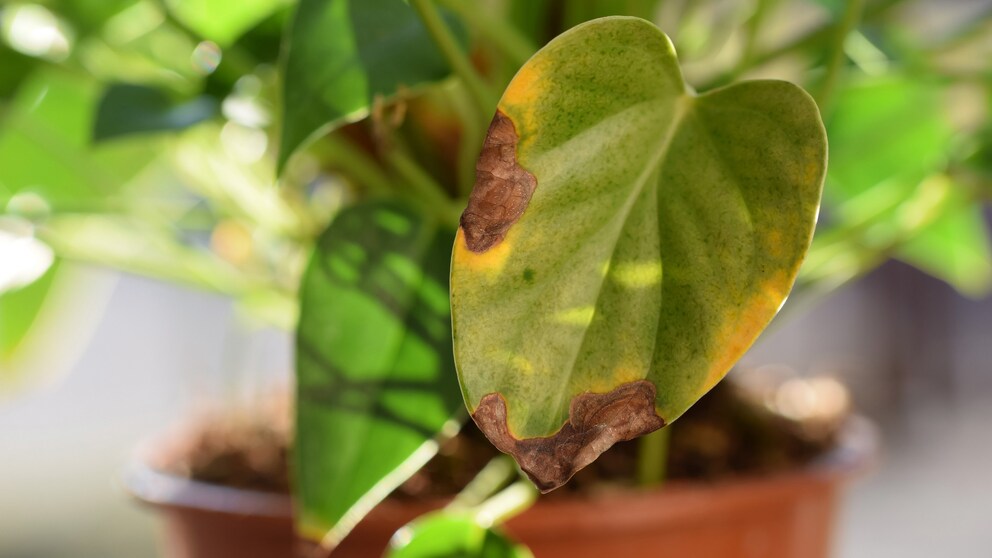
- In some cases, overfertilization of plants is indicated by brown leaf edges or tips.
- A lack of robustness in wind and weather can also indicate overfertilization.
- If white deposits appear on the soil, this is a sign of overfertilization. The soil is “salinized.” The plant tries to neutralize excess salt and even releases water to the soil. As a result, the plant dries out, even though it has been adequately watered.
Also interesting: DIY Plant Fertilizer from Eggshells
Proper Care After a Plant Has Been Overfertilized
Most overfertilized plants can still be saved. First, all fertilizer residues must be removed from both the soil and the plant. Residues can be identified in and on the soil as white deposits. These can be carefully removed.
Rinsing Plants After Overfertilization
The soil must be thoroughly rinsed, preferably with distilled, lukewarm water. This way, all excess nutrients can be washed out. For potted plants, ensure the pot has a hole for drainage. If the overfertilized plants are in the garden, they should be flooded. After thoroughly rinsing the soil of overfertilized plants, do not water the affected plants for the next few days.
Also interesting: Why You Shouldn’t Pour Old Fertilizer Down the Drain
Note: For plants that generally require very little water, such as citrus plants, this can cause problems.
Repotting Plants After Overfertilization
It is advisable to repot in cases of severe overfertilization and for plants that require little water. To do this, remove the soil from the roots and rinse them. With new, nutrient-poor soil, the plants can recover. Once the plant has regenerated, it can be returned to more nutrient-rich soil.