


May 29, 2023, 10:45 am | Read time: 5 minutes
Flaxseeds are particularly known as a source of plant-based omega-3 fatty acids. They are often used in baking bread or in cereals. Oil can be pressed from flaxseeds, and the plant fibers are processed into linen fabrics. The crop is also a real eye-catcher in any garden.
For those who follow a vegetarian or vegan diet, flaxseeds are likely familiar. Besides fatty fish, the small seeds contain a high proportion of valuable omega-3 fatty acids, which should be part of a healthy diet. Compared to chia seeds, which are also rich in omega-3 fatty acids, flaxseeds are not only significantly cheaper, but they also grow easily in our regions. As a crop, the seeds can be used as a basis for textiles and even green manure. A truly versatile plant that certainly has its place in a large vegetable garden.

Overview
Planting Flaxseeds
Flaxseeds are not pre-cultivated but sown directly outdoors. A larger, previously fallow area is recommended. The seedlings are sensitive to frost, so sowing should occur no earlier than the end of March. Flaxseeds can also be sown in May, resulting in a slightly later bloom. As dark germinators, flaxseeds need a one to two centimeter thin layer of soil to cover them, which should always be kept slightly moist. After about a week, the first flaxseeds germinate and grow into plants.
Appearance and Growth
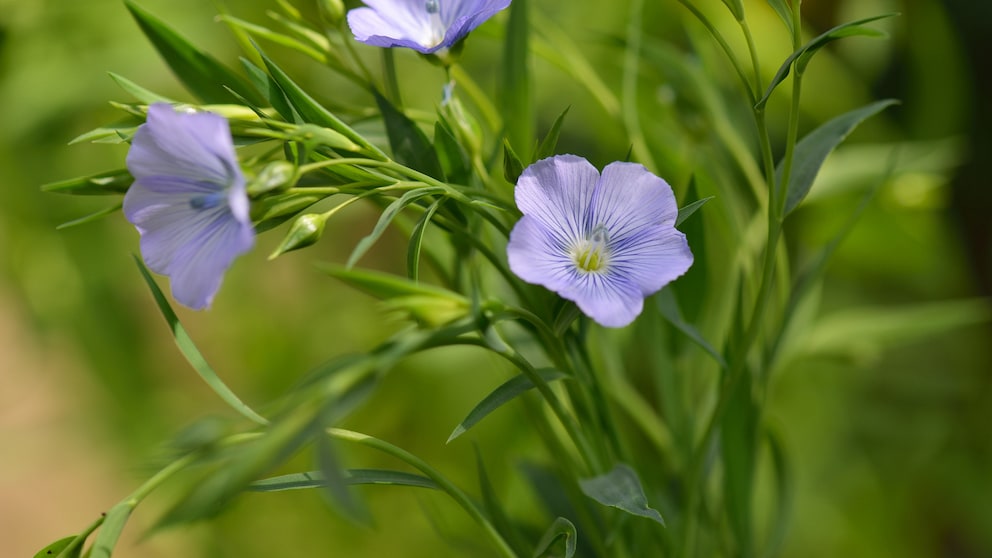
The plant that bears the flaxseeds after blooming is also called flax. Each plant grows 20 to 100 centimeters tall, forming a long, fiber-rich stem that can be used to make linen fabric. At the top of the plant, the flowers develop, which can be a real visual delight on fallow, large areas. The small flowers, about 1.5 centimeters, are usually blue, but they also come in pink, red, or white. Flax is only a limited nectar source for insects. It mostly self-pollinates and then forms capsule fruits, each containing about ten flaxseeds.
Location and Soil
Flax tolerates sun only in moderation. It should not be exposed to the intense midday sun. A partially shaded location is ideal, but flax can also thrive in the shade. The soil should be relatively nutrient-poor. This is also beneficial because after harvesting the flaxseeds, flax can be simply plowed under as green manure, preparing the soil for more nutrient-demanding plants the following year. The substrate should never completely dry out, but flax also does not tolerate excessive moisture well.
Varieties
Flaxseeds are harvested from plants belonging to the flax family. Many species are planted solely for decorative purposes, while some are used as crops.
- Common Flax: Common flax is the most widespread crop. Its seeds are edible, and the flowers are typically blue. Common flax is annual.
- Blue Flax: This flax species is perennial and grows as a shrub. It is particularly suitable for shrub beds, rock gardens, or can be used for green roofing.
- Yellow Flax: As its name suggests, yellow flax bears yellow flowers. This flax species is also perennial and hardy, making it a low-maintenance addition to shrub beds.
Caring for Flax
Flax is easy to care for depending on the species. Common flax, most often used for flaxseed production, is also a beginner-friendly plant for gardeners with enough space or those looking to green manure a bed.
Watering
The soil should be more dry than moist, but never completely dry out. Waterlogging must be avoided.
Fertilization
Most flax species require relatively nutrient-poor soil and therefore do not need fertilizer. It is more important to keep the immediate surroundings of the plants free of weeds, as flax can be quickly displaced.
Pruning
Common flax is only pruned for harvest. Depending on the plant’s use, as a fabric supplier or seed plant, either only the capsule fruits are cut or the entire plant. If plant parts remain, they can be worked into the soil as green manure.
Winter Hardiness
Common flax is not hardy and sensitive to frost, especially during the delicate seedling phase. Perennial flax species, which grow in shrub beds, for example, are hardy.
Diseases and Pests
The location and soil determine the plant’s vitality and thus its susceptibility to mildew or flea beetles. Too moist locations or compacted soil harm flax in the long run and promote diseases and pests.

Which Oil Is Suitable for Which Purpose
How Black Cumin Thrives in the Garden
Harvest
Flaxseeds are ready for harvest when the capsule fruits are dry and the seeds rattle when lightly shaken or already fall out of the fruits. This can also be used for harvesting. Gather the dry flax plants in bundles and place them in a cloth bag. Then shake vigorously, for example, against a tree or a house wall. This way, the flaxseeds are collected. They must then be sorted.
Usage
Flaxseeds can be pressed into oil or eaten raw. However, the oil should be used quickly as it becomes rancid fast. In cereals, on bread or rolls, or in smoothies, flaxseeds provide many fibers and valuable omega-3 fatty acids.