


January 27, 2025, 12:12 pm | Read time: 4 minutes
Mint (Mentha) is a versatile plant that is not only aromatic but also easy to care for. It grows in gardens, on balconies, or in pots and adds freshness and spice to drinks, desserts, and savory dishes. Thanks to its winter hardiness and simple care, it is also ideal for beginners.
Mint originally comes from the Mediterranean region and Western Asia. It is a herbaceous plant from the family of Lamiaceae. It thrives in moist locations such as riverbanks and meadows. The large variety of species, formed through crossbreeding and hybrids, makes it a versatile crop plant. In addition to the classic peppermint (Mentha x piperita), there are varieties with fruity or mild aromas that are equally popular in the kitchen and garden.
Overview
Planting Mint
The herb is planted in spring as a young plant, cutting, or by division. The soil should be thoroughly loosened beforehand. To limit the strong spread of roots, a root barrier is recommended, such as a pot without a bottom.
Additionally, it is advisable not to grow mint in the same spot for more than three years. Afterward, a break of four to five years should be taken before planting Lamiaceae in that location again.
Location and Soil
The plant prefers sunny to partially shaded locations and humus-rich, nutrient-rich soils. Waterlogging should be avoided, but the soil must still be kept evenly moist. On balconies, growing in pots with peat-free herb soil is suitable. In herb spirals, mint is planted in the lower, wetter area.
Follow myHOMEBOOK on WhatsApp now!
Appearance and Growth
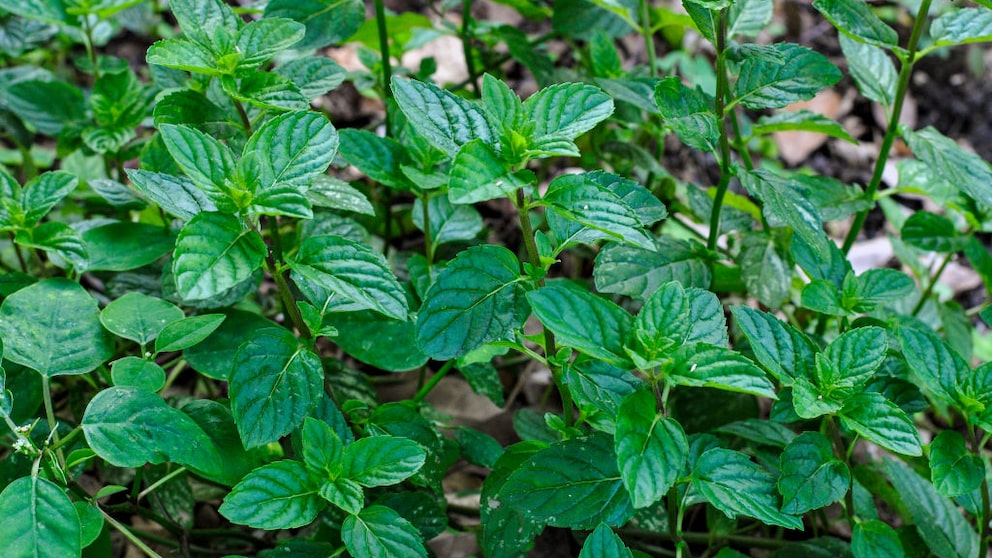
Mint is a herbaceous, perennial plant that can grow 30 to 100 cm tall depending on the species. Its angular stems bear oval to elliptical, toothed leaves. The flowers appear in false whorls or spike-like inflorescences and vary from white to pink to violet. It forms strong rhizomes that allow rapid spread. To prevent overgrowth, runners should be removed regularly.
Varieties
There is an impressive variety of mint species and varieties:
- Mints without Menthol:
- Spearmint (Mentha spicata): Delicate scent, violet-pink flowers.
- Pineapple Mint (Mentha suaveolens ‘Variegata’): White-green speckled leaves, fruity aroma.
- Lemon Mint (Mentha gentilis var. citrata): Lemon aroma, repels mosquitoes.
- Mints with Menthol:
- Peppermint (Mentha x piperita): Intensely refreshing taste, pink flowers.
- Chocolate Mint (Mentha x piperita var. piperita ‘Schoko’): Scent of mint chocolate.
- Moroccan Mint (Mentha spicata ‘Marokko’): Mild tea mint with fresh aroma.
Caring for Mint
Mint is easy to care for and suitable for beginners. However, it should be noted that the plant can spread extensively. Regular watering, fertilizing, and targeted pruning promote healthy growth.
How to Water Mint
Mint requires evenly moist soil. During dry periods, it should be watered every one to two days. Morning watering is best to allow the leaves to dry quickly and prevent fungal diseases.
Proper Fertilization
Fertilizing with organic materials such as compost or comfrey manure every four to six weeks promotes growth. In pot culture, more frequent fertilization is necessary as nutrients in the substrate are limited.
How to Prune Mint
Pruning in spring keeps mint compact and encourages branching. After the first bloom, another cut is advisable to enable autumn flowering. Before winter, the above-ground parts should be cut close to the ground.
Winter Hardiness
Most mints are winter hardy down to minus 15 degrees. A mulch layer of leaves or twigs protects more sensitive varieties like strawberry mint from frost damage.
Propagation
Mint can be propagated by division, cuttings, or separated runners. Cuttings root quickly in moist soil or water. Pennyroyal (Mentha pulegium) is an exception: it can be propagated by sowing.
Diseases and Pests
- Peppermint Rust (Puccinia menthae): Reddish pustules; cut and dispose of affected plant parts.
- Mint Leaf Beetle (Chrysolina herbacea): Eats leaves; collect beetles.
- Aphids: Spray with a soap solution.
- Whitefly: Cut back and dispose of infested shoots.
Related: What helps against the mint bear in the garden and on the balcony?
Toxicity
Most mint species are non-toxic. However, pennyroyal (Mentha pulegium) contains the toxic pulegone and should not be consumed. Essential mint oils should be used cautiously with pets.
Alternatives
Similar herbs with fresh aromas include:
- Lemon Balm (Melissa officinalis)
- Basil (Ocimum basilicum)
- Rosemary (Rosmarinus officinalis)
Planting and caring for Thai basil correctly
Planting and Care Tips for the Imperial Crown
Harvesting and Use
Mint can be harvested from spring to fall. The content of essential oils is highest just before flowering. The fresh leaves enhance teas, desserts, and salads. Drying or freezing the leaves is suitable for preservation.
Bee Friendliness
The flowers of mint are a valuable food source for bees and butterflies. Especially late-blooming varieties provide important nectar and pollen sources in the fall.