
February 26, 2024, 6:22 am | Read time: 5 minutes
Perennials are plants that typically regrow each year from the original clump. This means a garden bed doesn’t need to be replanted annually if it’s filled with a low-maintenance mix of perennials. myHOMEBOOK explains which perennials are also suitable for beginners in this article.
When the first bulbs push their heads through the soil in spring, gardeners also feel the spring fever. Often, in their enthusiasm, they fill their shopping carts with early bloomers at the hardware store to dress the garden in a colorful spring outfit. Beginners often overlook that this blooming splendor is short-lived. After a few weeks, daffodils, primroses, or hyacinths have faded, leaving behind withered leaves. Those who want to find resilient and long-blooming plants in their garden year after year should opt for low-maintenance perennials.
Overview
Benefits of Perennials in the Garden
Apart from being mostly perennial and saving costs on new plants over time, some types of perennials are very low-maintenance. Except for a warming mulch layer on the root area, hardy perennials need no additional protection. The long, faded stems of perennials also serve as winter quarters for many insect species, contributing to nature conservation.
Low-maintenance perennials usually require little water, often making them less work than annual plants. Once perennials have spread in a bed, for example, through runners or seeds, weeds have less space and light to take over the front yard and other areas. This also saves hobby gardeners time and effort.
Top 6 Perennials for Beginners
1. Lavender
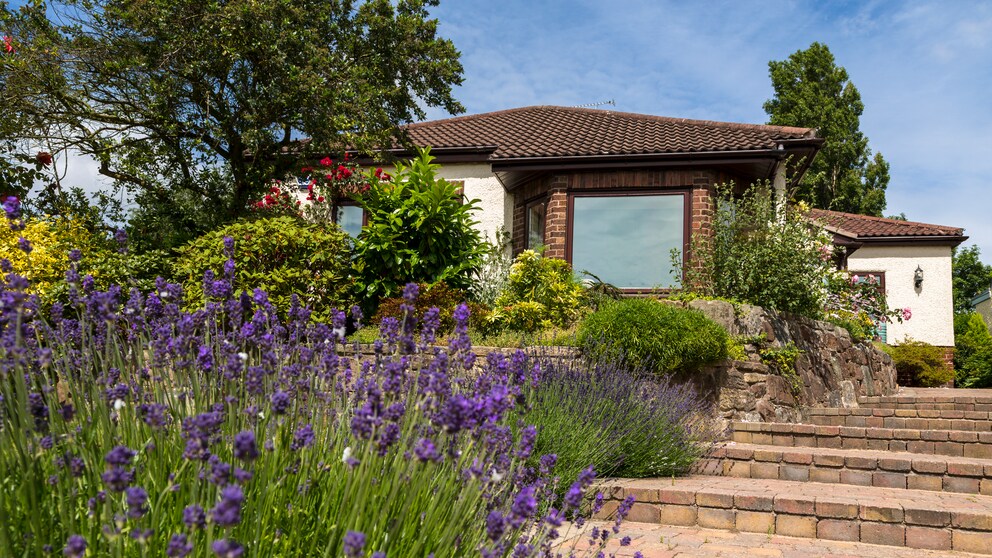
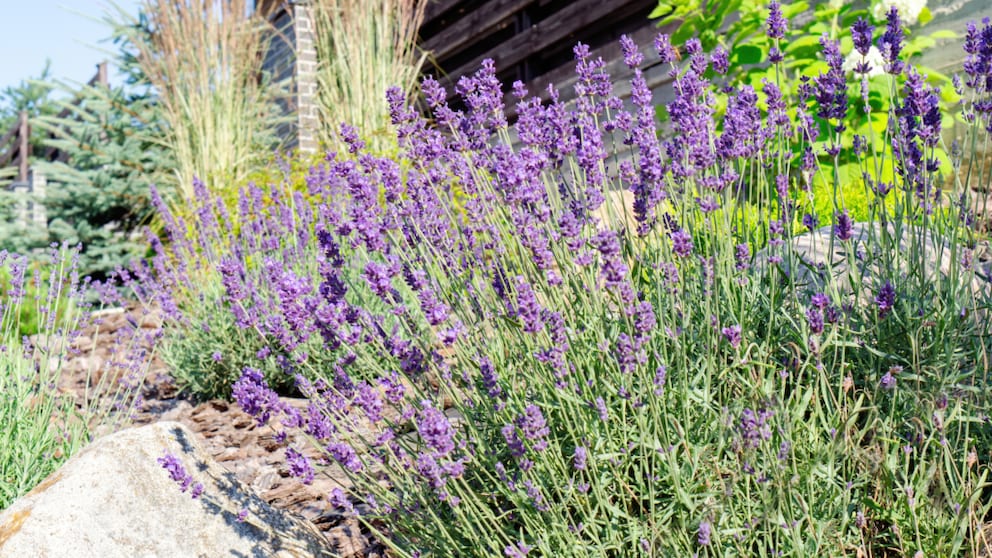
Anyone who already has lavender in their garden likely appreciates the advantages of this Mediterranean perennial. Besides the beautiful, mostly purple or white flowers, lavender emits its typical enchanting scent during the blooming period, which is attractive not only to humans.
Many pollinators, such as bumblebees and butterflies, love the scent and nectar of the plant. Therefore, filled flowers should be avoided with lavender, as the proboscises of pollinators sometimes cannot reach the nectar. In addition to its fragrant blooms, lavender is particularly noted for its high heat and drought tolerance. A sunny bed is therefore the ideal location.
2. Allium
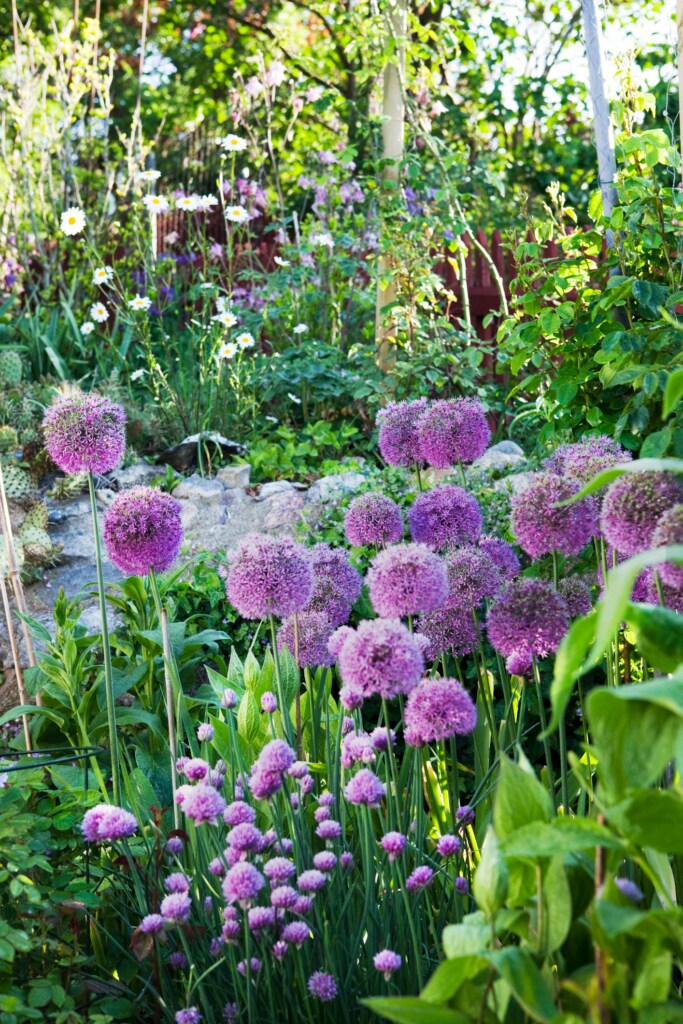
Allium, also known as ornamental onion, pairs particularly well with lavender. Both perennials love sunny, rather dry beds without waterlogging. Additionally, Allium forms spherical flowers on long stems, providing variety alongside lavender. Nevertheless, the flowers of both plants belong to the same color family and harmonize well together. Like lavender, Allium requires little water and is resistant to most pests.
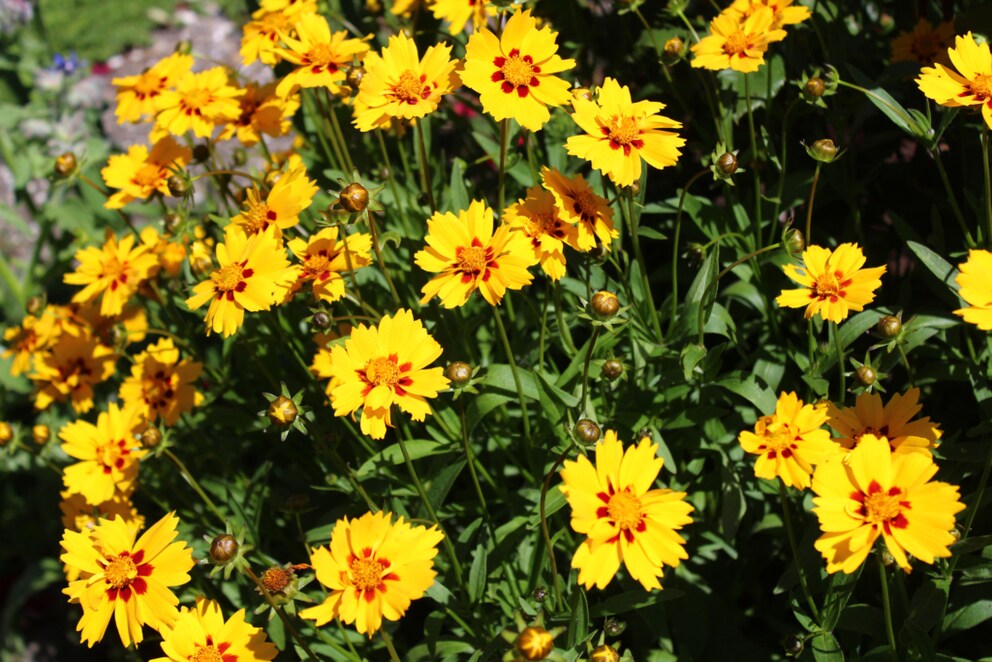
3. Coreopsis
While lavender and Allium display their blooms from early summer, coreopsis typically blooms from late summer into the fall. The mostly yellow flowers are particularly enduring and fit perfectly into the autumn garden.
Coreopsis is easy to divide and propagate, requires no special care, and should only be cut back close to the ground in spring to make room for new shoots. Overall, coreopsis grows up to 80 centimeters tall and should be placed towards the back of the bed to avoid overshadowing other perennials.
4. Lady’s Mantle
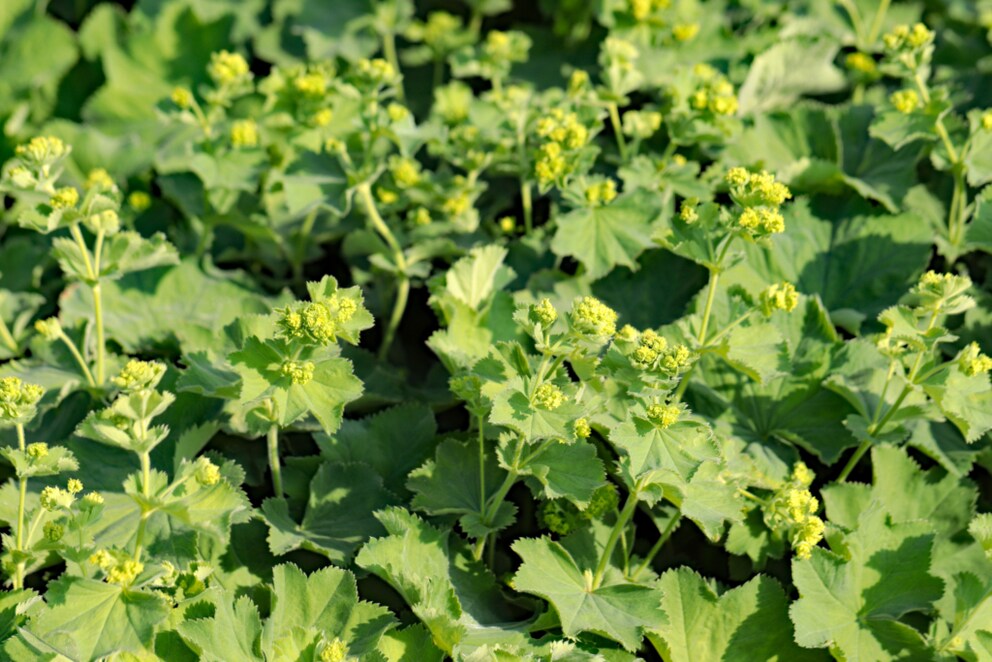
Also yellow-blooming, lady’s mantle can be a beautiful addition to the previously mentioned perennials in the same bed. Lady’s mantle grows a bit lower than lavender and Allium, making it a good fit for the front row.
Like the other perennials presented, it has few demands regarding location or soil and also thrives in a very sunny and rather dry spot. Thus, lady’s mantle is also among the perennials for beginners. Its dense foliage can quickly fill gaps in the bed, further reducing the required watering due to the created shade.
5. Lamb’s Ear
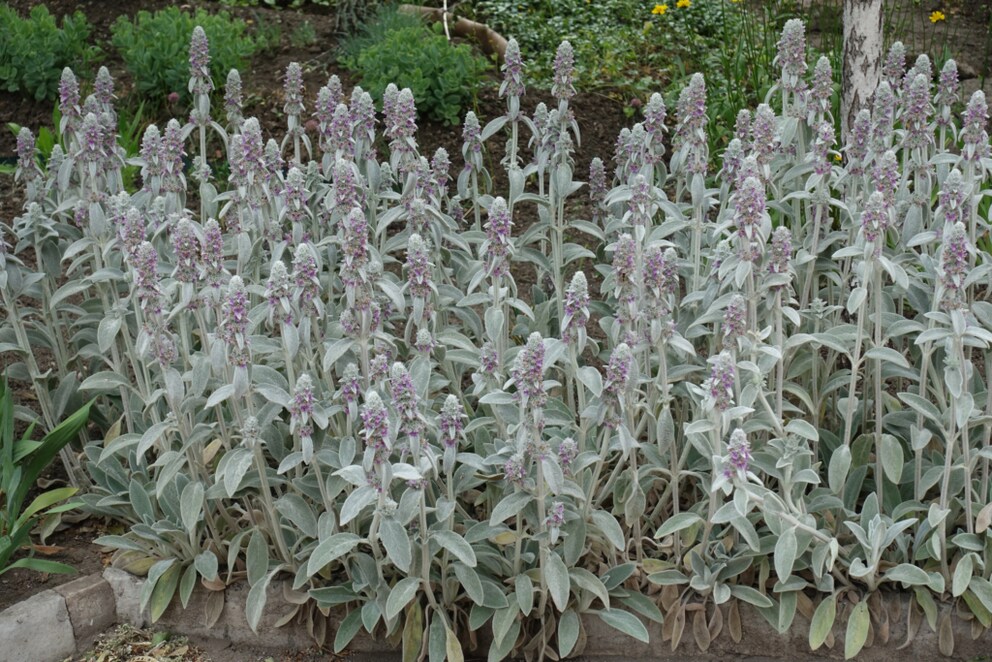
Lamb’s ear is especially notable for its silvery-haired leaves. These are also relatively thick and can store a lot of water, making the perennial a perfect companion in sunny and dry perennial beds. Even though the flowers of lamb’s ear are rather inconspicuous, the candle-shaped flower spikes can grow up to 30 centimeters high and are an underrated nectar source for bees and other pollinators.
6. Periwinkle
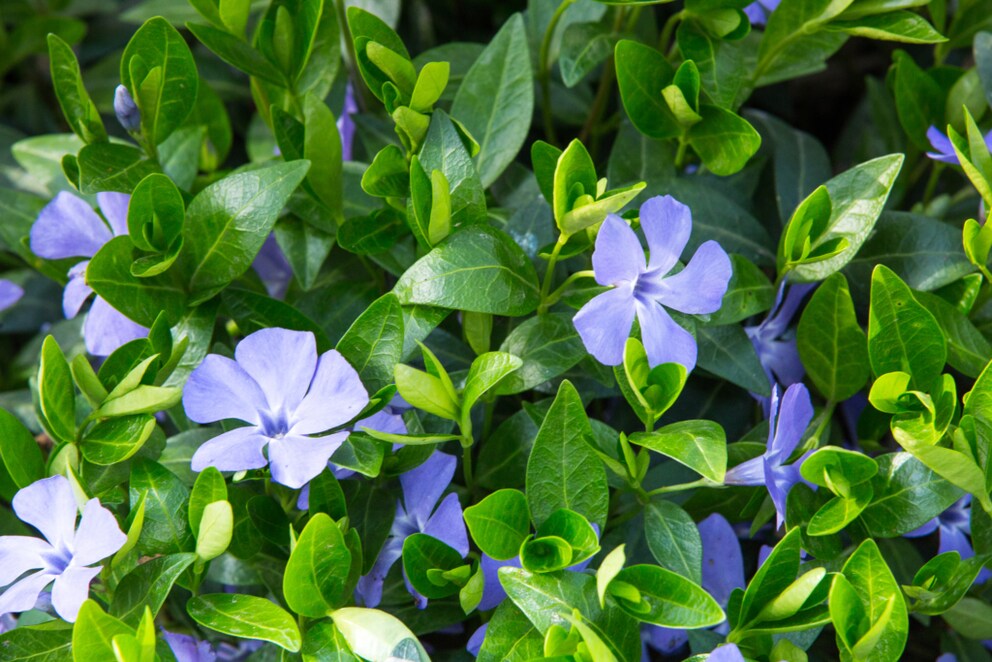
As the name of this perennial suggests, periwinkle bears green leaves all year round. In summer, attractive violet and bell-shaped flowers are added. Periwinkle is a popular ground cover, as it grows only a few centimeters high and quickly fills gaps in the bed.
The downside of these characteristics is that periwinkle can spread aggressively. If you want the perennial to grow only in a specific bed, you should limit its growth with a root barrier. Especially near fences, it can soon cause trouble with neighbors if periwinkle finds its way into their garden.