


August 12, 2025, 8:37 am | Read time: 2 minutes
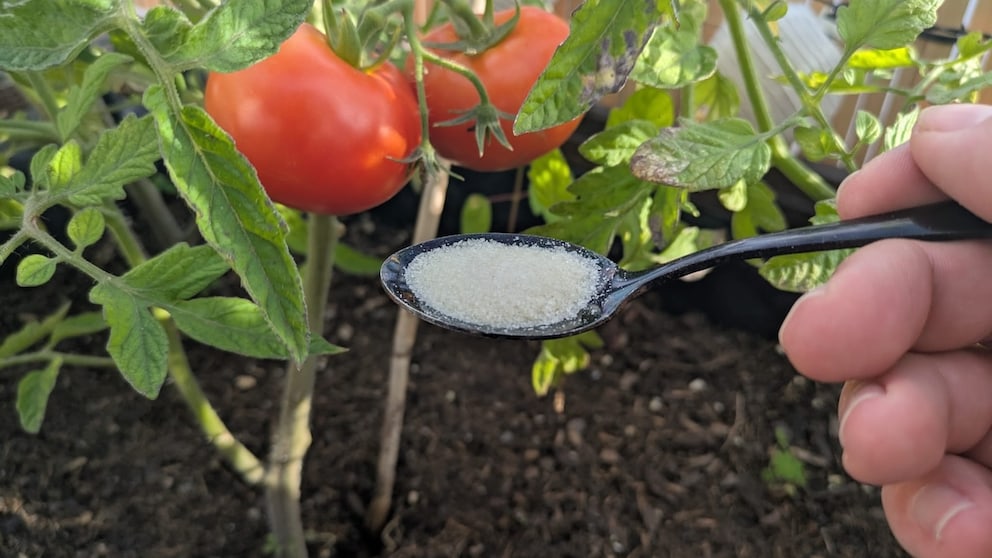
The internet is full of useful tips and tricks that make our lives easier. Unfortunately, sometimes a few bad ideas slip through. A new tip circulating online suggests fertilizing tomatoes with gelatin. Of course, it doesn’t have to be newly purchased gelatin; the idea is to use gelatin that has passed its expiration date instead of throwing it away. myHOMEBOOK was skeptical and consulted an expert.
Can You Fertilize Tomatoes with Gelatin?
“It’s actually a topic that sounds interesting at first glance but is rather critical upon closer inspection,” explains Sebastian Mühlemann from Baumschule Bauer in response to myHOMEBOOK’s inquiry.
Gelatin is made from animal collagen, which contains proteins with nitrogen, the expert explains. During microbial decomposition in the soil, ammonium can form. This is a form of nitrogen that plants can generally absorb, Mühlemann adds.
However, that’s precisely where the problem lies, the professional explains: “This process is neither fast nor reliable.” It’s important to note that it only involves ammonium. All other micronutrients and trace elements are missing, the expert points out.
Mühlemann offers a humorous comparison for better understanding: “You wouldn’t be thrilled with just a plate of semolina. It’s somehow cooler when it’s spaghetti, made from all the many components that this nutrient topic consists of. Nutrients are much easier to absorb when they are in the right ratio—when they occur together.”

Fertilize hydrangeas correctly for long and lush flowering

Is It Sensible to Use Yeast as Fertilizer?
Do Gelatin Residues Remain in the Soil?
The expert explains that how well gelatin can be broken down is highly dependent on the soil. “Without active soil life, little happens.” He also points out other considerations: “Gelatin can clump in the soil and disrupt aeration in the root area.
Additionally, expired gelatin tends to mold and emit an unpleasant odor, which can attract pests. The most important point is that tomatoes need not only nitrogen but also phosphorus and potassium—gelatin provides practically none of these.”
How the Expert Rates the Gelatin Trick
“I personally would advise against using gelatin as fertilizer,” Mühlemann reveals. “Not because it’s inherently harmful, but because it’s not sensible compared to other proven methods. There are many organic alternatives that are better balanced and have no unwanted side effects—such as nettle manure, coffee grounds, or good compost.” Alternatively, you can also use homemade compost tea instead of compost.