

May 2, 2023, 4:23 am | Read time: 4 minutes
In Germany, the diversity of insects is drastically declining. To prevent further decline, not only agriculture must take countermeasures–every individual can do something to combat insect extinction.
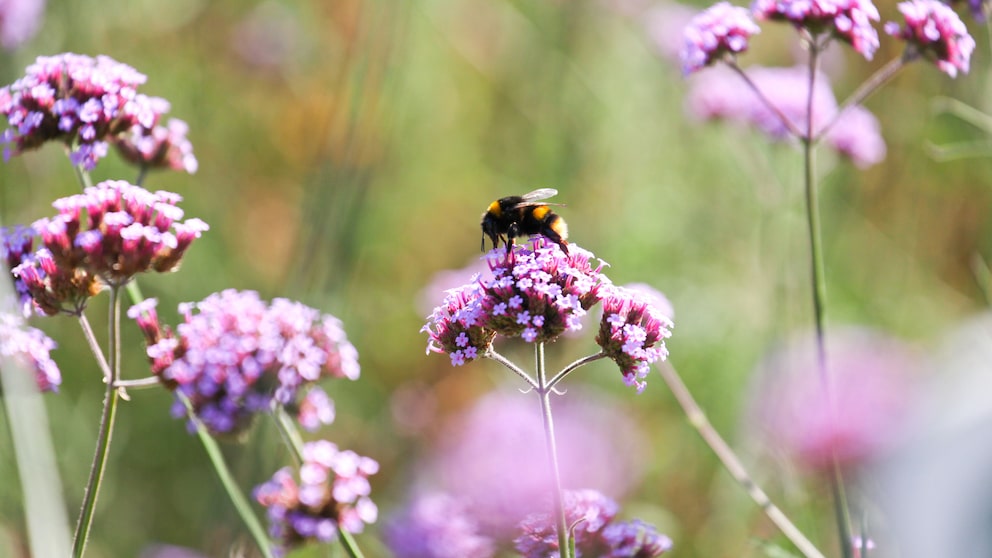
Insects such as wild bees and butterflies are indispensable for the ecosystem. As pollinators of wild and cultivated plants, they play an outstanding role in agriculture and thus in feeding the population. At the same time, a massive insect extinction is underway, even in nature reserves. A new research project led by the Nature Conservation Association of Germany (Nabu) found that a massive decline in insects in nature reserves, already documented in 2017, continues. “I feared it was the case, I hoped it wasn’t,” said project leader Gerlind Lehmann from Nabu. According to her, the project shows that the total mass of insects, which is directly related to species richness, has not recovered at all. Exact figures are to be published in the coming months.
Total Mass of Flying Insects Has Drastically Decreased
In 2017, a study by volunteer entomologists from the Entomological Society of Krefeld showed that the total mass of flying insects in parts of Germany decreased by more than 75 percent from 1989 to 2016. According to Nabu, this trend has not changed in recent years–the insect extinction continues.
The results indicate that a particularly large threat to insect diversity is the proximity of nature reserves to fields where insect-killing pesticides are applied. This has dramatic consequences for the animals and biodiversity. “The bee is systemically relevant,” said Konstantin Kreiser, a member of Nabu’s management.
Many people are now aware of the problem–and they want to help. Parents build insect hotels with their children, cities and municipalities sow colorful flower strips between roads, and nature conservation organizations offer tips for insect-friendly balconies and gardens.
Every Flower Box on the Balcony Helps Combat Insect Extinction
Do such small measures actually help against insect extinction? “Every flower box on the balcony is, of course, always helpful,” says Jürgen Gross, president of the German Society for General and Applied Entomology.
Especially in big cities, the effect of a large supply of native plant species should not be underestimated. Of course, you won’t save all bee species, but you do a lot of good for the insects. Moreover, such actions are also important for educating children about nature conservation: “What you don’t know, you can’t protect.”
For an insect-friendly garden, it’s important to plant many native plant species, such as bellflowers or viper’s bugloss. “But willows are also very important food sources, especially in spring when most wild bees are flying,” explains the biologist.

Fewer Birds in the Garden? Here’s Why
The “Black Hornet” Is Actually Called the Violet Carpenter Bee
Better to Avoid Ornamental Plants and Lawns
Many ornamental plants, on the other hand, are not usable for insects. These include rhododendrons or roses with double flowers that have no nectar. You should also avoid ornamental lawns and instead value a meadow with many different herbs.
Nesting aids like insect hotels are also a good and helpful measure, according to Gross–especially for wild bees, to prevent insect extinction. About half of the total 570 wild bee species in Germany are threatened.
“If you set up a nesting aid, you should build it yourself,” advises Gross. With ready-made models from the hardware store, the holes are often not well drilled. This poses a risk of insects injuring their wings when crawling in.
Gravel Gardens Hostile to Every Insect
Gravel gardens are an absolute taboo for the biologist. “They are hostile to every insect and bird and also create a poor climate in the city.” At high temperatures, the stones heat up and further warm the air. In several federal states and numerous municipalities, the creation of gravel gardens is now prohibited.
Because stones, concrete, and asphalt are obviously unappealing to insects, many cities are now upgrading. Green roofs on bus stops in cities like Hamburg and Bottrop are just one example.
Actions like these do indeed have added value for insects, as shown by an initial assessment from Hamburg. On just two green shelters in the Hanseatic city, 49 different wild bee and wasp species were detected last year. These included rare and endangered species as well as gold wasps, which had not been found in Hamburg before, it was reported.
With material from dpa