


June 23, 2026, 9:34 am | Read time: 4 minutes
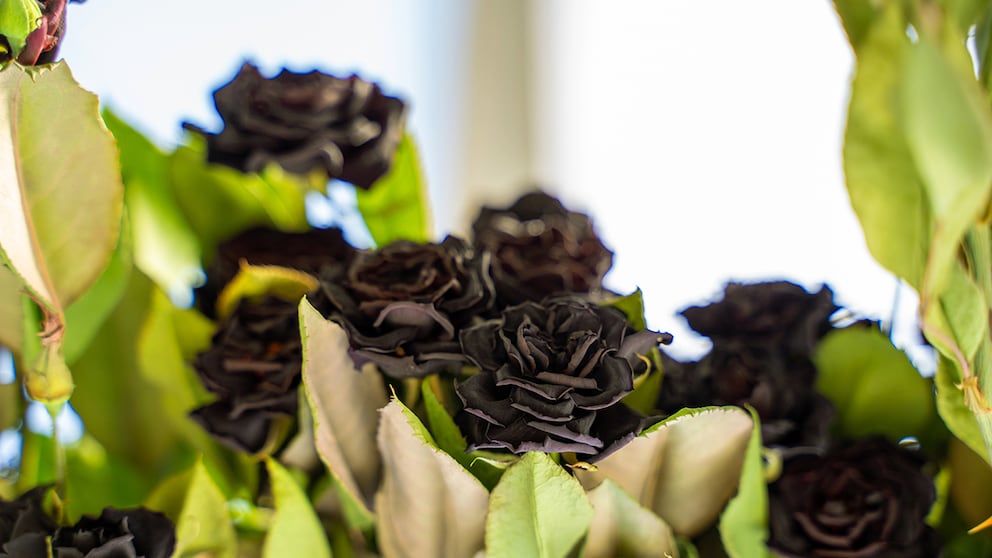
The nearly pitch-black roses of Halfeti appear mysterious, special, and almost unreal. For years, stories and legends have surrounded this extraordinary rose, often referred to as the only true black rose in the world. But what is really behind this botanical phenomenon?
A Rose That Appears Almost Black
The black rose—also called Karagül (Turkish for “black rose”)—originates from Halfeti, a small town in southeastern Turkey on the banks of the Euphrates. It is not actually a separate species of rose but a special variety of dark red roses. Only about five buds grow on a stem, not ten to fifteen as is often the case with classic red roses. The yield is therefore not very abundant, which makes the black rose special. What truly makes it unique, however, is the extraordinary coloring of its blooms. While the buds are dark red to almost black, the color of the blooms gradually changes and becomes somewhat lighter. Later, the blooms darken again and appear in a deep, dark red that almost turns black. Under certain lighting conditions, the rose actually seems completely black—a sight that impresses even experienced rose growers.
Each stage of the rose has its own color. The blooming period is very short, about two weeks in April and October.
A Legend Says …
In the past, roses grew in almost every garden. But in 1999, the government decided to flood the old town center of Halfeti and other surrounding villages to make the region more fertile. As a result, many residents had to relocate and left their roses behind.
Today, only the tip of an old mosque serves as a reminder of the flooding. The legend of the black roses begins here. Allegedly, the daughter of the Armenian architect of the mosque fell in love with a man from the other side of the river. Her father opposed the relationship and forbade it. The desperate couple saw suicide in the Euphrates as their only way out. According to the legend, the roses turned black from that point on.
Why the Roses Are Really Black
The extraordinary color is actually the result of a rare combination of climate, soil composition, water quality, and proximity to water. The soils around Halfeti have a special pH value, contain relatively high amounts of calcium and other minerals that influence the growth of the roses. Additionally, there is a unique microclimate: hot summer temperatures, the moisture of the nearby Euphrates, and the valley location of the town create climatic conditions that differ significantly from the surrounding area even in a small space.
Experts believe that the high concentration of anthocyanins—natural plant pigments—is also responsible for the extremely dark coloration.

What Rose Colors Mean

5 Plants for a Romantic Touch
Can You Plant the Black Rose in Your Own Garden?
When the same roses are cultivated in other locations, they usually develop only dark red or burgundy blooms. Just a few kilometers away, plants lose their characteristic color; according to reports, roses from the same seeds bloom red again about 50 kilometers outside of Halfeti. This makes the roses of Halfeti a true regional natural phenomenon.
Nevertheless, “black roses” are repeatedly offered in the market. In reality, these are usually other dark red cultivars. A completely black rose does not yet exist.
The unique coloring of the “original roses” from Halfeti is difficult to reproduce, as it is closely linked to the special environmental conditions of their homeland.
A Natural Wonder with Rarity
Although the black rose from Halfeti is technically not a truly black rose, it remains one of the most fascinating roses in the world. Its nearly black color, extraordinary origin, and the stories surrounding it make it a true legend.
For garden enthusiasts, it is an impressive example of how strongly location and environment can influence the appearance of a plant. And for many people, it remains above all one thing: one of the most mysterious roses that nature has produced.