


July 10, 2023, 9:09 am | Read time: 4 minutes
Wisteria is primarily known for its attractive bluish-violet flowers. However, some gardeners become frustrated when the hanging flower clusters fail to develop. myHOMEBOOK provides an overview of possible causes and solutions.
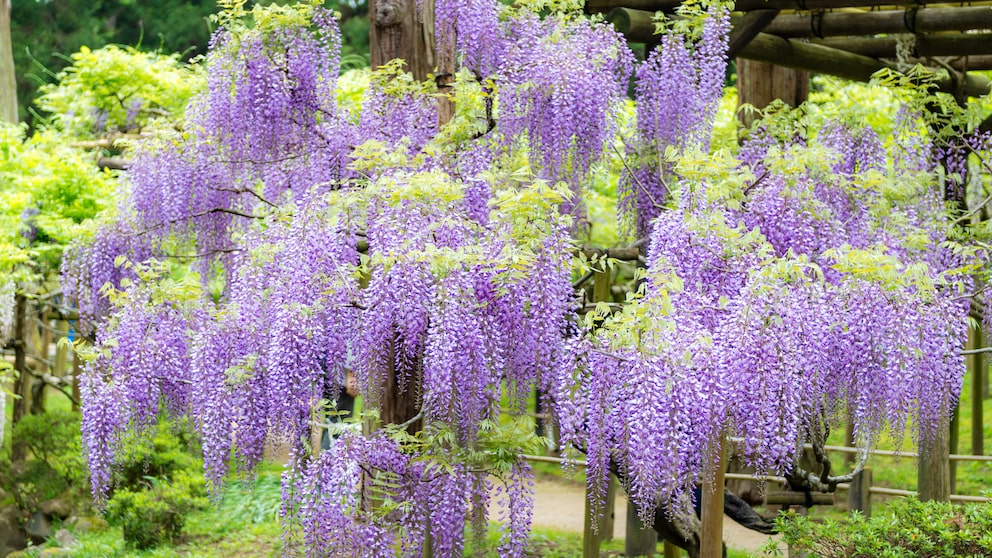
The wisteria is particularly popular in gardens or on balconies due to its spectacular flowers and climbing growth. With its fragrant, hanging flower clusters in various shades of blue and violet, wisteria creates a romantic atmosphere at entrances or over seating areas. The climbing plant can grow on pergolas, fences, or house walls, offering a blooming plant cover or wall. Even though the flowers (and all other parts) of wisteria are highly toxic, they are the highlight of the wisteria year. But what if the wisteria doesn’t bloom?
Wisteria Doesn’t Bloom – Causes and Solutions
Wisteria grows quickly and is also used in many public parks because it is easy to care for. Nevertheless, the pretty flowers sometimes take their time to appear. Possible reasons for this include:
Age of the Plant
Despite its rapid growth, wisteria usually needs a few years to mature and produce flowers. Young plants often bloom only after several years. Patience is required here, which is ideally rewarded with magnificent flowers.
Lack of Sunlight
Wisteria needs a lot of sunlight to bloom abundantly. If the plant is in the shade or does not receive enough direct sunlight, this can affect its ability to bloom. At least six hours of sunlight a day ensure stronger flower formation.
Improper Care
Wisteria relies on proper care to bloom beautifully. Over-fertilization, for example, can promote too much vegetative growth instead of flower growth.
Pruning
Wisteria must be heavily pruned twice a year to increase its flowering. Additionally, this helps contain the plant’s spread, as it grows quickly and can overgrow other plants. The side shoots should be heavily shortened after the first bloom in early summer. In the following spring, new shoots will have formed here, which should also be shortened again. A strong pruning of the entire plant is also possible. This should ideally be done at the end of February before the first leaves and shoots sprout anew. However, such a strong pruning can result in the wisteria blooming less in the same year.
Climatic Conditions
In some cases, the climate or weather conditions can affect flower formation. Extremely cold winters or late frosts can damage or kill the flower buds before they can open.
In general: If wisteria does not produce any or only a few flowers in one year, this does not mean it will be the same in the following years. Regular pruning, a little patience, and proper care are usually enough to be rewarded with plenty of flower clusters on the wisteria the following year.
Proper Care for Wisteria to Bloom Abundantly
Wisteria is one of the fast-growing and easy-to-care-for flowering plants. However, its flowering ability can be significantly increased with the right handling of the plant.
- Location: A sunny location with at least six hours of sun a day is ideal.
- Soil: The soil should be well-drained and offer good drainage. Wisteria prefers a slightly acidic to neutral pH.
- Watering: The substrate should be kept evenly moist, especially during the sprouting and flowering period. Waterlogging must be avoided, which is why well-drained soil is particularly important.
- Fertilization: Wisteria is regularly fertilized or supplied with compost in spring and summer. However, fertilizer from the garden center should only be applied according to the dosage instructions. Just like too much water, wisteria also poorly tolerates over-fertilization and may grow excessively instead of developing magnificent flowers.
- Climbing Support: To climb evenly, wisteria needs trellises and climbing aids. This can be a pergola, a high fence, or a trellis on a house wall. When pruning, thicker branches should be regularly tied to the climbing aid. Otherwise, the thick shoots can wrap around smaller ones and partially suffocate them.
- Containment: Under optimal conditions, wisteria can grow very vigorously and should therefore be heavily pruned every few years. A root barrier prevents the plant from spreading uncontrollably. Collecting the seeds can also help contain invasive spread–especially since wisteria seeds are the most toxic part of the plant and should be kept away from children and pets.
- Container Cultivation: Wisteria can also thrive in a large container on the balcony, creating an attractive privacy screen. However, it will eventually face space issues in the relatively small pot compared to the plant size and should be planted outdoors.