


July 25, 2023, 8:58 am | Read time: 4 minutes
Using wind power for your home to save on electricity costs? Yes, it’s possible–with a so-called “small wind turbine.” However, much like larger wind turbines, numerous myths circulate online. Manufacturers also entice with advertising promises. A consumer advocate sheds light on the matter.
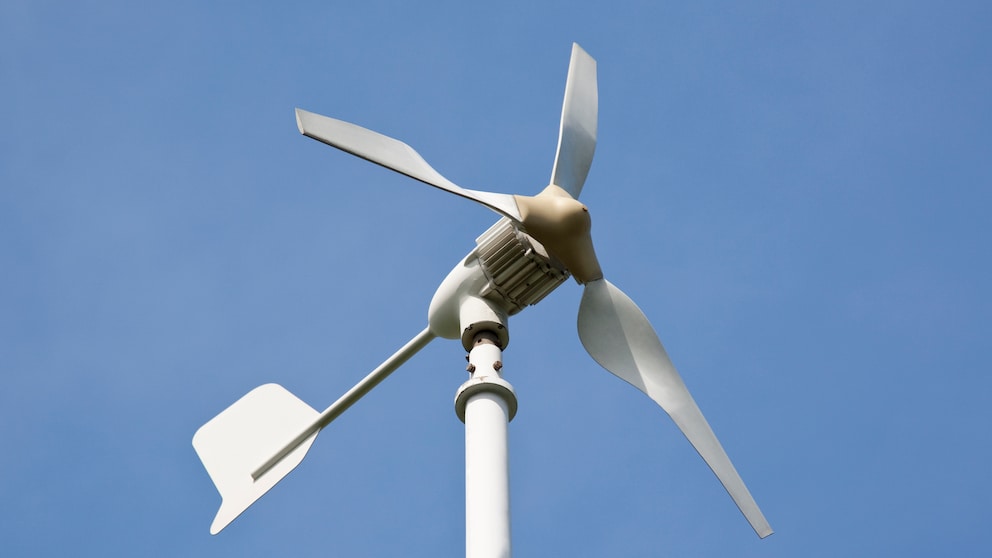
Many consumers are interested in generating affordable and environmentally friendly electricity themselves, such as to charge an electric car or power their own household. Established technologies like rooftop photovoltaic systems or balcony solar panels that harness solar energy already exist. Additionally, the market offers so-called small wind turbines. However, numerous misconceptions surround these mini wind turbines.
Are Mini Wind Turbines Worth It for Power Generation?
“Unlike large rooftop photovoltaic systems or plug-in solar devices, these small wind turbines are currently suitable in very few cases. Particularly regarding their economic viability and technology, there are several misleading advertising promises in the market,” says Stefan Hoffmann, an energy expert from the Consumer Center NRW. What are the most common misconceptions about these mini wind turbines?
1. Misconception: A Mini Wind Turbine Generates as Much Power as a Photovoltaic System
This statement is false. The amount of electricity generated is simply too low under the wind conditions prevalent in residential areas. Market-standard small wind turbines cannot produce significant power output due to their low height. Additionally, turbulence near buildings prevents sufficient wind from reaching the rotor blades.
Read more: When a Small Wind Turbine in the Garden Is Worthwhile for Producing Your Own Electricity
2. Misconception: A Small Wind Turbine Can Be Sensibly Installed on the Roof
This is also one of several misconceptions about mini wind turbines. Installing a small wind turbine on the roof poses the risk of permanent dynamic movements, which can lead to damage to the roof structure and building envelope. Additionally, it may cause inconvenience to neighbors, as vibrations and rotor noise can lead to significant noise pollution.
If consumers still wish to use a small wind turbine, it is advisable to ideally install and operate it on a mast on their own property. This can largely avoid potential issues regarding building structure and noise development.
3. Misconception: The More Power in Watts, the Better
This statement is also incorrect. The wattage alone provides limited insight into the potential annual energy yield. The rotor diameter is significantly more important, as it has a major impact on the expected power output. It should be noted: A double rotor diameter results in a fourfold larger harvest area.
Nevertheless, a photovoltaic system on the roof could generate a similar or even greater amount of electricity with a comparable area. This occurs with a significantly lower investment and without dynamically stressing the building structure.
4. Misconception: You Can Trust the Manufacturers’ Promises
One should be cautious here. The calculated energy yields often rely on optimistically good wind speeds, which are rarely found in residential areas. Additionally, many offered wind turbines lack a performance curve measured by independent institutions. Interested consumers should therefore only consider systems with a correspondingly measured performance curve. It is advisable to also gather information about a reference location in the region to better assess the expected yield over the entire year.
5. Misconception: Advanced Technology Doesn’t Have to Be Expensive
This statement is also currently one of the misconceptions about mini wind turbines. While there are numerous advanced and reliable small wind turbines on the market, they reliably serve for many years on ships, mountain huts, or similar isolated situations. However, such models are still too expensive to be economically viable for the average home. The currently very inexpensive offers, mainly found in online shops, are often not technically advanced and usually not durable enough to meet the long-term expectations of interested consumers.