


November 25, 2026, 10:33 am | Read time: 6 minutes
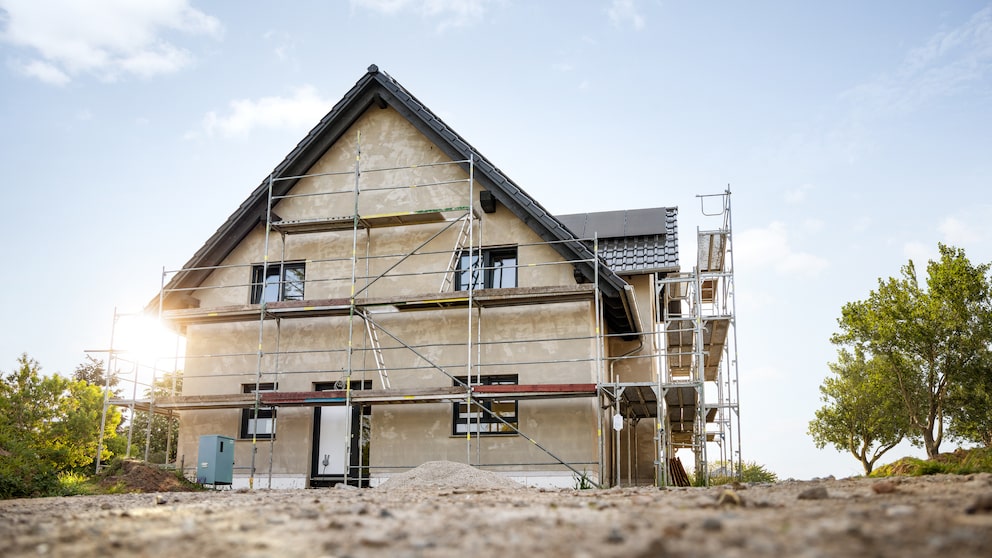
The foundation is laid, the walls are rising, and curiosity about the construction is growing. Many homeowners prefer to visit their construction site every day. Some construction companies dislike this and refer to the contract. Who is right? myHOMEBOOK asked attorney Manuela Reibold-Rolinger.
Follow myHOMEBOOK on WhatsApp now
Can Homeowners Enter the Construction Site?
Homeowners who are not directly involved in the construction might wonder if they are allowed to enter the site. “Basically yes–but not without restrictions,” answers Manuela Reibold-Rolinger, a specialist in construction and architectural law and a member of the Construction and Real Estate Law Working Group at the German Bar Association (DAV). “Anyone having a house built on their own property is naturally allowed to check on the progress and inspect the work.”
The reason for the restriction is obvious. Open stairwells, unsecured ceilings, or scattered materials can quickly lead to serious accidents in the shell construction. Homeowners should adhere to safety regulations and coordinate their visits with the construction management.
The law protects the rights of the property owner. How inspections are conducted is regulated by the construction contract. The construction management ensures safety.
Also interesting: Technical terms in construction contracts that owners often misunderstand
Entering the Construction Site: Safety Rules Yes, Blanket Ban No
Safety does not justify every rule. A safety regulation is different from a general prohibition on entry. While the crane is swinging or concrete is being poured, a homeowner has no business in the shell construction. “It is unacceptable, however, if a construction company wants to prevent any inspection,” the specialist lawyer clarifies.
Such clauses often appear in the fine print of construction contracts, according to her experience. A blanket prohibition on entry can be legally invalid. A special case applies when buying from a developer who builds on their own land and sells the house along with the land. Until then, the land usually belongs to them. Buyers should secure a right to inspect in the notarized contract.
Reibold-Rolinger offers a tip to all other homeowners. “Agree in writing that you may enter the construction site with a chosen expert after timely notification.”
Who Is Liable for an Accident on the Construction Site?
Even with a guaranteed right of entry, walking through the shell construction remains risky. After a fall or damage, liability depends on the perpetrator. “There is no blanket answer,” the construction law expert limits.
Construction companies secure their work areas against avoidable dangers. If a homeowner is injured by an unsecured floor opening, the company may be liable. It is different if someone climbs a blocked scaffold or ignores clear warning signs. Then shared liability may apply.
Is the Duty to Secure on the Homeowner?
The potential danger of such visits is illustrated by a case before the Federal Court of Justice (BGH). A visitor fell about 2.60 meters through a non-load-bearing ceiling during a shell construction inspection and was seriously injured. The judges determined which security obligations lie with the construction company and which with the homeowner (Judgment of December 11, 1984, Az. VI ZR 292/82).
Even with property damage, the cause matters. If a homeowner damages already installed components, they may be responsible. Reibold-Rolinger advises against allowing children and unaccompanied visitors on the construction site. Before construction begins, insurance coverage should be checked. Important are homeowner liability insurance for third-party damages and construction insurance for damages to the emerging house.

What to Consider When Hiring Contractors

Defects in the house can be reported for five years
Acceptance: When the Burden of Proof Shifts
With their site visits, homeowners primarily want to detect defects early. Who proves a defect depends on the timing. Until acceptance, the construction company usually demonstrates that the work was done according to the contract. With acceptance, the homeowner confirms that the house is essentially completed as agreed. “Acceptance is not just a handover of keys. It is a legal turning point with significant consequences,” emphasizes Reibold-Rolinger.
Afterward, the burden of proof typically shifts. Now the homeowner must prove the defect and its origin before acceptance. It is sufficient if the cause was already present at that time. If moisture appears on a wall a year after moving in, this becomes a hurdle. A similar case was heard by the BGH in 2019. After sealing work on a terrace, it was disputed whether the defect existed at the time of acceptance (Judgment of February 7, 2019, Az. VII ZR 274/17).
Be Vigilant During the Construction Phase
The specialist lawyer draws a conclusion for the construction period. “Do not wait until acceptance to inspect,” warns Reibold-Rolinger. Critical construction phases should be checked beforehand by an independent expert. What disappears behind plaster, screed, or tiles can often only be examined later at great financial expense. During acceptance, every visible defect should be recorded in the protocol. Homeowners should explicitly reserve their rights due to these defects (§ 640 BGB). For significant defects, the future homeowner may refuse acceptance, but not for minor ones. The expert from the Construction and Real Estate Law Working Group recommends never accepting a house under time pressure and bringing your own expert.
The origin of a defect is usually not stated in the protocol. Homeowners do not initially need to explain the technical error. A specific description like “Water enters the basement after rainfall” is sufficient. If a general contractor builds the entire house from a single source, they are usually responsible for the overall performance. They cannot simply blame a subcontractor’s error. If homeowners have individually commissioned the trades, it must be clarified which company is responsible for the defect. “Document defects immediately with photos, date, and detailed description,” says Reibold-Rolinger. Premature repairs without securing evidence should be avoided.
Also interesting: What owners need to pay attention to during construction acceptance
What Should Be in the Construction Contract Before Starting
Many of these disputes can be mitigated before the first shovel hits the ground. A good construction contract is, according to Reibold-Rolinger, the most important foundation for a conflict-free home build. The lawyer advises private homeowners to consider these questions.
- Can homeowners and their experts inspect the site after notification?
- Is an inspection possible before pipes and seals disappear behind plaster or screed?
- Who documents construction progress, technical inspections, and defects?
- Who secures the site, and what insurance is in place?
- Is a formal acceptance with a written protocol and own expert agreed upon?
The final draft should be reviewed by a specialist lawyer for construction and architectural law before signing. “Early legal advice is generally much cheaper than a lengthy construction dispute,” concludes Reibold-Rolinger.