


May 26, 2023, 3:09 am | Read time: 4 minutes
For greater energy efficiency, buildings are usually insulated with Styrofoam or mineral wool. However, architects from southern Hesse source their insulation not from the hardware store, but from the farm.
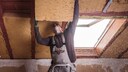
A craftsman carries a bale of straw through a hall of the Middle Mümling Wastewater Association in southern Hesse. But he doesn’t plan to lay the straw in stables for horses or cows; he’s building a house. His climate-friendly building material comes from the local field and the nearby forest.
Local Building Material Protects the Climate
On the site, a highly insulated, greenhouse gas-storing, almost fully recyclable three-story building is being constructed with straw. “We can build at the same cost with maximum climate protection,” says Tilman Schäberle from the architecture firm “Shakti Haus” in Bad König, comparing it to conventional construction methods. “We definitely won’t end up more expensive.”
In times when insulation is a common topic in construction due to energy efficiency, Schäberle and his partner Susanne Körner get their insulation from the farmer. They have designed and built over a dozen of these buildings in recent years. However, this is their first public building. There is potential in halls, schools, or kindergartens. And: “We don’t have to reinvent the wheel; it’s been around for more than 100 years,” says Körner.
Also interesting: Is Building a House Without a Basement Really More Sustainable?
Straw Bale Construction Emerging from the Niche
Amid discussions about energy-saving potential, densification, and the lack of affordable housing, cities are also turning to sustainable construction. Recently, Darmstadt announced an award. The “Climate Award for Sustainable Construction” includes topics such as energy efficiency and sustainable building materials.
“The developments of the last five to ten years show that straw bale construction is slowly moving out of a niche,” says Adina Lange from the German Straw Bale Building Association. In Lüneburg, for example, multi-family houses and a public daycare center are being realized.
However, the majority of builders are private. This could change in the future, as these houses offer an excellent climate balance. According to the association, there are currently around 1,200 houses of this type in Germany, with about 50 new ones added each year.
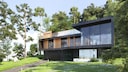
The Features of a Hybrid House
How Effective Is Insulation for the Climate and Your Wallet?
Renewable Resources from the Neighborhood
“We have had sustainability concepts developed,” says Gunnar Krannich, managing director of the Michelstadt Wastewater Operations. Sustainability has long been a topic, and they specifically sought architects who have already made a name for themselves in straw bale construction. The project is sustainable and regional. The wood for the framework comes from the Michelstadt forest. The straw, pressed into blocks rather than round bales, comes from a farm in Höchst in the Odenwald–renewable resources from the neighborhood.
For the building, a total of around 120 cubic meters of wood from the local forest will be used for exterior walls, interior walls, roof, ceilings, facade, bracing, and cladding of the interior and exterior walls, along with about 1,200 straw bales. The unit price is between 2.50 and 3 euros. “These are significant quantities involved,” says Körner about the planned multi-story office and operations building with a usable area of 310 square meters.
Also interesting: Rammed Earth–How an Ancient Building Material is Being Rediscovered
As Little Waste as Possible
According to Krannich, they also aim to produce as little waste as possible. “We leave little behind.” Fifty percent of the waste is generated during construction. Well under ten percent of the building materials are not from renewable resources, such as screws, steel beams, or aluminum parts.
According to Körner and Schäberle, they are building exclusively with local products for the first time. Due to the straw blocks, they had to contact several farmers. During construction, the walls are pre-produced in a hall and then assembled at the planned site in a kind of prefab construction.
Pre-producing in the hall is also necessary to keep the straw dry. The pre-produced components are finally sealed airtight and windproof with panels. And Körner also dispels other potential fears: “The straw bales are free of mice or other crawling animals.”
with material from dpa