


March 19, 2024, 3:37 am | Read time: 2 minutes
Over time, demands change. This is also true for apartments. Today, those moving into an older apartment often want larger rooms or to combine several rooms. Knocking down a wall might not be the worst decision—or is it?
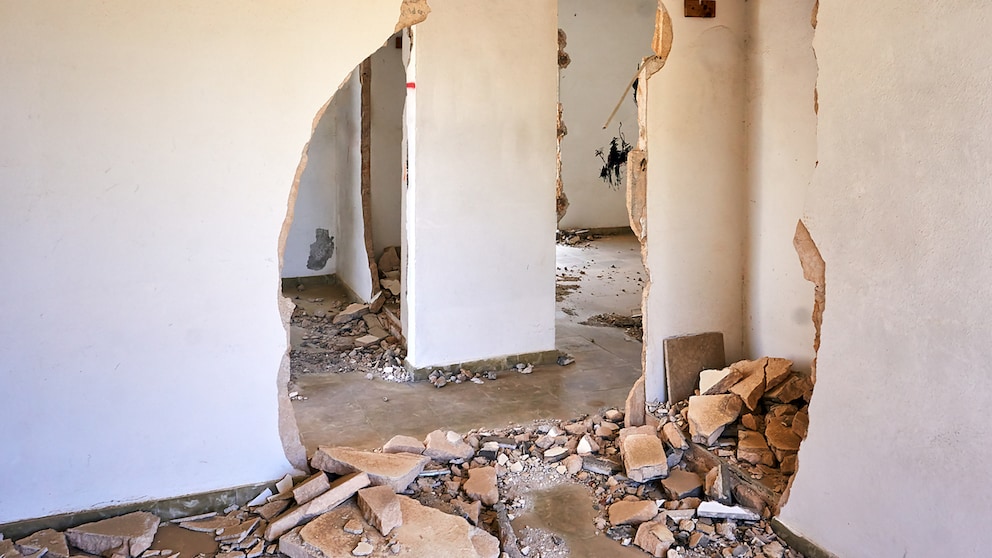
If you’re planning to tear down walls in an older building, you should not do so without thorough research. Ideally, you should consult a professional. Even if it’s just a small wall a few centimeters thick, DIY enthusiasts should not take matters into their own hands. The Association of Private Builders (VPB) points this out. In the structural system of aging houses, even seemingly non-load-bearing walls can play an important supporting role.
Why You Should Consult Experts with Experience in Older Buildings
“With old houses, you have to assume that each generation of owners has made more or less expert renovations and changes over the years,” explains Marc Ellinger, VPB construction expert. The structural system of these buildings would have adapted to such interventions. Over time, walls that were not supposed to bear loads may have become supporting walls.
Before removing or breaking through walls in an older building, you should definitely consult a structural engineer with experience in older buildings, according to the VPB. This is the only way to really ensure that the planned measure does not lead to serious damage to the structure.
Related: Decorating Tips for the Typical Features of an Older Building
Caution in Earthquake Zones
Special caution is advised for renovation plans in earthquake zones. There, even the non-load-bearing walls of a house serve to brace the structure. If you remove these walls from an older building completely or in parts, the earthquake safety and thus the stability of the house may no longer be guaranteed.
In Germany, according to the Federal Office of Civil Protection and Disaster Assistance, earthquake risk areas are located in the Cologne Bight, south of Tübingen in the Swabian Jura, in the southern Upper Rhine Graben, and around Gera.
With material from dpa