


December 4, 2025, 5:55 am | Read time: 5 minutes
The old tiles in the bathroom no longer match current tastes? No problem—tiles can be painted. However, there are some differences compared to painting a wall with emulsion paint. What should you pay attention to?
What paint is suitable for tiles? How should you prepare the tiles? And what about the grout? If you want to paint the tiles in the bathroom or kitchen a new color, several questions quickly arise. You should also plan enough time for the project—especially for the paint’s drying time. It’s definitely faster and more cost-effective than retiling the entire bathroom. Important for renters: Be sure to talk to your landlord beforehand and ideally get written permission. Additionally, ensure good ventilation during and after painting, as tile paint often has a strong odor.
Overview
Tile Painting—Proper Preparation
When painting tiles, proper preparation is crucial. Mistakes from sloppy work quickly become visible and are not as easily corrected as with wall painting. Consider the following points in advance:
- The right paint: Tile paint is the way to go. There is a wide range of products available in various colors, glossy or matte. High-quality paints combine primer and topcoat in one can, sometimes even with a sealant. Others consist of multiple components. A can of paint costs around 30 euros. Important: Be sure to follow the instructions on the can!
- Painting over grout: In many cases—except for silicone grout—you can paint over it with suitable tile paint, although this is often not desired (except perhaps with white tiles). An alternative is to use grout tape from the hardware store to cover the grout. You then remove the tape afterward.
- Scraping out grout: Other options are a bit more complicated. Silicone grout cannot be easily painted over; you must first scrape it out with a grout knife and then regrout the tiles. It’s a lot of work but delivers the best results.
- Replacing damaged tiles: If the tiles are old, cracked, or loose, you should replace them.
- Taping: Before painting, tape off all areas where you don’t want paint, just like with regular wall paint. Painter’s tape, fleece, or foil works well for this.
- Sanding tiles: Depending on the tile paint, you may need to sand the tiles first to ensure the paint adheres better and doesn’t chip. A small sander with fine grit (220 or more) is best for this.
- Cleaning tiles: For the paint to adhere, the surface must be free of grease and dirt. It’s best to clean thoroughly beforehand.
What Equipment Do You Need?
Once you’ve found the right tile paint, you’ll need the appropriate materials to paint the tiles. This includes:
- Sponge and cleaning agent (possibly a special grease-dissolving cleaner)
- Cloth to remove dust from tiles
- Painter’s tape for taping
- Grout knife if you need to remove silicone grout
- Gloves
- Painting set (including roller, brush, tray, and grid)
- Fine sandpaper and sander
Note: Some tile paints also require a primer for better adhesion. Consider this in your planning—or choose a product that doesn’t need a primer. The same goes for sealing.
Tile Painting—Step by Step
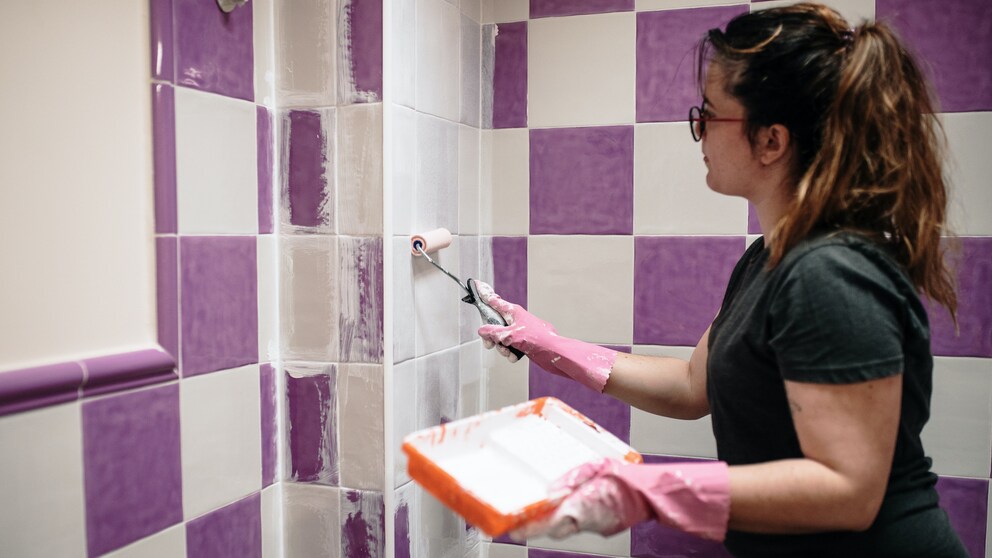
The actual painting is only part of the work and comes after preparation is complete. The tiles should now be free of grease and dirt, and the edges should be taped. Here’s how to proceed with painting:
- Thoroughly stir the tile paint: Especially for cans that combine multiple components like primer or sealant, mix the paint well.
- Paint wet-on-wet: This helps avoid visible paint lines and creates a harmonious overall look. It’s best to work area by area. Use a paint roller for even application. If painting the grout, a paintbrush is suitable. Remove the painter’s tape while the paint is still wet to prevent it from peeling off with the tape.
- Apply additional coat(s): Often, one coat isn’t enough. Two coats already provide a clean result, but more are possible. Let the first coat dry thoroughly, which can take several hours; it’s best to let it dry overnight. Follow the instructions on the can closely.
- Let it dry: The paint reaches its final hardness only after a few days, depending on the application. During this time, avoid contact with water. Ensure good ventilation!
- Apply sealant: To protect the paint layer, you can apply a sealant. Use a product from the same manufacturer to ensure compatibility. Some paints already include a sealant.
- Regrout: If you previously scraped out the old silicone grout, you can regrout last. Do this only after the paint layers have fully cured.

Covering old tiles in the bathroom in 8 steps
How to Lay Tiles on a Wooden Floor
What Are the Disadvantages of Painting Tiles?
First, be aware that painting tiles in the kitchen or bathroom is not a task for an afternoon—or likely even a weekend. Consider the following disadvantages:
- In a rental situation, the landlord must be involved, as it is their property, and the paint cannot be removed.
- This is also a disadvantage: You should be sure of your color choice, as the result cannot be undone.
- Upon close inspection, you’ll notice the tiles are painted. The surface is not as smooth as untreated tiles.
- Often, the grout is also painted if you don’t want to leave it out or scrape it out. This can lead to an unusual result.
Tip: You don’t have to paint over old tiles completely. You can also enhance them with other, simpler methods.
What to Consider When Painting Floor Tiles?
If you want to paint floor tiles, consider that they are subject to special stress. Therefore, choose an epoxy-based paint, as it is highly resistant to foot traffic. Additionally, be sure to seal the floor with a protective layer. Otherwise, the process is the same as painting wall tiles.