

January 11, 2023, 4:29 am | Read time: 5 minutes
Anyone looking into energy saving will quickly come across the tip for hydraulic balancing of the heating system. For many homeowners, it will soon be mandatory.
Large multi-family homes with gas heating must have their heating systems inspected and hydraulically balanced this year. Smaller residential communities will follow in 2024. This is a one-time requirement, but it’s worth planning ahead. Real estate experts recommend linking it to another mandatory appointment or the usual heating maintenance. This saves costs.
Table of Contents
What is hydraulic balancing?
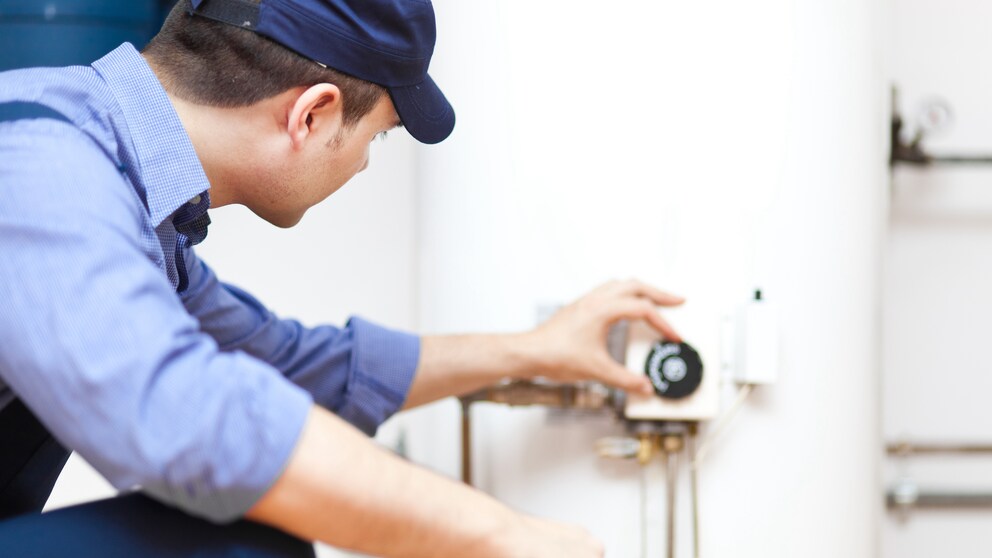
In this process, a professional determines how much heat output is needed to heat the living spaces of a house. Based on this, the necessary water volume of the heating system and the optimal flow temperature are set.
Additionally, the pump performance and the necessary resistances in the heating circuit are calculated. This ensures that the circulation pump delivers exactly the required amount of water to and from the radiators. If too much or too little water flows, not all rooms in the house will be evenly warm. As a result, colder radiators are turned up more, causing unnecessary energy consumption.
The process takes several hours, depending on the size of the system, and may even require a break over two days for calculations.

Who is required to have it done?
Many homeowners or owners of multi-family houses are affected. A regulation requires large multi-family houses with gas heating to have an inspection and hydraulic balancing of their heating system conducted this year. Smaller residential communities will need to comply by 2024. This is a one-time requirement, but it’s worth planning ahead. Real estate experts recommend linking it to another mandatory appointment or the usual heating maintenance. This saves costs.
A regulation from the German Federal Gazette requires that apartment buildings with ten or more units must have a heating inspection by September 30, 2023. For residential buildings with six to nine units, the deadline is September 15, 2024.
https://oembed/myhomebook/affiliate/294c761518230a865181720543a8de99d744afd283fe597699044ac951da27c9/8e6e2b30-0677-421d-83d2-e1e4481878f8/embed
The goal is to check whether the heating system has been optimized and whether it has already undergone hydraulic balancing. If the heating inspection reveals deficiencies, the system must be optimized, according to the Future Old Building information program, funded by the Ministry of the Environment, Climate Protection and the Energy Sector Baden-Württemberg.
If not, a supplementary appointment is required by the previously mentioned deadlines, according to Zukunft Altbau.
Advertisement: Is a heat pump worth it for my house?
When is the best time to have the inspection and balancing done?
The deadlines are still several months or more than a year away. Nevertheless, Zukunft Altbau advises planning ahead and combining appointments now.
Even the consumer protection association Wohnen im Eigentum recommends combining appointments to save on travel costs and time. This is not mandatory, as the balancing also involves the radiators, which are considered the private property of individual parties.
For one, to save costs. If the heating inspection is carried out during an already scheduled appointment, the effort would be in the range of 50 to 150 euros. If done separately, it could be more expensive.
Advertisement: Heat pump solutions for multi-family homes – costs that pay off
What should I consider when scheduling an appointment?
The heating inspection should not be confused with a heating check, which goes a step further and is not mandatory. During the heating check, professionals inspect and document the entire heating system, providing more precise results. However, the check often leads to the same optimization measures as the heating inspection.

Replace outdated circulation pumps and save up to 90 percent on electricity
Heat Pump in an Apartment Building? The Most Important Questions and Answers
What are the benefits of hydraulic balancing?
Energy consumption for heating radiators can be reduced by hydraulic balancing by up to 15 percent, according to the “Intelligent Heating” portal of the VdZ – Building Services Association. Zukunft Altbau estimates a 10 percent reduction, while the Consumer Association Energy Advisory Service estimates savings of up to five percent.
The Optimus study by the German Federal Environmental Foundation demonstrated that, on average, all buildings can achieve a savings potential of seven kilowatt-hours per square meter of space per year.
Is balancing worth it for smaller buildings?
In terms of energy savings, yes. Financially, at first glance, no. The simplest version of hydraulic balancing, which involves calculating and adjusting the system, can cost around 1,200 euros for smaller buildings, according to Frank Hettler. Additional costs may arise for modifications, such as replacing individual radiators or installing underfloor valves to adjust the water volume.
For buildings not required to undergo hydraulic balancing, there is currently government funding available for the measure. Through the “Heating Optimization” program at the Federal Office for Economic Affairs and Export Control (Bafa), you can get 15 to 20 percent of the costs for such measures to improve heating efficiency reimbursed upon application.
Also interesting: Is a heat pump worth it for my house?
https://oembed/myhomebook/affiliate/d1533e180c29ba62f37cbdf303a8de99d744afd283fe597699044ac951da27c9/8e6e2b30-0677-421d-83d2-e1e4481878f8/embed