

August 13, 2026, 4:47 am | Read time: 7 minutes
Owning a house or apartment can be a sensible and lasting investment, especially with rising real estate prices and high demand. Those looking to further increase the value of their property often consider various renovations before selling. However, not all of these will boost the property’s value. In fact, some involve significant legal effort—and sometimes even unattractively high costs for the buyer. myHOMEBOOK presents four renovations that do not necessarily increase the sales value for owners.
4 Property Renovations That Hardly Pay Off When Selling
Not every owner considers selling the property again when purchasing it. However, when the time comes, the question of increasing the property’s value through renovations may arise. Those who buy properties for financial reasons to renovate and sell them also sometimes consider which renovations could yield a higher profit upon sale. myHOMEBOOK consulted real estate agent and mortgage broker David Gramzow. He often encounters owners who overestimate their property’s value due to supposedly lucrative renovations. But the reality is often different.
1. Sauna and Wellness Area
A sauna or wellness area is often found in significantly larger and more expensive properties. While both sound appealing in theory, they are less worthwhile in a house or apartment.
“I regularly see sauna and wellness areas as a ‘builder’s dream that never arrives.’ Owners often calculate with a significant increase in value, but realistically, it hardly counts in the sale—in the worst case, the space even seems like wasted living area.” Attorney Nicole Mutschke adds that energy costs and maintenance can often be negative points in sales, potentially deterring buyers.
A small sauna for your own house or apartment is available for retrofitting from various providers. Prices start at over 2,000 euros and have no upper limit. Even though these costs are only a fraction of the property’s price, it’s important to carefully consider whether this relaxation option will actually be used. Those planning to build an entire sauna area should think carefully. David Gramzow explains: “With an investment of 20,000 euros in a sauna area, you often see only 2,000 to 4,000 euros of that reflected in the sale price, if at all.”
2. Balcony or Conservatory
According to attorney Nicole Mutschke, a balcony or conservatory extension is a common renovation for single-family homes and condominiums. No wonder, as they promise additional living and usable space, more light, and, depending on the design, a certain form of luxury. What many don’t consider: Such an extension requires a permit. If no permission is obtained from the relevant building authority beforehand, an expensive dismantling may be necessary. Buyers take this risk if no confirmation from the authority is available at purchase.
Another point sellers should consider is the setback regulation on the property. Boundaries to neighboring properties must be strictly observed. Otherwise, the neighbor can also veto the construction. Here, too, a legal conflict can lead to dismantling and additional costs, as a ruling showed a few years ago.
On November 5, 2020, the Administrative Court of Karlsruhe ruled that an owner had to dismantle his self-built two-story conservatory. His neighbor had only agreed to the construction of a one-story conservatory, which is why the authority refused the permit. When the owner built it anyway, he was supposed to dismantle it. Instead, he tried to justify the glass extension as a garage in court, which was rejected. According to the administrative court, a glass extension is not considered a garage.
Important: For condominiums, caution is also advised. A balcony, for example, visibly changes the exterior of the residential building and can affect the property of other residents or cause shading issues if built incorrectly.
3. Photovoltaic System or Balcony Power Plant
An investment in sustainability should surely be reflected in the price, right? Generally, yes. However, sellers should note that this renovation depends on the location, construction, and, of course, the economic return. Additionally, a photovoltaic system may not provide any added value for the buyer, as there is no legal right to freedom from shading. If the system is built in such a way that in a few years a neighbor’s tree or the house next door causes shading, the owner may face a price-reducing argument rather than a clear increase in value when selling.
In 2022, the Higher Administrative Court of North Rhine-Westphalia ruled that photovoltaics do not have priority over permissible construction. The case involved a preliminary decision for the construction of a daycare center, which adhered to the permissible setback limits according to the development plan. The neighbor did not want to accept the shading, but the court decided otherwise.
It is also important to note that a balcony power plant on the balcony of a condominium is considered an external structural change affecting the so-called common property. According to the Condominium Act (§ 20 WEG), such changes must be voted on at a homeowners’ meeting. According to a ruling by the Federal Court of Justice in 2025, this renovation is a change to the visual appearance of common property.
4. Pools and Large Terraces
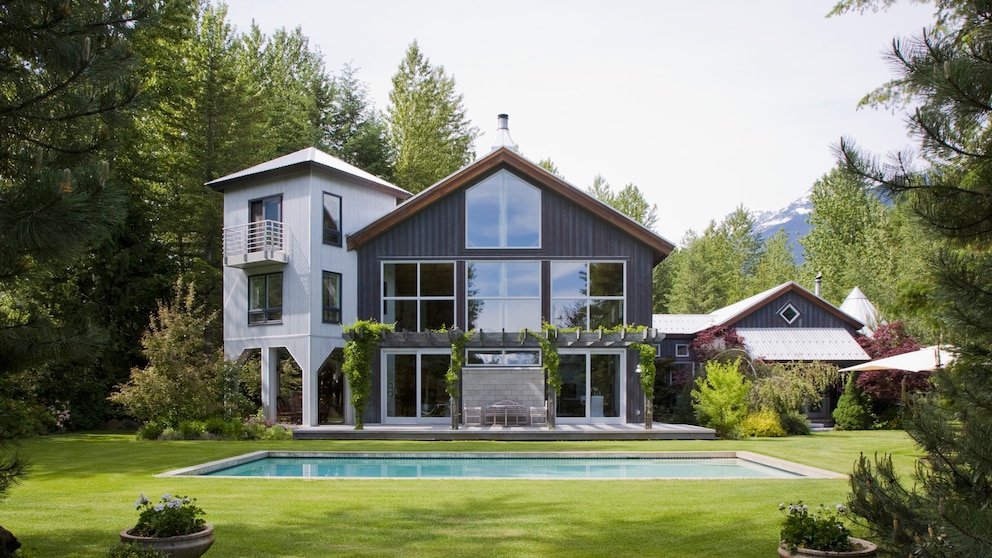
A beautiful garden can significantly enhance the sale of a house, but it must also be maintained. A pool, in particular, can initially be considered a lucrative selling point, as confirmed by real estate agent and mortgage broker David Gramzow: “With a pool, it depends on the execution: An above-ground pool from the hardware store or a simple pool shell brings almost no added value—it’s more likely to be seen as a dismantling issue during the sale. A solidly built outdoor pool with proper technology (filter system, heating, cover) is a plus with the current summer temperatures.” This can also pay off in the sale. According to experts, owners can expect a value recovery of 50 to 80% of the costs if the pool is solidly built with good technology.
Attorney Nicole Mutschke notes, however, that a solidly built pool may also require a permit. If built without the building authority’s permission, dismantling may be necessary. Neighbors may also be disturbed by noise, odors, or non-compliance with setback limits. Incidentally, when building a pool, it’s important to consider not only whether it is permit-free (often depending on size) but also whether the materials used comply with regulations.
SWR reported on a couple from Affalterbach who, after receiving incorrect information from the internet, built not only a pergola but also a terrace and a pool, believing they were permit-free. However, the municipality’s development plan guidelines said otherwise. The roof, pool, and terrace exceeded the building line and had to be dismantled.
Even Elaborate Furnishings Can Hinder the Sale
David Gramzow reports a case that significantly complicated the sale of a property. “I had a case in Berlin where the owners had completely renovated their apartment in an oriental style: ceiling spots, elaborate stucco decorations, golden wallpaper with oriental patterns, and marble floors. This was complemented by golden faucets, a large whirlpool bathtub, and custom-made built-in cabinets with golden door handles. While intended to be modern and elegant, it mainly caused head-shaking among potential buyers—the taste was so individual that hardly anyone could imagine moving in without first dismantling everything. The added value in the sale was practically zero.”
For personal use, owners should certainly make their property, whether an apartment or house, livable and, above all, comfortable for themselves. However, those with an unusual taste should not expect enormous sales success and may even need to plan more time for a sale.