


November 3, 2025, 2:04 pm | Read time: 3 minutes
On cool and damp days, many homeowners worry about mold. When it pours and storms outside, windows often remain closed to avoid letting in moisture. Anxious eyes scan every visible spot on the wall. However, these aren’t always health-threatening mold spores. Often, it’s salt or nitrate. In this article, myHOMEBOOK explains how to determine the difference.
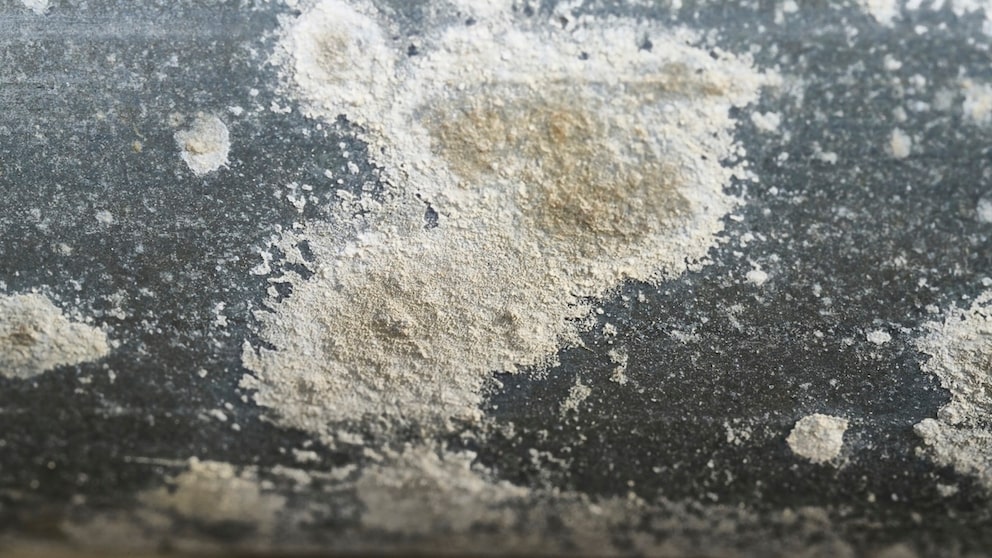
The technical term is efflorescence. Over decades, or even centuries, nitrates have accumulated in the soil. These can be urea from animals that first penetrated the ground and later seeped into the masonry.
That’s why such salty efflorescence primarily appears in rural areas in older buildings, initially in the basement. Long ago, livestock might have been kept there, or manure used as fertilizer. Both substances contain salts that dry out when they penetrate the masonry and can appear as white nitrate spots.
Nitrate Not Harmful to Health
The most important takeaway: Nitrate is not initially dangerous to human health. However, such efflorescence in the home should not be taken lightly. The cause is the same as with mold: too much moisture.
What You Can Do About a Damp Basement

Tips for Getting Rid of Musty Odors in the Cellar
The Difference Between Mold and Nitrate
Moist walls can eventually destroy the entire structure. Therefore, the cause of the spots on the wall should be investigated. There is a simple method to distinguish nitrate from mold.
A scratch test can determine the type of spots. If the scraped material crystallizes after drying, it’s salt. Additionally, nitrate spots are usually white and feel dry to the touch on the wall.
Mold spots are rarely pure white, tending to be grayish to dark. The surface feels smooth and slimy. A musty smell is also a telltale sign. If you’re still unsure, it’s best to consult an expert.
Have Old Buildings Regularly Inspected
In general, the masonry of older buildings should be regularly inspected by a professional. Nitrate spots aren’t always visible to the naked eye. Depending on the region and location, existing moisture in the walls can dry out quickly. In such cases, no visible white spots form. However, the structure can still be too damp, damaging the entire building over time.
Whether nitrate spots have already appeared in living areas or are still confined to the basement, the cause should be addressed. Damp basements are a problem not only in old buildings. Moisture in the plaster or joints undermines the stability of the entire structure.
Typically, renovation and the installation of so-called horizontal barriers help protect the building from water seeping in from the ground. However, an independent expert should first determine the cause of the moisture. Based on this assessment, further measures can be discussed with a professional company.