


February 20, 2026, 4:17 am | Read time: 3 minutes
A blank wall can quickly be spruced up with one or more pictures. Nail in the wall, hang the picture, and you’re done. Despite colorful motifs or eye-catching designs, the pictures can look out of place. myHOMEBOOK explains which mistakes when hanging pictures can be responsible for this.
The most common solution for decorating a wall is to hang pictures. Whether it’s just one, two, or an entire photo wall, you should avoid typical mistakes when hanging pictures.
1. Mistake: The Pictures Are Hung Too High
The picture should hang straight—most people would agree on that. But how high should it be on the wall? In many cases, the picture is too high. This often results from uncertainty, preferring to hang the picture a bit too high rather than too low. After all, paintings in museums are also hung quite high. What looks impressive in a museum can seem unnatural in your own home. Raising your gaze to view the picture subconsciously conveys a sense of distance.
Pictures are meant to be seen. Therefore, they should be hung at eye level. To avoid disputes over different heights in a household, you can follow these guidelines:
- The center of the picture should be about 145–150 cm (approximately 57–59 inches) above the floor.
- Maintain a distance of about 10–20 cm (approximately 4–8 inches) between the top of the furniture and the bottom of the picture.
How High Should You Really Hang Picture Frames?

5 Overlooked Decor No-Gos Few Talk About
2. Mistake: The Pictures Are Too Far Apart
A group of pictures presents various challenges. One of them is finding the right distance between the frames. They only appear harmonious when perceived as a unit. Too much or too little distance makes the composition look chaotic or disjointed.
Generally, a distance of five to ten centimeters (approximately 2–4 inches) between pictures is ideal. Choose a smaller distance for smaller formats and a larger one for bigger formats. Consistency is also important. Highly varying distances create a restless overall appearance.
3. Mistake: The Pictures Are Too Small
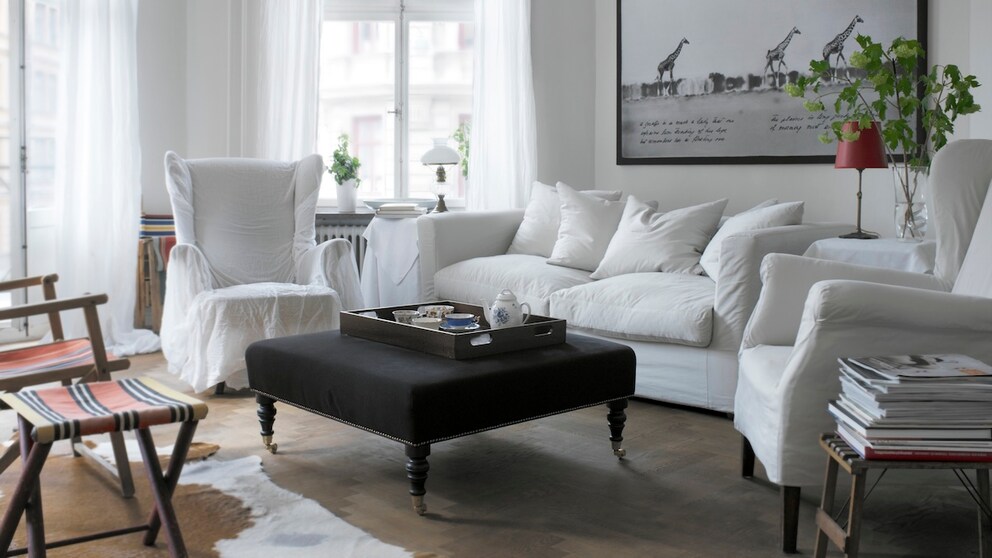
The size of a picture should be in proportion to the wall. If it’s too small, it quickly looks out of place and lost. The human eye automatically assesses visual weight. A large wall offers a lot of visual space. A small picture creates too little counterbalance and thus appears insignificant. For a large wall, it’s better to choose a large painting or assemble a gallery of pictures. If the picture is above a piece of furniture, remember this rule of thumb: The picture should take up about two-thirds of the furniture’s width.
If you’ve consciously chosen a small picture and don’t want to do without it, you can use a generous mat. The additional visual framing gives the motif more presence and makes it appear larger and more valuable.
Even without a mat, a small picture can still work if you deliberately play with a minimalist presentation. The “white space,” or empty wall area, acts as a stylistic device. An asymmetrical positioning can also help to skillfully showcase a small picture.