


September 15, 2025, 3:02 pm | Read time: 3 minutes
Lighting in the bedroom can significantly influence how comfortable and relaxed you feel in this space. While the living room often requires brighter general lighting, the focus here is on soft, zoned light. With a well-thought-out concept using different types of lamps, functionality and coziness can be ideally combined.
1. The Right General Lighting
A central ceiling light forms the basis for good lighting in the bedroom. It provides sufficient brightness needed for tidying up and cleaning. Since many people have their wardrobe or a dressing area in the bedroom, adequate lighting is also important. Models with fabric or frosted glass shades are particularly suitable, as they diffuse the light softly and prevent glare. For more flexibility, it’s best to opt for dimmable versions or use recessed or surface-mounted spotlights that illuminate the room evenly.
2. Practical Lighting for Specific Areas

In addition to general brightness, it’s sensible to highlight specific areas of the bedroom with targeted lighting. Nightstand lamps are a classic choice: They provide reading light without illuminating the entire room and add a decorative touch. Wall lights are more space-saving, as they can be mounted directly next to the bed and are often adjustable. Floor lamps can also be useful, for example, in a reading corner or next to a chair—they provide additional brightness and enhance the room’s ambiance.
Also interesting: Which Lamp Fits Which Interior Style
3. Indirect Lighting and Atmospheric Light
For a particularly cozy atmosphere, indirect light is indispensable. It occurs when the light source is not directly visible but is reflected off walls, ceilings, or furniture. LED strips are popular for this purpose, as they can be installed behind the headboard, under furniture, or in shelves. Light strips in niches or along the ceiling create soft lighting moods and make the room appear more spacious.
4. Setting Stylish Accents with Decorative Light
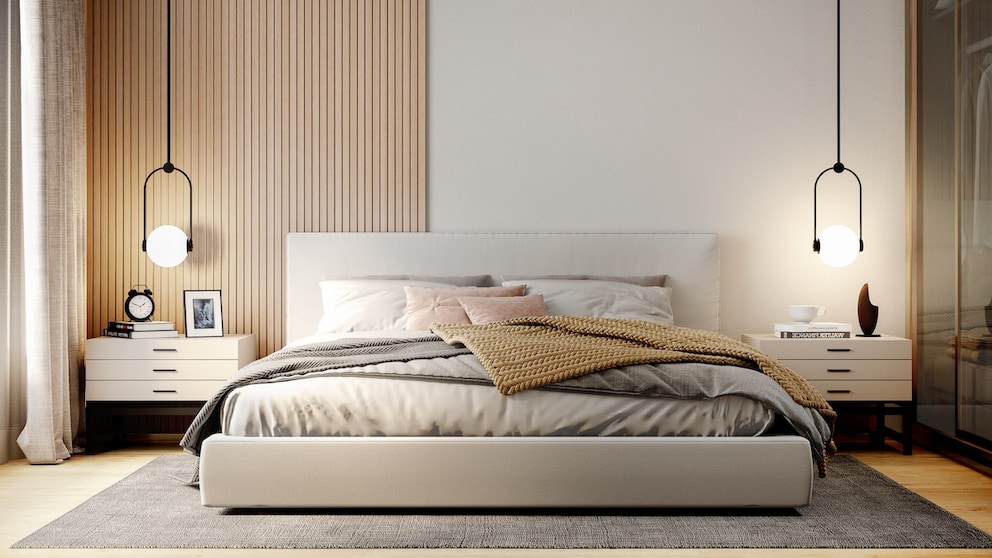
In addition to functionality, the decorative aspect should not be overlooked. Pendant lights above nightstands are a real eye-catcher and a modern alternative to the classic table lamp. Dimmable table lamps with unique shades set stylish accents and make the room more individual. For a particularly cozy feel, complement the concept with string lights, small lanterns, or candles—they are perfect for creating a warm and romantic atmosphere.

Why a Single Ceiling Light Is Almost Always a Mistake

8 Tips for Indirect Lighting in the Living Room
5. Choosing the Right Color Temperature and Light Source
The color temperature of the light is crucial for well-being. Warm white light sources with about 2700 to 3000 Kelvin have a calming effect and support relaxation.
Cold, bluish light should be avoided in the bedroom as it tends to be activating. Modern LEDs are best suited: They are energy-efficient, long-lasting, and available in many variants—from dimmable to smart control via app or voice assistant.
Thinking in Layers of Light
The perfect bedroom lighting is achieved by combining different layers. A dimmable ceiling light forms the base, complemented by zoned light sources at the bed or in a reading corner. Indirect lighting creates a homely atmosphere, while decorative accents give the room personality. Those who opt for warm white light and flexible types of lamps create an atmosphere that is both functional and cozy.