


August 8, 2022, 4:13 am | Read time: 6 minutes
Feeling good is a valuable asset these days. Your home decor can play a crucial role in this. Although it may seem unimaginable at first, a minimally furnished living room undoubtedly invites more relaxation.
Minimalism often faces the prejudice that it appears uncomfortable. The reason for this assumption is its well-known rule of thumb: Less is more. However, even if a purist design seems to lack some elements, there is certainly enough coziness. Instead, minimalist living rooms become special places of relaxation. Curious about how to achieve the look? Our interior designer explains the process.
1. Leave Walls Bare
A purist design begins with a rather understated wall design. Ideally, in a minimalist living room, this is kept in light, neutral colors like white. White is primarily chosen for its calming effect. Additionally, this color tone gives small rooms a sense of more space. But (light) gray, anthracite, or–for those who like to experiment–black also meet the minimalist design criteria.
Bare walls literally free up the space for clarity, imagination, and creativity. The monochrome look also applies to wallpapers. Instead of opting for textured, embossed, or wildly patterned wall coverings, a simple, single-color variant is recommended here as well, promoting calm and tranquility.
If the minimalist living room is to feature patterns, then large-scale, graphic, and linear designs in neutral colors are a suitable choice. It’s best to wallpaper just a single wall.
2. Bring Color into the Room
Especially white walls, typical of minimalist spaces, often seem strange, cold, and sterile to many people, and thus somewhat uncomfortable. Those who miss coziness and liveliness in a minimalist living room can bring it in through furniture, accessories, or even plants. That’s right, because natural products and materials bring their own colorfulness, from which a minimalist design benefits.
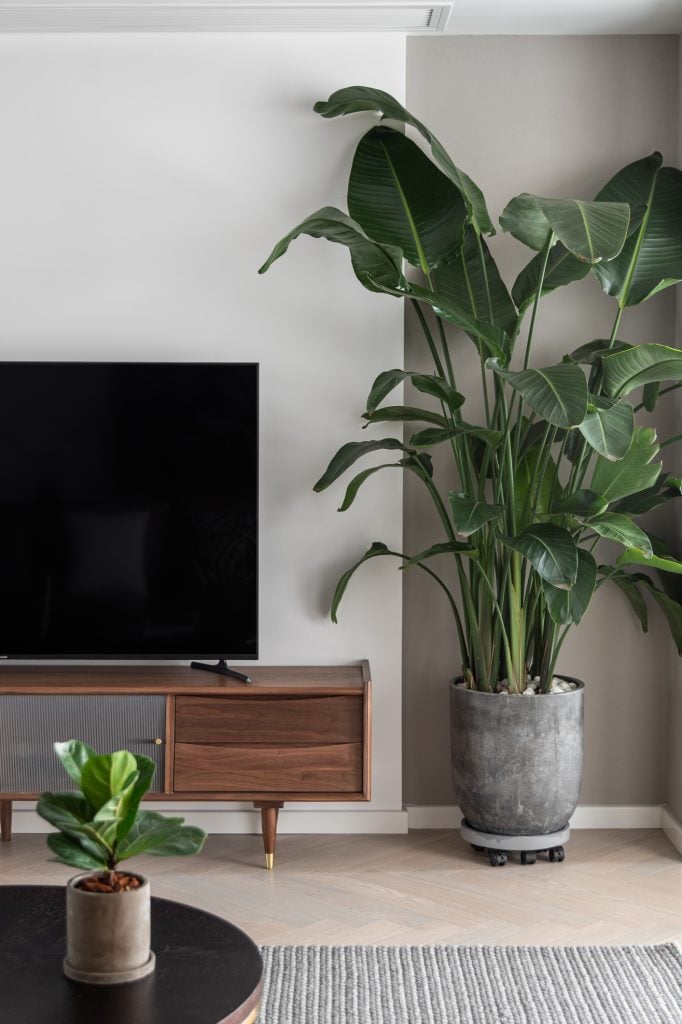
The green of the plants, the brown of the wooden furniture, or the greige tone of baskets made from natural fibers appear anything but dull. Therefore, only a few truly bright colors are needed. A good measure is two to three different shades. Instead of loud and flashy, muted tones or even pastels are welcome. In short, a minimalist living room feels coziest with a sober color scheme that incorporates occasional pops of color.
Also interesting: Six Tips for Designing a Minimalist Kitchen
3. Rugs Can Move In
Minimalist designs often feature dark parquet or alternatively laminate flooring. This usually contrasts nicely with the otherwise light design. A light stone or tile floor also looks charismatic in a purist setting. Is a rug even necessary? Those who strictly adhere to minimalism and have no issue with a completely smooth surface might prefer to skip it.
However, a rug or runner can certainly be added to a minimalist living room. Again, less is more. A single-color model is particularly advisable, as it definitely adds a cozy splash of color to the room. A patterned rug is also conceivable, but its design should not be too intricate and is better in neutral colors.
Ideal are floor textiles made from natural fibers like sisal, raffia, or wool–ensuring both colorfulness and coziness! Especially those who enjoy walking barefoot will appreciate this textile surface.
Related: Seven Tips for Designing a Minimalist Bedroom
4. Use Furniture Intentionally
A minimalist living room should not just have any furniture. Generally, it requires pieces with clear, simple shapes and lines. Too many details and embellishments mean too much mental distraction.
Large, bulky sideboards or sofas clearly contradict minimalist designs. Round, oval, or organically shaped furniture can meet distinctly linear models. Minimalists also value practicality, so multifunctional furniture is particularly popular with them.
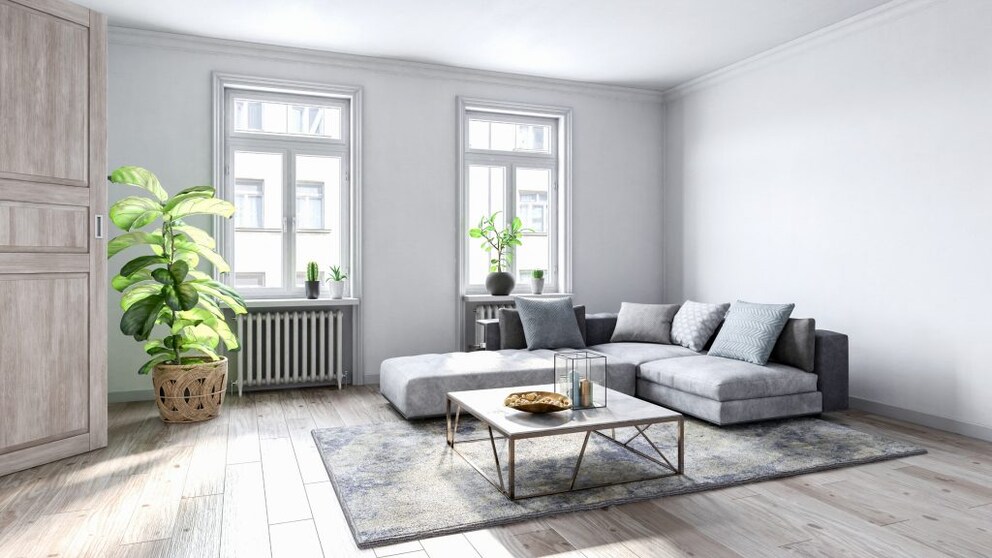
A sofa that turns into a bed at night, an extendable dining table, or a side table that can also serve as a stool fits perfectly here. Additionally, maintaining order and storage is crucial in minimalism, so furniture with doors like cabinets is preferable to open options like shelves.
If these are used, then it’s best as a slim, tall model with a tidy look: Books sorted by color or size, or a single accessory within a single compartment, also create a lot of harmony.
https://oembed/myhomebook/affiliate/23a33d33f32314a1c9f92f945c357d1e798fcc0334b71a1fdaade5d524055216/8e6e2b30-0677-421d-83d2-e1e4481878f8/embed
Less Is More: How to Achieve Minimalist Decor
Decorating Tips for a Scandinavian-Style Kitchen
5. The Right Material Matters
Inspired by Scandinavian designs, a minimalist setup undoubtedly includes a lot of wood. Light or dark woods are welcome–just not necessarily in combination, as that can make the look unintentionally restless and disharmonious. Especially solid wood furniture, like an old table, brings a particularly charismatic and warm-cozy touch to the room.
Other materials also make a big impact in a minimalist living room: Glass furniture, such as a coffee table or a display cabinet, has become indispensable in modern designs. Thanks to their transparent nature, they flood a room with plenty of lightness and ease. Metallic materials like stainless steel or chrome give the minimalist living room an elegant touch. And, of course, natural materials like cork, leather, or seagrass fibers add a lot of coziness to the space.
What’s important in material selection is that they are of high quality, as this is a priority for minimalists–over quantity.
6. Few, Curated Accessories
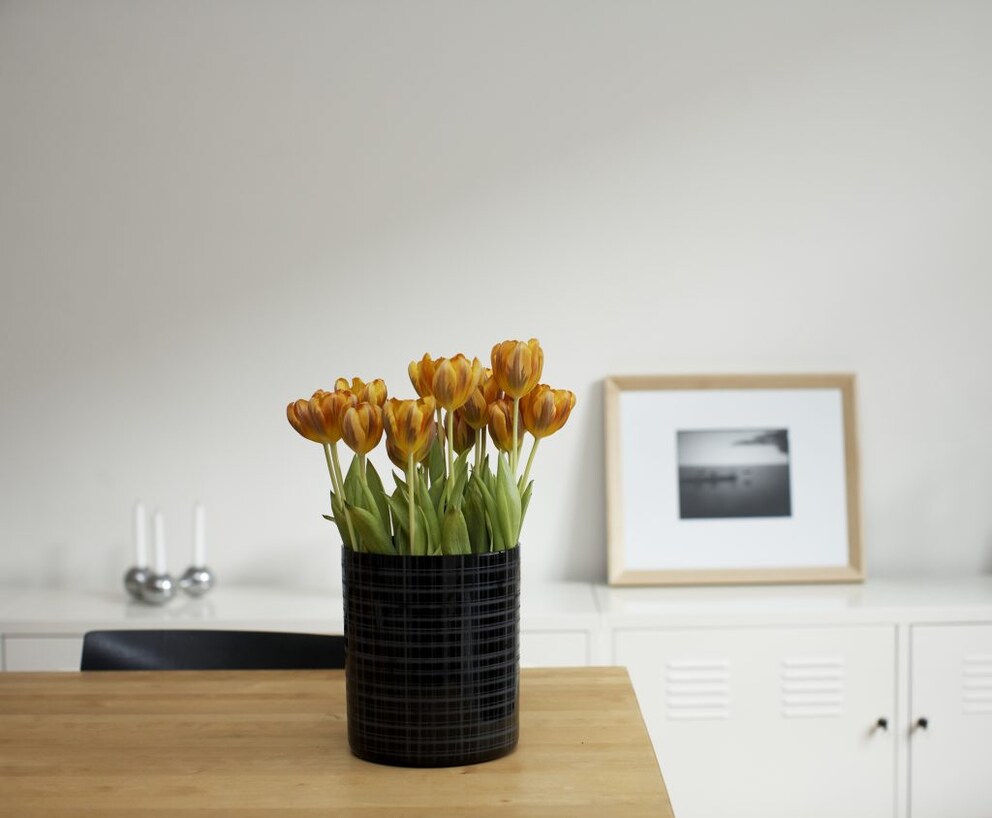
A minimalist living room requires only a few, lovingly curated accessories. Since they are essentially functionless, they actually contradict the core idea of minimalism. With particularly large accessories like floor-to-ceiling plants or an XXL picture on the bare wall, statements are skillfully made. Curtains at the window are best simple, monochrome, and floor-length. Pulled aside with a single motion, they allow daylight to enter the room unhindered.
Light is an important aspect of minimalism. Especially during the cold season, it’s essential to compensate for the lack of natural light with artificial light sources. Floor or even arc lamps, ideally in a slim, unadorned design, fit perfectly here.
LED strips or mini ceiling spots provide indirect lighting. Lampshades for pendant or table lamps can be made from metal, glass, or natural fibers like rice paper or linen. Additionally, a few monochrome cushions on the sofa, scattered favorite pieces, and an original vase with flowers on the table complete the look.