

October 28, 2026, 3:16 pm | Read time: 4 minutes
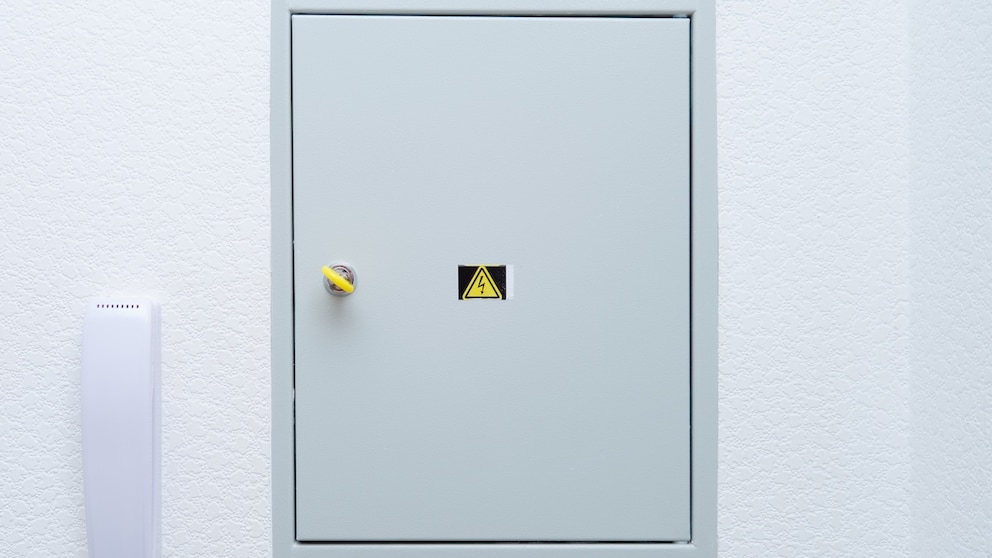
In the middle of the beautifully decorated hallway, the fuse box stands out on the wall. Or exactly on the free wall space sits an outlet that is never used. Both can be hidden with picture frames. myHOMEBOOK explains how it’s done.
Sometimes it’s the small details that disrupt the overall look of a room. An unused outlet in an inconvenient spot or a conspicuous fuse box in the hallway–these are typical everyday problems often overlooked in home design. It doesn’t always require an extensive renovation to make such visual distractions disappear. With a few creative ideas, outlets and fuse boxes can be cleverly concealed and even transformed into decorative design elements.
Follow myHOMEBOOK on WhatsApp now
Hide the Fuse Box with a Picture Frame Construction
The fuse box is one of those things you’d prefer to overlook in a nicely decorated space. Especially in the hallway, it often sits visibly on the wall, appearing as a functional foreign element among mirrors, coat racks, and selected home accessories. Simply painting over it or permanently covering it is not a good solution–after all, it must remain accessible in case of need.
The clever alternative is a self-made picture frame construction that makes the fuse box visually disappear and can be opened when needed.
What you need:
- Two identical picture frames that are large enough to completely cover the fuse box
- Two suitable hinges
- Appropriate mounting materials for the wall and the respective surface
Also interesting: With a simple guide, the router at home becomes invisible
How the DIY Project Works
To hide the fuse box, you first need two identical picture frames that are larger in their outer dimensions than the fuse box. They should completely cover it and provide enough space so that the construction can be easily opened later.
In one of the two picture frames, the back panel, glass pane, and inner paper are removed. What remains is the empty frame, which serves as a spacer and part of the movable construction. The second frame remains as the decorative front and can later be fitted with a suitable picture or art print.
Now position the two frames on top of each other and connect them on one side with two suitable hinges at the top and bottom. This creates a foldable construction where the front, decorative frame can be opened like a small picture door.
Special care must be taken when mounting: Since electrical wires can run in the wall around the fuse box, you should not simply drill or nail. If you want to mechanically attach the frame to the wall, you should first check with a wire detector where the wires run. An alternative can be strong adhesive double-sided tape.

5 Tips to Hide Your Drying Rack in the Apartment

7 Creative Ideas for a Unique Hallway
Hide Unused Outlets
Outlets that are not needed or are positioned in inconvenient places can also be hidden with a picture frame. For this, a suitable, precisely fitting, and approved outlet cover is attached to the back of the picture frame. The frame can then be placed in front of the outlet so that it is no longer visible from the front. A beautiful motif, a minimalist art print, or a personal photo turns the previously annoying spot into a decorative focal point.
For a particularly harmonious look, choose a frame that matches the material and color scheme of other elements in the room–such as an oak shelf, black lights, or picture frames in an existing gallery wall.
Important: The picture frame should only stand in front of an unused outlet and must not be attached in a way that damages or makes the outlet inaccessible. A child safety cover is not a substitute for a proper electrical cover. For an outlet that you want to permanently take out of service, a safe solution by an electrical professional is recommended.
Small Tricks with Big Impact
Not every functional component of a setup has to become the visual focal point of a room. With creative ideas, even seemingly disruptive details can be integrated into a harmonious home design. A picture frame in front of an unused outlet or a foldable picture solution to hide the fuse box shows how easily aesthetics and practicality can be combined.
The key is that the solution not only looks good but is also implemented safely. After all, good interior design means that a home not only feels harmonious but also functions well in everyday life.