


May 4, 2023, 10:57 am | Read time: 6 minutes
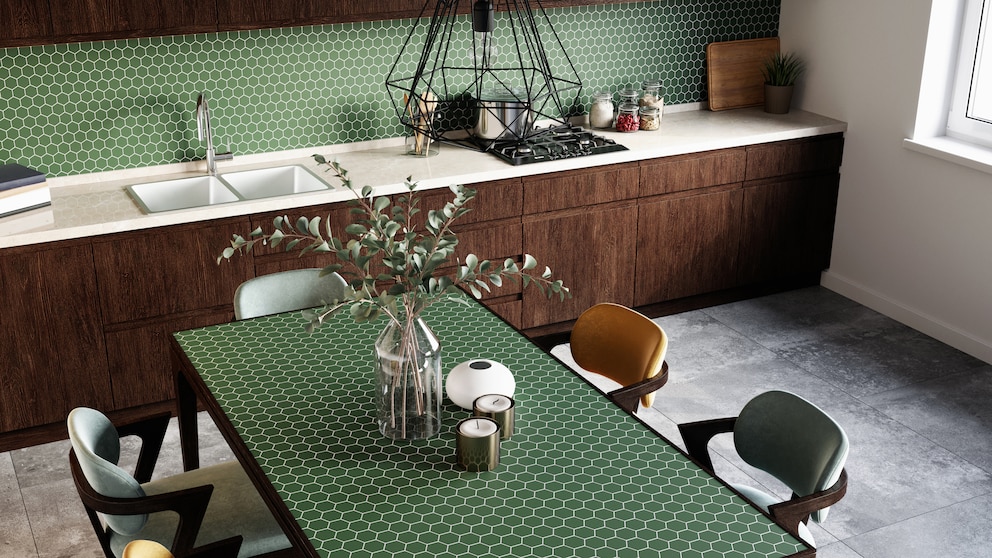
Tiles belong in the bathroom! Wrong, now they adorn not only walls and floors but also furniture again, and in a very tasteful way. The once-maligned tile table is currently experiencing a special update and is even suitable as a DIY project. At myHOMEBOOK, you’ll find the right inspiration for the new interior trend, as well as tips on how to build your own tile furniture.
Who doesn’t know the tile table? It made history, more or less appealingly, especially in the ’70s to ’90s. Today, the piece of furniture from back then, primarily characterized by a beige-brown tile surface and a rustic oak wooden base, is considered quirky and outdated. Time for an update! A trend is currently emerging that proves the small ceramic tiles can not only beautify floors and walls in bathrooms and kitchens but also completely reinterpret the tile table! We reveal everything about the new tile furniture trend and how you can recreate it yourself.
New Eye-Catcher: Tile Furniture

Few would have expected tiles to become an essential part of a piece of furniture again. Yet the comeback seems successful: With tiled stools, nightstands, side tables, or coffee tables, the trend of tile furniture is making quite an impression in living spaces. But why? Unlike in the past, today it’s small, monochrome ceramic tiles that define the look. The size of this rather small-scale tile surface strongly resembles mosaic surfaces, which are also often a popular design element. Another difference is immediately noticeable: The tile surface no longer adorns just the tabletop as it once did but instead covers the entire piece of tile furniture. Just like the rigid dimensions of the small tiles, the clear design of the new tile furniture, which can be cube- or cuboid-shaped, behaves similarly. It’s as if expressive form language meets consistent linearity, which somewhat recalls the popular Bauhaus style.
Also interesting: How to implement the Bauhaus style at home
Tiled Kitchen Island
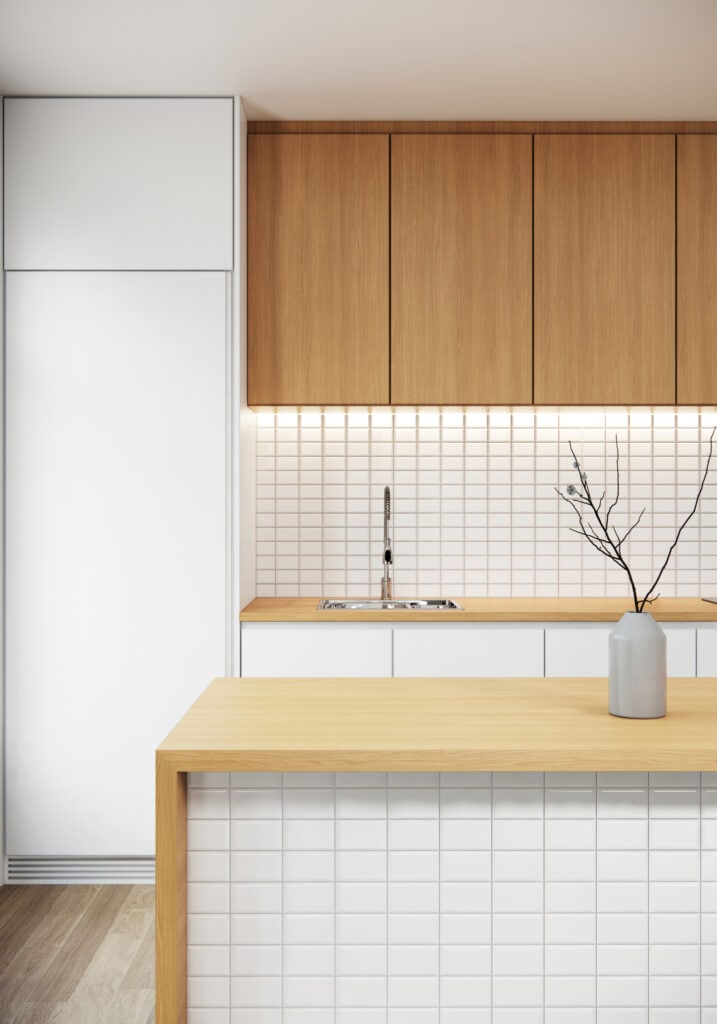
From the spot next to the couch, it moves directly into the kitchen. Here, too, the trend of new tile furniture is bringing fresh looks to the ambiance. Instead of serving only as a backsplash between upper and lower cabinets or as a floor surface, tiles are now conquering the kitchen island. The small-format design, covered entirely with tiles, not only looks exceptionally original but also provides an easy-to-maintain covering. Whether a monochrome or colorful patterned surface, both create maximum attention and admittedly make the other kitchen elements fade somewhat into the background. Depending on your enthusiasm for tile designs, you can choose between full or partial coverings–both options have their visual appeal!
Also interesting: What to do when the suction cup no longer holds
Tiles Also on Sideboards and Benches

The new tile furniture trend is not limited to coffee and dining tables or kitchen elements; small, monochrome ceramic tiles now give sideboards and benches unique looks. With a stylish, minimalist design free of frills, handles, and drawers, the new furniture is ideal for universal use. Whether as a shelf for flower pots and magazines in the living room or for seating at the large dining table, the special tile furniture always finds its practical use and suitable place in the room. A position under the window or at the foot of a bed also looks extremely original.
Hide the Litter Box with a Stylish Tile Cabinet
Build a Foot Bath in Just a Few Steps
Easily Build a Modern Tile Table Yourself
Fully tiled furniture can sometimes be pricey. Fortunately, tile furniture is also ideal as a DIY project. A small table model, suitable as a side or nightstand in a simple cube shape, should make it easier to start your own DIY tile furniture. Here’s how:
Materials and Tools
- MDF boards
- Drill with appropriate bit
- Cordless screwdriver
- Screws
- Pencil
- Primer and brush
- Tile mats
- Scissors
- Tile adhesive
- Notched trowel
- Grout
- Spatula
- Sponge
Instructions for a Mini Table
1. For the body of the small cube-shaped table, stable MDF boards are recommended, as they not only provide a good and secure stand but can also easily support the weight of the tiles. MDF boards are available at hardware stores and can be cut to the desired size on-site.
2. To screw the individual boards together, small marks should be drawn with a pencil on two of the four side pieces, about 8-10 millimeters from the edge. Then, use the cordless screwdriver to sink the screws into the wood, and the frame of the small table is ready. The top board is attached to the body in the same way.
3. In preparation for attaching the tiles, the mats should be cut to the size of all table sides and laid out as a test.
4. Now it’s time to lay the tiles: For a good hold, the wooden base of the mini table should be primed. Use a brush to coat all boards completely. Be sure to let it dry thoroughly afterward.
5. Use the notched trowel to apply the tile adhesive, then lay the appropriate tile mat and, if necessary, individual tiles, pressing them down well. Apply the tiles side by side (lying down). Wait a few minutes with each side change until the adhesive has dried well and the tiles do not threaten to fall off when turned over.
6. Once all tiles are applied and the adhesive is completely dry, it’s time to grout. Mix the grout according to its instructions and apply it with a rubber spatula. Ideally, hold the spatula at a 45° angle to ensure the grout fills the joints completely and without air pockets.
7. After the grout has dried, carefully remove the remaining excess with a damp sponge and clean the tiled surface. And your modern DIY tile table is complete!
And Another Trend: Colored Grout
In connection with the tile furniture trend, another trend is emerging–colored grout. A design form that has been seen here and there in modern tile surfaces on walls. Now, colorful grout can also be a relevant part of current tile furniture. There are various possibilities: An interesting option would be to play with contrasts. Light gray tiles can be paired with neon orange grout for a striking contrast. Less conspicuous but no less original is another version. It looks smooth when two tones from the same color family meet. How about this? A tile piece with delicate pink tiles that gains a touch of extravagance through a wine-red grout grid.