


June 4, 2021, 11:46 am | Read time: 6 minutes
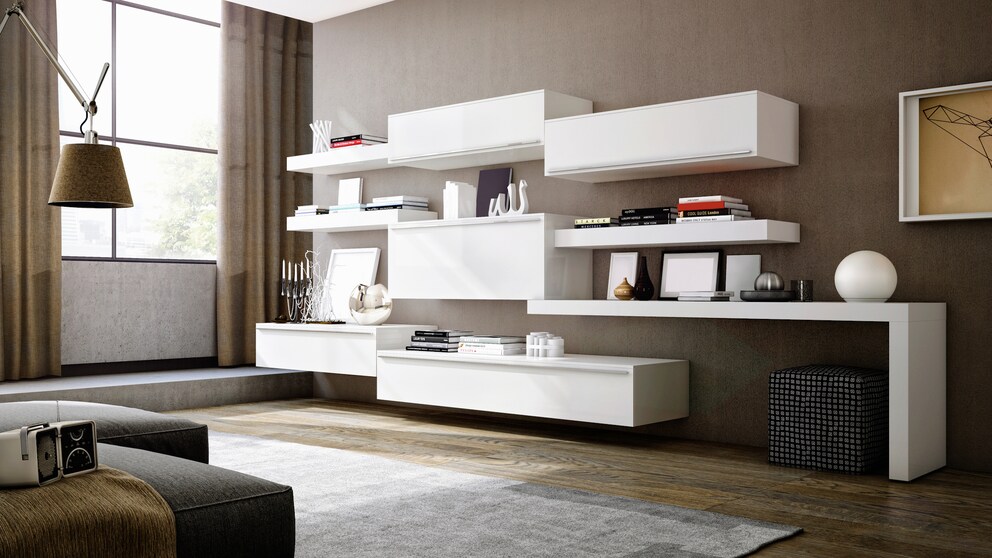
Customization is a major trend in many areas–including furniture! Here, it’s the modular wall unit that brings a noticeable lightness to the living room–something that seemed unthinkable for decades.
What was once the wall unit in German living rooms is now the living wall. Not only does it appear significantly more appealing and practical, but it also seems less bulky. This is largely because the living wall today no longer resembles a “wall” but consists of a loose modular system. It’s a setup that can be completely configured according to personal preferences. Numerous options for an individual living wall solution show how to skillfully bring more lightness to your home.
Overview
Living Wall vs. Wall Unit: Why the Modular System Is the Better Solution
Compact, floor-to-ceiling, bulky–these are likely the typical characteristics of a wall unit. What was considered an enormous storage marvel with impressive multifunctionality, such as an integrated library, TV solution, and minibar since the 1950s, is now mocked as stuffy and outdated. Nowadays, the massive furniture complex, usually screwed together and standing in the same spot for decades, seems hardly suitable for modern living situations. Designers have recognized this lack of flexibility over time and developed living walls that can be individually constructed. Individual elements of a living wall, such as wall shelves, display cabinets, lowboards, or sideboards, can now be combined almost at will. A hallmark of this modular system is its loose structure with generous spacing between the modules. In contrast, the wall unit, which typically spanned the entire length and height of a wall, seems overwhelming from today’s perspective. Modern living walls usually occupy no more than two-thirds of the room’s height and width, leaving enough open space to noticeably relax the room’s atmosphere.
The Living Wall as a Shelf-Cabinet Combination
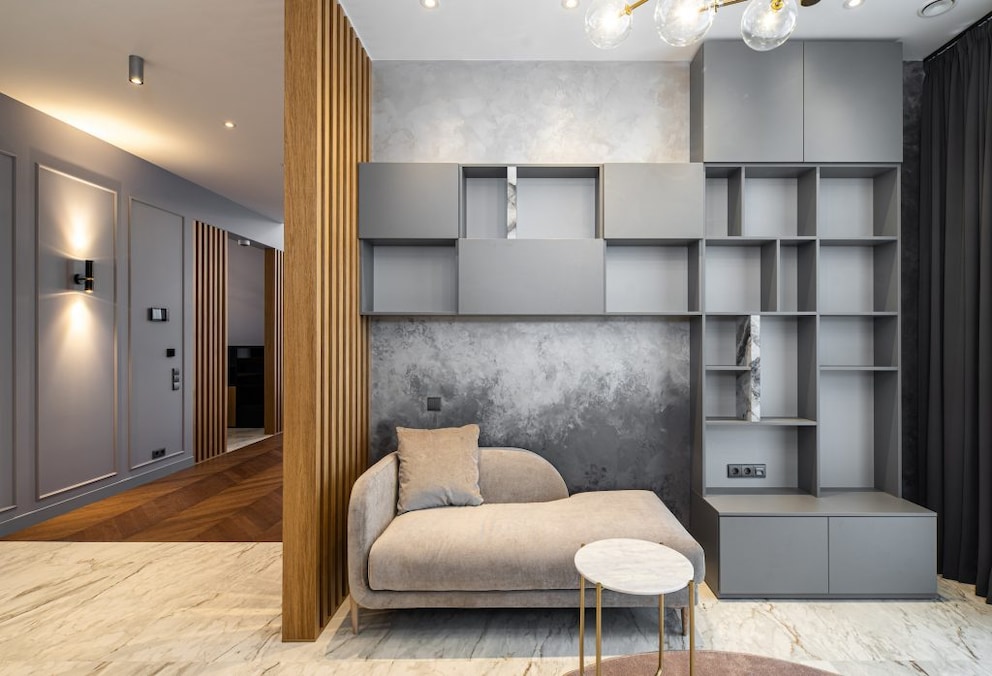
Furniture is increasingly adapting to our highly individualized lifestyles. Instead of a purely closed cabinet or a completely open shelf, combined forms are becoming more common: a cabinet with some open compartments or a shelf with additional storage space behind doors. Nothing has to be sacrificed; everything is found in one piece of furniture. This is known as a shelf-cabinet combination. A living wall in this style is designed based on the available wall space and individual storage needs. It can be tailored to specific requirements, such as integrating a TV or another piece of furniture, framing it accordingly. Despite the modular design, the result is a harmonious arrangement.
Also interesting: 7 Shelf Models and When Each Is Suitable
Living Wall as a Room Divider
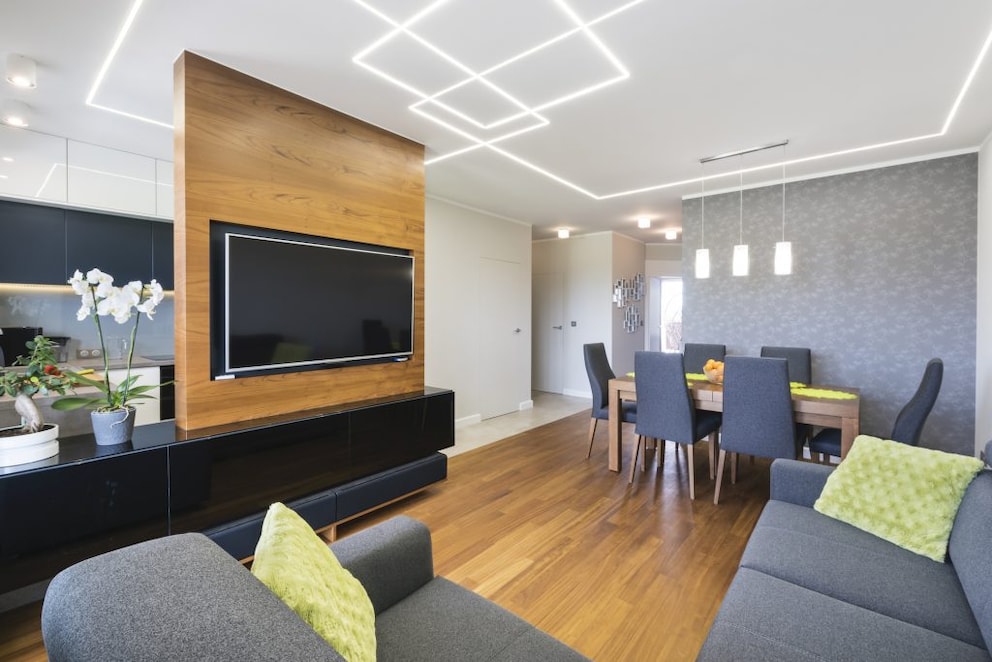
As living spaces increasingly merge, such as living and dining rooms, a clear visual separation is sometimes needed. If this isn’t structurally provided, a living wall can help. It acts as a room divider and ideally extends from ceiling to floor. Such a construction may require a custom design, which is worthwhile as it usually provides an appealing look from all sides. Combined with a sideboard and an integrated TV solution, the living wall sets new standards.
The Living Wall as a Multi-Part, Loose System
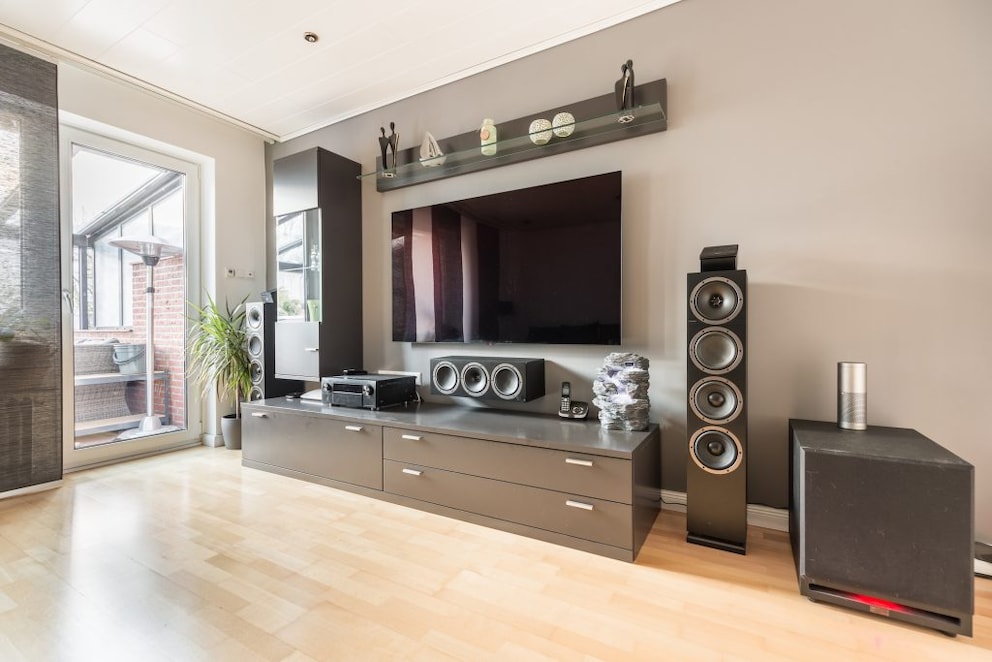
The multi-part system, which seems to be loosely assembled yet forms a fixed frame like a picture frame, has become particularly popular. Typically, all axes of the setup surround the four sides of the TV and merge into a visual unit. An individual living wall of this type uses various elements such as display cabinets, wall and book shelves, as well as lowboards and sideboards. If there is no flatscreen in the arrangement, an element within the living wall is often highlighted: for example, a wall cabinet is larger in design and placed with significantly more spacing from the other modules of the system. This type of setup can also incorporate highlights like integrated lighting, wheels as feet, or floating elements.
What to Consider When Planning a Wall Unit
5 Solutions for More Storage Space in the Basement
Multi-Part, Fixed System
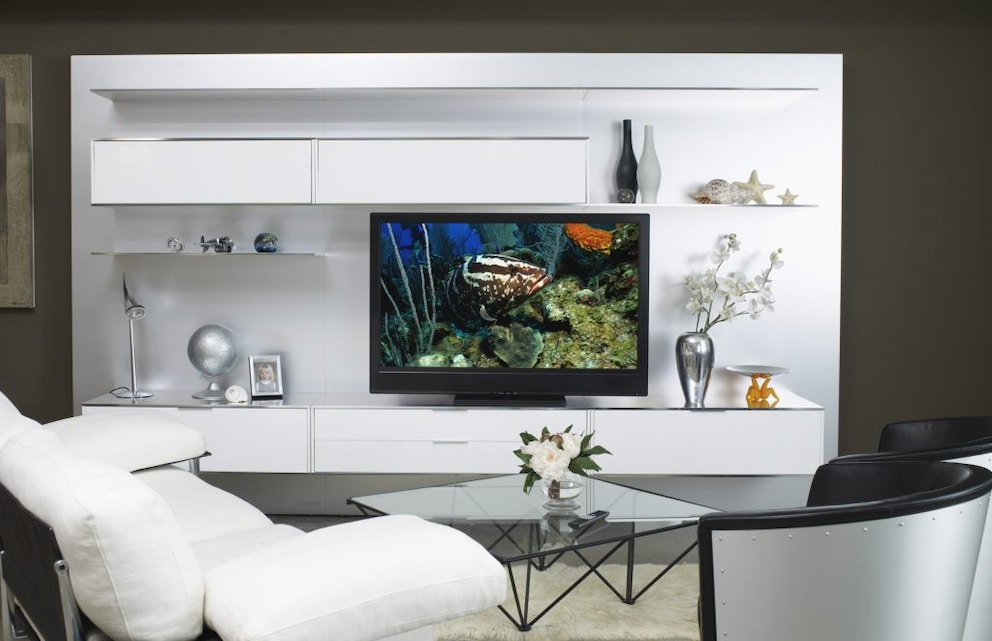
A living wall consisting of multiple modules is also available as a type of fixed system. Here, a simple back wall forms the basis of the living wall, within which all other modules are located. Usually, all these elements, such as wall, low, or sideboards, are in the same color as the back wall, creating the effect that they visually merge into a unit and stand out from the rest of the setting. Even though the positioning of the individual elements is often preconfigured by a rail or hole system, this type of modern living wall does not lack individuality and casualness. There is almost always some room for creativity in designing the living wall. Modules can be moved or even omitted entirely without making the system appear flawed.
Also interesting: Build a Shelf with Plenty of Storage Space Yourself
DIY Living Wall with Crates and More
For those who want to design their living wall even more individually and prefer a less formal look, the DIY solution is the way to go. Old fruit and wine crates or wire baskets are often used to develop a unique system on different levels. To give the living wall its own look, many personal items, such as a worn-out suitcase for extra storage or a broken skateboard as a wall shelf, are often integrated. This construction is not only a significantly cheaper option but also adds a highly unique charm to the room.