


February 22, 2026, 5:13 am | Read time: 5 minutes
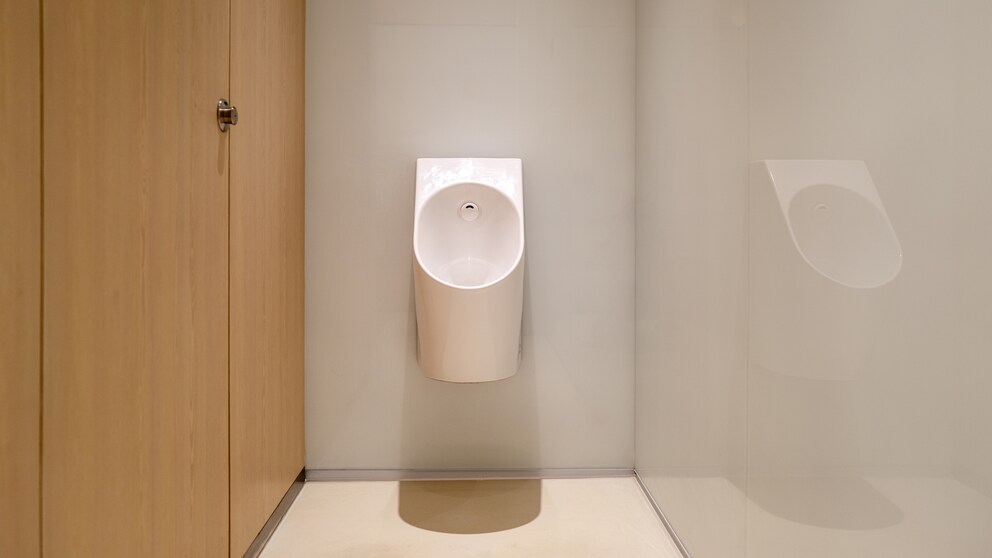
A urinal in one’s own bathroom is something mostly known from public buildings. However, in modern new constructions, it is increasingly being included. This is not only due to technology but also design: Many models now appear so discreet that they can be easily integrated into bathroom design.
Relief in Everyday Life
Anyone who grew up in a large family can probably remember such scenes: If you get up too late in the morning, the next person is often already waiting outside the bathroom. A urinal could have made the routine much less stressful, provided it is housed in a separate room. The urinal has the following advantage: When several people share a bathroom, an additional spot provides more peace, especially in the mornings and evenings when everyone wants to use the bathroom at the same time. Additionally, the toilet remains free for others, saving time, reducing friction, and allowing for a more relaxed start to the day.
Even as a couple, a urinal in a shared apartment can be advantageous, especially if the toilet and urinal are in separate rooms. This way, you can shower, bathe, or apply makeup undisturbed, while the quick trip to the urinal can be done easily. Honestly, not every man likes to sit on the toilet; many prefer to use it standing up. So the question arises: Why not just get a urinal?
Moreover, you have your own area that you can use quickly and undisturbed at any time. Different habits—such as urinating standing up—do not become an issue in everyday life, and the bathroom gains a bit of extra comfort. In a single household, however, a urinal plays hardly any role unless you place special value on it.
Also interesting: What Will No Longer Be Trendy in the Bathroom in 2026
Less Water Consumption
A urinal can also score points in terms of water consumption. Per use, it typically requires significantly less water than a traditional toilet. Waterless models even do without flushing entirely. If used regularly, everyday water consumption can be noticeably reduced. However, if used only rarely, the financial benefits are hardly noticeable. In a household with several family members, the savings effect is significantly greater.
Different Designs
There are urinals that function without water and without flushing. Inside, a special sealing liquid or a mechanical system ensures that no odors escape. This saves several liters of water with each use.
Models with water flushing work similarly to a toilet. They can be activated by a button or automatically flushed via a sensor. This is especially popular for hygienic reasons.
Some manufacturers now also offer urinals with lids. The closed form makes them appear more familiar and allows them to blend better into bathroom design. At the same time, odors are more contained inside. High-quality lids with a soft-close function close slowly and quietly, further enhancing comfort.

How to Combine Bedroom and Bathroom

Simple Household Remedy on the Toilet Brush Makes Cleaning Easier
Costs and Regular Maintenance
Besides space, costs also play a role. Depending on the model, you should budget several hundred euros for the urinal itself. Additional expenses for installation are also to be considered. For waterless variants, it should also be noted that cartridges or sealing liquid need to be regularly replaced.
Whether this investment is worthwhile becomes apparent only in everyday life. If several people use the bathroom daily, a urinal can significantly increase comfort while saving water. However, if it is rarely used, it is less worthwhile and remains an additional feature without much effect.
As mentioned earlier, the decision ultimately depends on your living situation. If there is enough space and you share the bathroom with other family members, a urinal can noticeably ease the routine. In small bathrooms or with infrequent use, a urinal is not necessarily needed.
Also interesting: 6 Things That Make the Bathroom Look Cheap
Does a Urinal Fit in Every Bathroom?
Whether a urinal can be installed at all often depends on the layout. You need a water connection, a drain, and enough space in front, at least 60 centimeters. In large bathrooms, this can be easily planned. In small spaces, however, every additional centimeter is precious and may not be available for a urinal.
The location in the bathroom is equally important. If the urinal is not placed directly in the line of sight or is separated by a half-height wall, the overall appearance can be calmer. In well-planned bathrooms, it can even appear as a subtle wall element when positioned correctly.

All a Matter of Habit?
“Urinals are not yet a given in the classic bathroom, which is why you rarely see them in older apartments. You have to get used to them, that’s for sure. But in new constructions, they are increasingly finding their place, and demand is steadily growing. Ultimately, the personal living situation and individual needs determine whether a urinal is sensible or necessary.”