


July 30, 2025, 9:37 am | Read time: 5 minutes
When the craving for coffee hits, it needs to be quick. That’s why many people at home opt for a fully automatic coffee machine, a French press, or a capsule machine. But let’s be honest: The taste from your favorite bistro often can’t be matched by homemade coffee. Could this be why barista courses have been booming like never before in recent years? Bringing the café experience home is often at the top of coffee lovers’ wish lists. myHOMEBOOK reveals how to set up a coffee bar in your home.
The Coffee Bar
Admittedly, creating an entire room dedicated to coffee enjoyment is not feasible in many homes due to space constraints. But sometimes, small changes in the kitchen or living/dining area are enough to turn coffee preparation into a ceremony. A well-organized corner not only brings order but also creates a small oasis of mindfulness in everyday life. It becomes a place for a well-deserved break—and that makes the occasional cup taste especially good.
Finding the Right Zone
Before you can start making your first barista-style coffee and begin your personal café experience at home, you should consider which spot is best suited for the coffee bar. Whether it’s a small coffee corner on the countertop, a mobile bar, or a separate little spot apart from the kitchen, the possibilities are endless.
What You Need
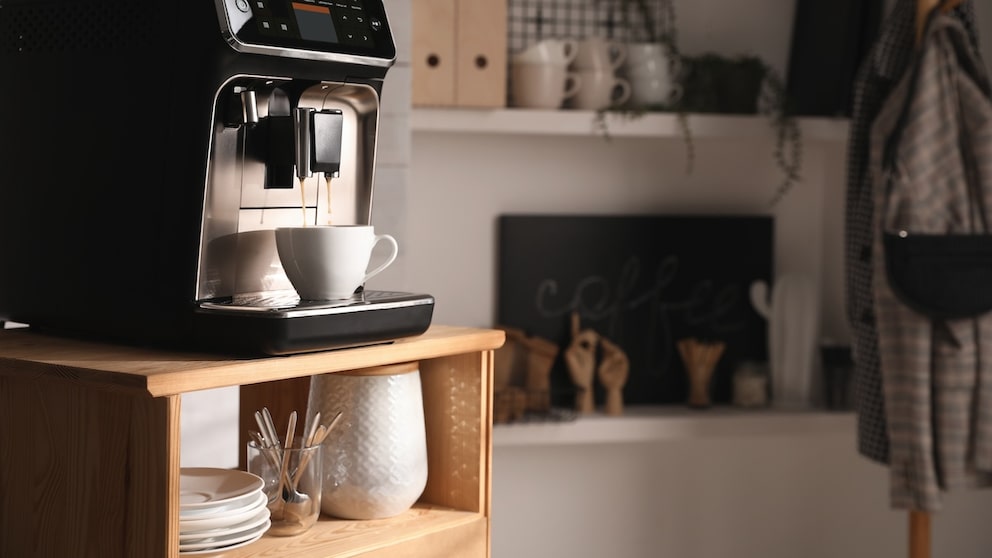
No matter what type of coffee nook you choose, the coffee machine is always at the center. It influences not only the ambiance but also the taste. If the budget allows and you’re technically inclined, a portafilter machine like the one at your favorite café around the corner is a good option. But a filter or capsule machine can also be appealing, depending on your taste and style. If you have the space, you can add more coffee gadgets. A coffee grinder or a milk frother with a milk jug, for example, are great for working on your latte art skills. Baristas who opt for a portafilter machine will also need a tamper set, consisting of a station, tamper, and rubber mat, to press the freshly ground coffee into the filter.
Additionally, you should have suitable coffee cups, spoons, and storage jars that match the coffee nook’s aesthetic. It’s best to choose a uniform set, perhaps made of porcelain or stoneware.
The Coffee Corner

If you want to integrate your personal coffee bar into your kitchen unit, you often have limited space. Therefore, you should use it wisely. The coffee machine is clearly the focal point here; coffee cups can be arranged on a shelf above or hung on a metal rack on the wall. Alternatively, the coffee nook can be placed directly under the wall cabinet where the cups are stored.
Also interesting: What’s Behind the “Cafécore” Interior Trend?
A wooden turntable or a small tray provides enough space for storage jars and other devices. To avoid cluttering the mini coffee bar, only relevant items should be placed on the counter.

What Is Behind the Interior Design Trend ‘Cafécore’?
Optimizing Niches: Creative Solutions for More Living Space
The Mobile Coffee Bar
How convenient is it to be able to move your coffee bar exactly where you need it in your home—to the kitchen, the dining table, or even the balcony? A mobile coffee spot makes it possible. A rolling cart offers flexibility and is super practical for those with limited space in their homes. The appliances can be placed on the cart, with cups and spoons stored in the lower compartments. Decorative items, matching syrup bottles, or small plants make the mobile coffee bar particularly attractive. When not in use, it can be stored compactly behind the kitchen door or in the storage room.
Fixed Barista Spot
Is your kitchen or dining/living area spacious? Then a dedicated, fixed coffee spot is a great option. Ideally, choose a large sideboard that you can decorate like a small bar counter. Here, too, the appliances are placed on top. Cups can be stored either on a wall shelf or in the sideboard, and storage jars can find a place in the storage compartments. The sideboard offers plenty of room for decoration. You can play with statement signs and plants here.
If you want a corner in Boho style, you can place small wicker baskets in the sideboard or a jute runner in front of it. A large statement lamp above the bar, perhaps with a basket lampshade, adds a special touch. Those who prefer the industrial style can choose a sideboard made of metal or dark wood and keep the color scheme of the appliances consistent. A color palette of black, white, and gray tones is ideal. If you prefer more color, choose colorful cups or decorative items to go with the neutral sideboard.
With a few simple steps, anyone can set up a coffee bar in their home—whether there’s a lot or a little space available. This way, the (daily) cup of coffee can become a cozy delight in your own four walls.