



May 22, 2023, 3:31 am | Read time: 4 minutes
In the interest of climate preservation, modern facilities should no longer consist solely of new furniture, according to myHOMEBOOK author and interior designer Odett Schumann. The industry is currently experiencing a shift in thinking. Recycled furniture made from electronic waste or food scraps is now conquering the market.
The serious situation surrounding the climate crisis forces us to rethink many areas of life. Added to this is the equally concerning supply chain problem. To quickly address both crisis points and the associated material shortages, immediate innovative solutions are needed. Within the furnishings industry, initial trends are emerging that lean heavily toward sustainability. The focus is on recycled furniture: Whether made from food scraps or electronic waste, the potential for new, eco-friendly ideas seems enormous.
Furniture from Electronic Waste
As digitalization progresses and becomes part of our lives, our consumption of electronic devices increases. Consequently, more electronic waste accumulates each year. In 2020, Germany generated more than a million tons of such waste—a 9 percent increase compared to the previous year.
Not only are the vast amounts of electronic waste problematic, but also their environmentally harmful disposal. To counter this complex issue, it’s crucial to reuse as many parts of a device as possible. Some manufacturers specialize in recycled furniture using glass found in ovens or microwaves. Combined with other remnants, recycled glass tiles are created. The company Pentatonic developed the recycled chair “Airtool,” made from various components of a smartphone and plastic bottles.
From Byproduct to Recycled Furniture
In connection with recycled furniture, byproducts that are usually considered waste are receiving more attention. For example, during the cultivation of plant-based foods like pineapple, rice, cocoa, and flax, tons of valuable waste products can be obtained. Flax is already being processed into textiles and used as upholstery fabric for outdoor furniture due to its dirt-repellent and moisture-resistant properties.
Pineapple leaves can be used to create a leather-like material called “Piñatex,” which impresses with its durability and water resistance. Rice husks, a byproduct of rice harvesting, have been developed into a wood substitute. This material can compete with common tropical woods in quality and may be used as recycled furniture in the future. Currently, research is underway to develop a new bio-plastic from cocoa pod husks, which could be either rubber-like or solid in substance.

5 Steps to a Sustainably Furnished Living Room

Researchers Develop Innovative Insulation Material from Lemon, Coconut, and Wood
Betting on Hemp
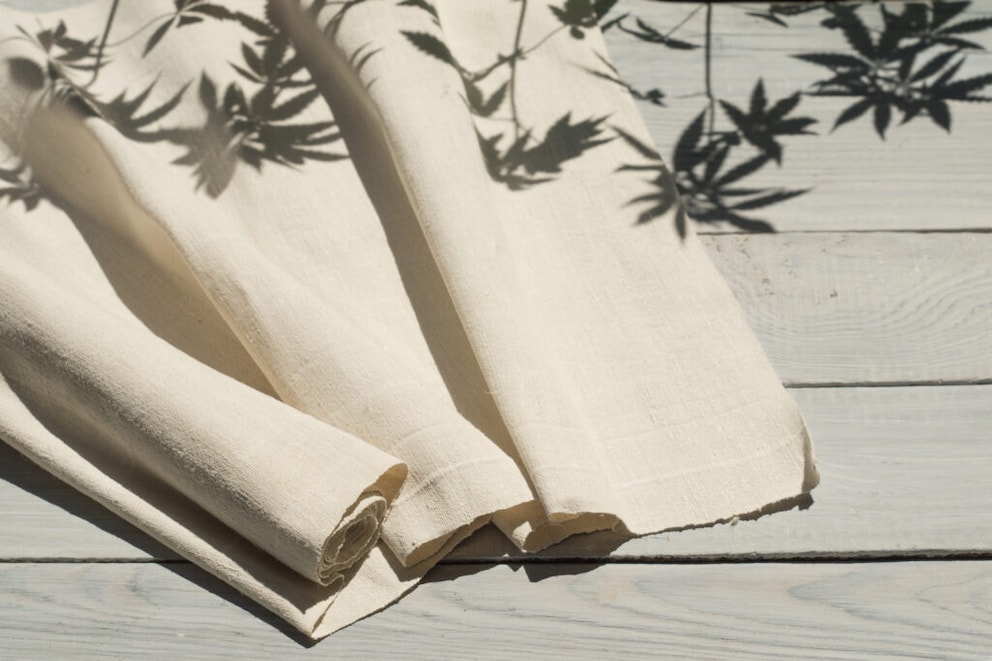
Alongside flax and cotton, hemp is considered one of the oldest cultivated plants. For several years, this valuable raw material has been successfully used as home textiles. Now, hemp is shaking up the furnishings market as a sustainable furniture piece. This makes sense because hemp—compared to cotton—is much less demanding to cultivate.
The natural material grows quickly, requires significantly less water, is cold-resistant, and is resistant to pests and fungi. Later, when processed into a product, it impresses with its high tear resistance. Additionally, hemp is antistatic, has a temperature-regulating function, and is suitable for allergy sufferers. Thus, hemp is now used not only in kitchen towels or bed linens but also in carpets, mattresses, and upholstery covers.
As a modern building material, hemp is also gaining attention. In the form of hemp concrete, which is completely recyclable, initial designs for vases, bowls, and other containers have been created. As a composite material, combined with natural resin, chairs made from hemp as recycled furniture have already appeared on the market.
Also interesting: 6 Tips to Make Your Balcony More Sustainable
Creating Sustainable Furniture from Food Scraps

Innovation can still be found in food scraps. Currently, the enormous sustainable potential of waste is often overlooked, and compost is still underutilized. However, this recycling approach could be promising for the furnishings industry.
True pioneering work is currently being done with new furniture creations made from compost waste. Specifically, these include lampshades made from orange peels and coffee grounds. The advantage: No new raw materials are needed, and the seemingly “new” product is also fully biodegradable. In Tulln, Austria, a new eco-friendly wood binder made from sugar beet waste is being developed. Many wooden furniture pieces are still produced from particle boards containing formaldehyde-based adhesives.