


July 4, 2025, 2:49 pm | Read time: 4 minutes
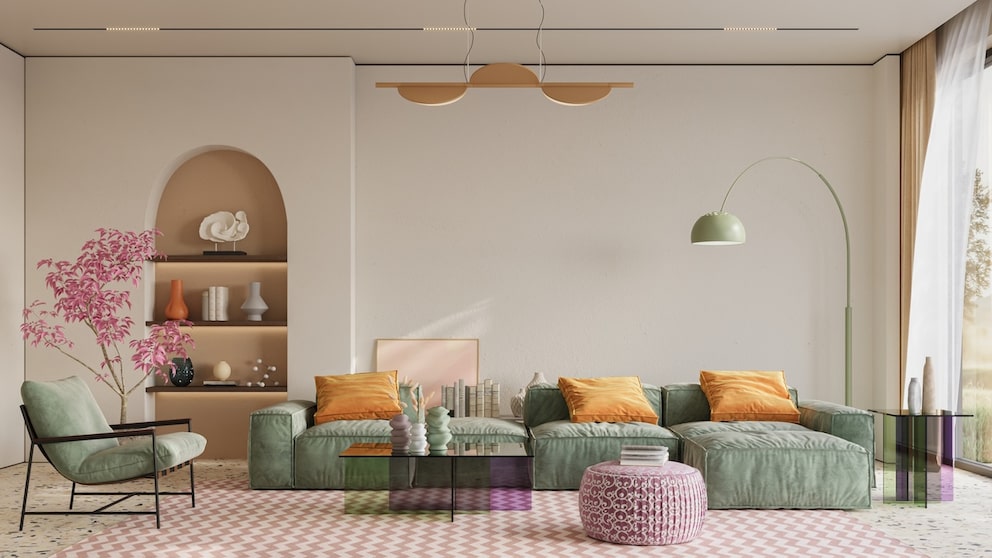
If you’re looking for a fresh, playful yet minimalist style, the Danish Pastel look is perfect for you. It’s a modern reinterpretation of classic Scandinavian interior design–but with a colorful twist.
The interior trend Danish Pastel brings a breath of fresh air into modern homes. Where clear lines and neutral colors have increasingly defined interior design, Danish Pastel embraces what was long considered too playful: soft colors, gentle shapes, and a good dose of lightness. The style combines the clear, reduced aesthetics of Scandinavian designs with cheerful color accents and nostalgic playfulness. The result is a decor style that remains minimalist yet exudes personality and joie de vivre. The spaces feel bright, open, and friendly. Almost as if it’s always spring.
Color Palette: Soft and Playful

The central feature of the Danish Pastel style is the color scheme. Instead of bold contrasts, soft, soothing tones dominate, which can be effortlessly combined. The psychological effect of pastel colors plays an important role. They are considered calming, friendly, and optimistic–qualities that can be soothing in a hectic everyday life. In Danish Pastel design, colors like soft pink, lavender, mint green, sky blue, or vanilla yellow are not just decorative elements but contribute to the atmosphere and function of a room. Despite the colorfulness, the muted tones make the rooms appear calm and stylish.
Also interesting: The Most Beautiful Pastel Decor for Your Home
Organic Shapes and Light Materials
In addition to color design, the Danish Pastel style is characterized by the deliberate use of shapes and materials. The lines are less oriented towards geometry and more towards organic naturalness. Furniture and accessories can be soft, round, or even playful. Instead of hard edges, curves, waves, and flowing silhouettes dominate. Decorative elements like mirrors with wavy frames, organically shaped vases with irregular structures, and twisted candles are particularly suitable.
Lightness is also emphasized in the choice of materials. Glass, ceramics, and acrylic are popular because they reflect light and give the room an airy openness. Fabrics like bouclé or linen support the homely character and add structure to the overall concept. The combination of these elements appears modern yet cozy.
Which Light Fixture Matches Which Interior Style
Here Are the Decor Trends for Spring 2026
Who Is This Trend For?
Danish Pastel is especially popular among people who love minimalist spaces but don’t want to forgo personality in the form of color and decor. The Danish Pastel look is feminine but not kitschy, modern but not cold, and above all, accessible. It thrives on small, deliberate choices and a love for details.
How to Style Your Home in the Danish Pastel Look
If you’re interested in the Danish Pastel style for your home, you don’t have to completely redecorate. The look can be achieved with just a few targeted accents.
Neutral Base
For pastel colors to have an effect, a calm foundation is needed. Walls in white or cream, light wood floors, and simple furniture create the ideal framework.
Use Colors Strategically
Color accents can be strategically placed in the room through decorative elements like pillows, candles, vases, or rugs. Different pastel shades can be combined well. If you have decorative items in bright colors like sunny yellow, red, or vibrant teal at home, you can also use them to set accents within the pastel color palette. However, it’s important to limit yourself to one or two colorful accents to maintain the pastel look.
Play with Shapes
To bring movement into the Danish Pastel look, objects with curves are suitable. Wavy picture frames, twisted candles, asymmetrical patterns on textiles, or organic lamps (and lampshades) look modern and soft.
Minimalism Instead of Maximalism
Once you start playing with color and decor, it’s easy to lose sight of the minimalist look that defines the Danish Pastel style. Therefore, special emphasis is placed on setting a few carefully selected highlights rather than filling the rooms with too much decor and furniture. Less is more–that’s the basic principle.
Even a pastel-colored armchair, a shaped mirror, or a few well-placed decorative elements, such as colorful candle holders with shaped candles, can sustainably change the mood of a room. It’s not always about making everything new but about infusing existing elements with new impulses. The style remains adaptable, sometimes more playful, sometimes calmer, but always with a sense of lightness.