


June 22, 2024, 3:42 am | Read time: 5 minutes
The “Componibili” container from Kartell in Italy has been providing highly personalized furnishings with style–and success–for decades. myHOMEBOOK author and interior designer Odett Schumann introduces the mobile modular furniture.
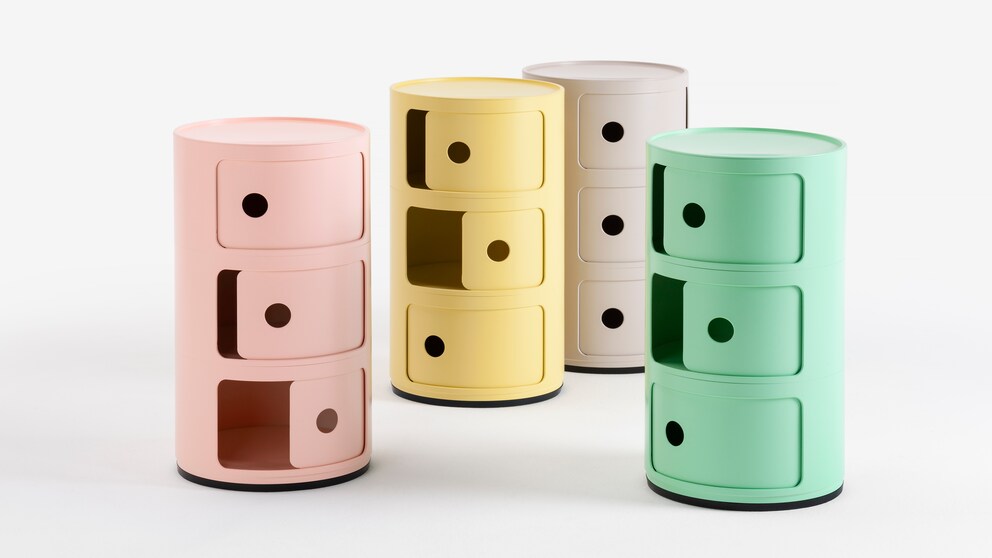
Few furniture classics boast such a timeless design as the “Componibili” container by Kartell. Both in the 1960s and today, this popular side table fits into almost any setting. Its unique construction is what sets this piece apart and is reflected in its name: The word “componibile” is Italian for “modular.” The system furniture can consist of just one or several elements. Here is the story behind the “Componibili” container.
A Container Furniture Becomes a Standout
Round, practical, good—no furniture fits this description better than the “Componibili” container by Kartell. Its pop appearance is mainly due to the many different colors in which it is available. Otherwise, the almost minimalist design scores with its open or hidden storage options, located behind the sliding doors of the rounded compartments. When opened, these doors disappear completely inside the furniture, giving it a completely new look and functionality.
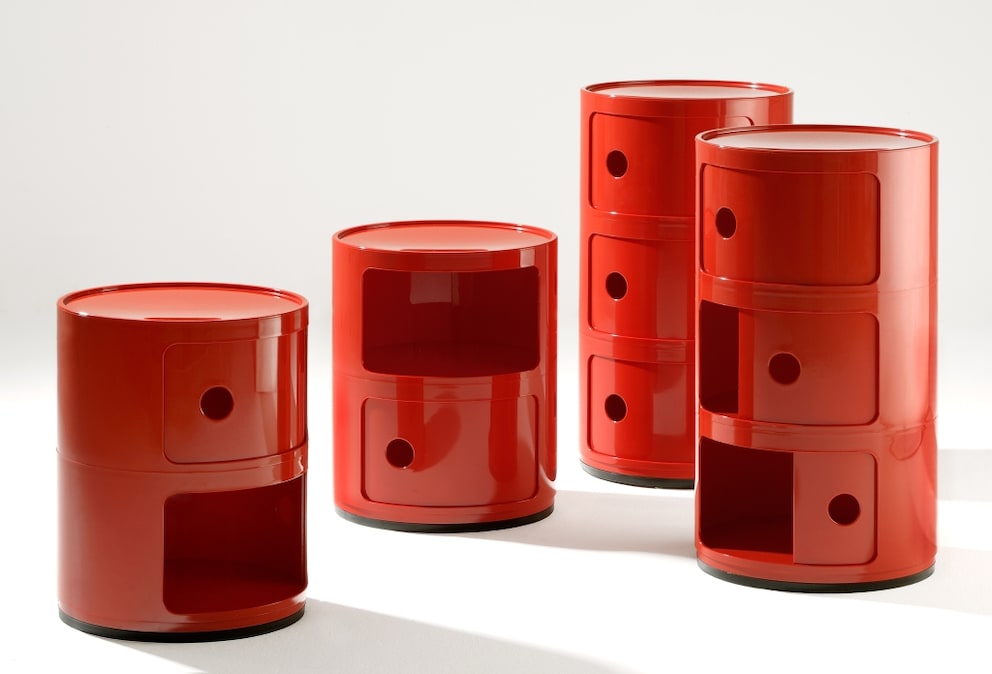
The rolling container was originally designed in 1967 by Anna Castelli Ferrieri for Kartell and was initially made from durable ABS plastic. Over time, however, the piece was further developed and is now made from sustainable polymer.
Today, the side table is considered a legendary design and is currently a striking part of modern interiors. The “Componibili” container is still manufactured by Kartell, has received numerous awards, and is even exhibited at the Museum of Modern Art in New York and the Centre Georges Pompidou in Paris.
Practical and Versatile
Essentially, the “Componibili” container by Kartell is a large, round building block that functions both as a side table and as storage furniture. Depending on preference and need, the piece can be built up with modules from the same family and securely fixed by simply snapping them together. And if an element is no longer needed one day, it can be easily removed. This feature proves especially practical for frequent moves.
Designer Anna Castelli Ferrieri was ahead of her time with the design of “Componibili.” After all, we live in a highly individualized world today, which is increasingly reflected in interior design. This makes the container furniture once again convincing with its timelessness.
In terms of furnishings, this aspect is also advantageous, as its versatility allows the column-shaped small furniture to harmonize with all interior styles. Sometimes it serves as office furniture in the home office, then as a mobile side table in the living room, or as a nightstand in the bedroom.
Also interesting: How the “Eames Lounge Chair” Made History
How to Add Chrome Highlights to Your Home

The Story of the “Grasshopper” Floor Lamp by Gubi
The Designer Anna Castelli Ferrieri

Anna Castelli Ferrieri was the designer of the “Componibili” container. Initially, the young Italian studied architecture in Milan and even founded her own architecture firm in the 1950s. Later, Ferrieri began designing plastic furniture for Kartell, the company of her husband Giulio Castelli.
Her first furniture design, the “Componibili” container, which was first introduced in 1967, quickly became a success. It is a piece that gained worldwide fame and went down in history. Today, it is one of the most popular design classics of the 20th century. Throughout her career, Ferrieri received numerous awards, including the Design Award of the Federal Republic of Germany, for the “Componibili” container.
Classic Meets Creativity
Undoubtedly, the “Componibili” container by Kartell has become an absolute cult object over the decades. This is likely due to its enormous design potential, as one can be extraordinarily creative with this furniture classic.
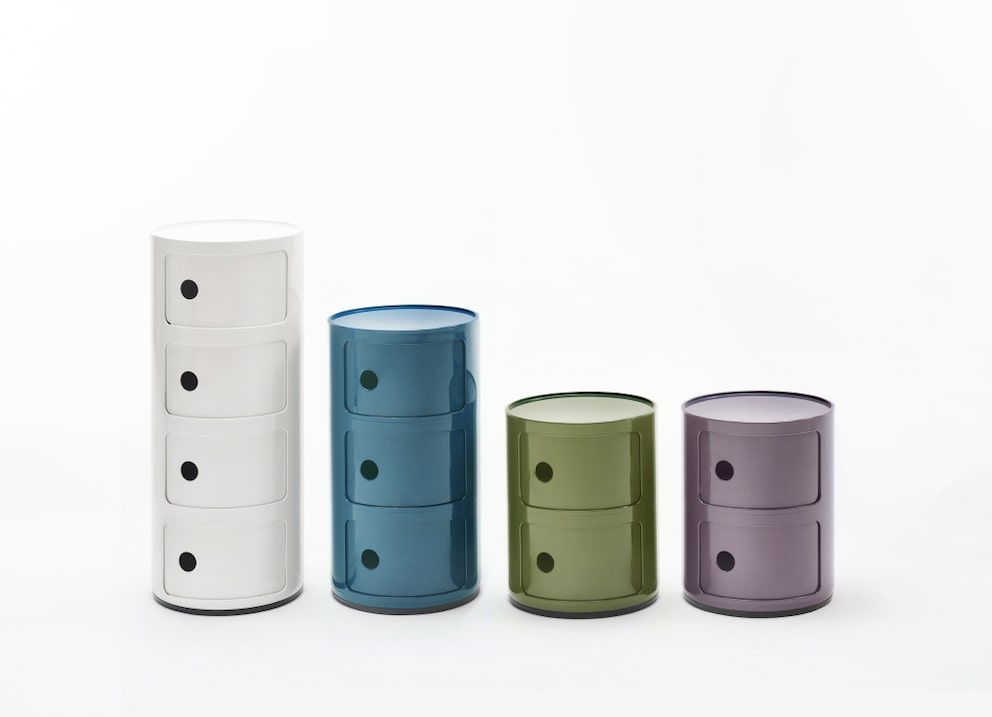
In addition to a wide range of colors, “Componibili” is also available in various sizes and diameters. Accordingly, the individual modules are not only stackable but also suitable for an ensemble of several side-by-side elements, such as in an organ principle. Here, one can experiment in the living space as desired. Even a single element makes a big impact.
The collection by Fabio Novembre was once popular, with the “Componibili Smile,” a bright red version of the design classic specifically designed for children’s rooms. The round handles of his model were available in the form of a smile or a wink. In 2014, the “Componibili” also appeared in the “Precious” collection in several metallic looks. This modern development once again created new design possibilities.
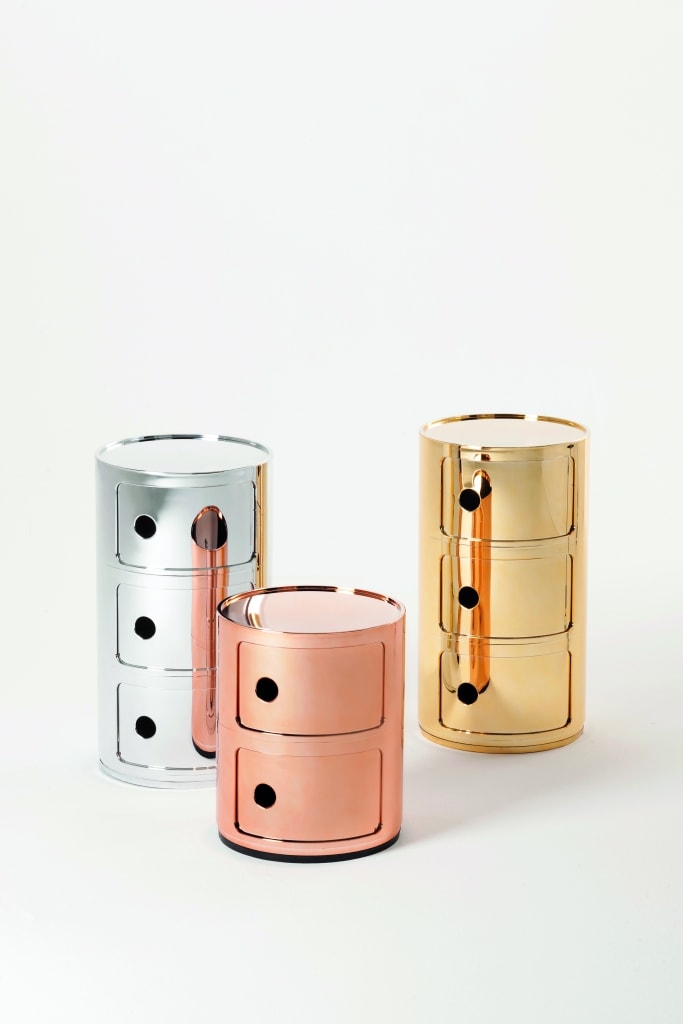
Finally, the mobility of this furniture classic also allows for extremely flexible furnishing. When purchasing a “Componibili” container from Kartell, optional wheels are available. The multitasker can then be quickly moved from A to B in the living space.