

October 2, 2026, 12:19 pm | Read time: 4 minutes
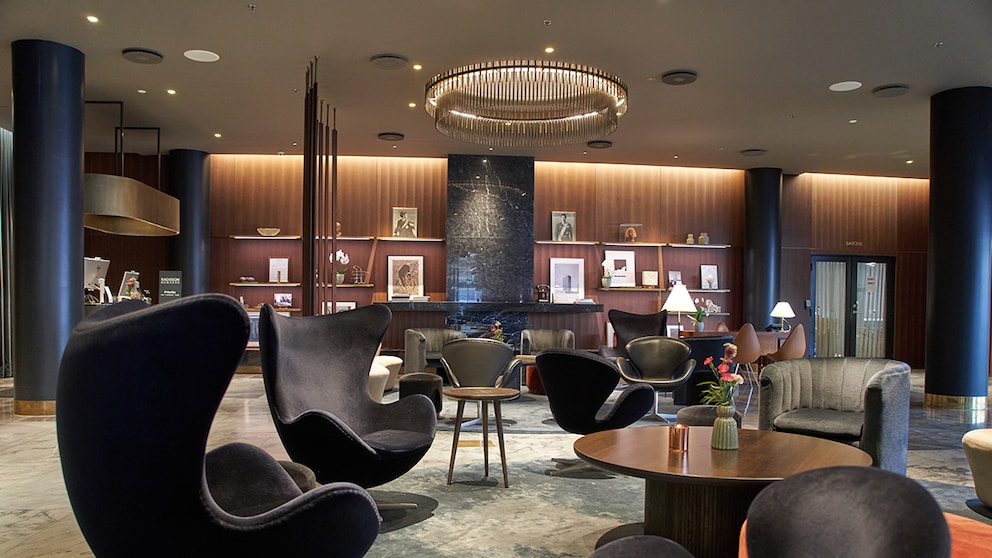
Few chairs have influenced modern lounge chair design as much as Arne Jacobsen’s Egg Chair. myHOMEBOOK has taken a closer look at its history and reveals why the chair is considered a design icon today.
Follow myHOMEBOOK on WhatsApp now
From Hotel Classic to Design Icon
Originally, the Egg Chair was part of a specific architectural project. In 1956, Danish architect and designer Arne Jacobsen was commissioned by Scandinavian Airlines System, or SAS, to design a new hotel in the center of Copenhagen. The future SAS Royal Hotel was meant to be more than just an ordinary hotel. Jacobsen conceived it as a total work of art, where architecture, interior, and furnishings would form a cohesive design unit. Jacobsen not only designed the floor plans, facade, and interiors but also developed textiles and furniture specifically for this project, including the Egg Chair.
The Egg Chair emerged during a time when international furniture design was undergoing significant changes. After World War II, architects and designers increasingly experimented with new materials, industrial production methods, and free, organic forms. Names like Eero Saarinen, Alvar Aalto, and Charles and Ray Eames are associated with this development.
Also interesting: 90 years of the Savoy Vase! Why Alvar Aalto’s design remains timeless
Jacobsen was also part of this movement. His designs combined technical innovation with a distinctly sculptural language. The Egg and its slightly lighter partner, the Swan Chair, are among the most famous examples of this development. The Egg Chair cannot be easily reduced to a single design style. It is functional yet expressive, industrially manufactured yet artisanally refined, modern yet surprisingly homey.
Why Is It Called the “Egg Chair”?
The name is quite simple: The shape resembles an egg. However, it is not merely a stylistic gimmick. Jacobsen developed an organic seat shell that stood out from the linear furniture and rationalist architecture of his time.
This contrast was crucial. While the exterior of the SAS Royal Hotel was characterized by clear lines and geometric precision, Jacobsen opted for softer forms, different materials, and sculptural furniture inside. The Egg Chair almost creates a small protected space within this environment. The high sides of the seat shell visually shield the sitter from their surroundings, creating a sense of privacy–a remarkable feature for a chair originally designed for a hotel’s public lobby.
Between Architecture and Sculpture
What makes the Egg Chair so extraordinary to this day lies primarily in its design process. Jacobsen approached the chair not solely as an architect or constructor but almost like a sculptor.
For the development of the organic form, he worked with materials like clay. Models made of wire and plaster were also used. The form was altered step by step until the proportions and silhouette met his expectations.
The Egg Chair was not only formally unusual. Its production benefited from a relatively new technology at the time. Together with Danish furniture manufacturer Fritz Hansen, Jacobsen worked with a process that allowed furniture to be made from a molded foam core. Jacobsen recognized the potential of this method and used it for his organically shaped seating furniture.
This made it possible to achieve a form that would have been much more difficult to realize with traditional wood constructions or a classic steel frame. The Egg could maintain its characteristic, continuous silhouette–without the straight edges and visible structural elements typical of many older upholstered furniture pieces.

The Barcelona Chair and Its Royal History

90 Years of the Savoy Vase: Why Alvar Aalto’s Design Remains Timeless
The Chair as a Retreat
The true uniqueness of the Egg Chair, however, lies not only in its form. When designing, Jacobsen also considered how a person moves and feels in a space. The chair creates a kind of architectural niche. Those who sit in it are not completely shielded from their surroundings, nor are they fully exposed. The curved form encloses the back, head, and arms, creating an intimate seating situation, even though the Egg was originally intended for a public space.
This reflects Jacobsen’s understanding of design. A piece of furniture should not only look good but also influence the relationship between people and space.
What Makes the Egg Chair a True Designer Piece?
A designer piece is not defined solely by a well-known name or an unusual appearance. Several factors come together in the Egg Chair. First, there is its distinctive form. The silhouette is unmistakable and withstands fleeting interior design trends. Additionally, its creation as part of a consistently thought-out overall concept is significant. Jacobsen designed the chair not as an isolated product but as part of an architecture where every detail was coordinated.
The connection between design and technology also plays a central role. The innovative shell construction enabled a form that would have been hardly realizable in this way before. Finally, the Egg possesses remarkable design longevity. Seven decades after its creation, its organic form still appears contemporary.