


October 22, 2021, 2:55 pm | Read time: 4 minutes
For too long, the TV has dictated the layout of the living room. It’s time to change that! There are now legitimate reasons why the TV shouldn’t be in the center of the room, as our interior designer explains.
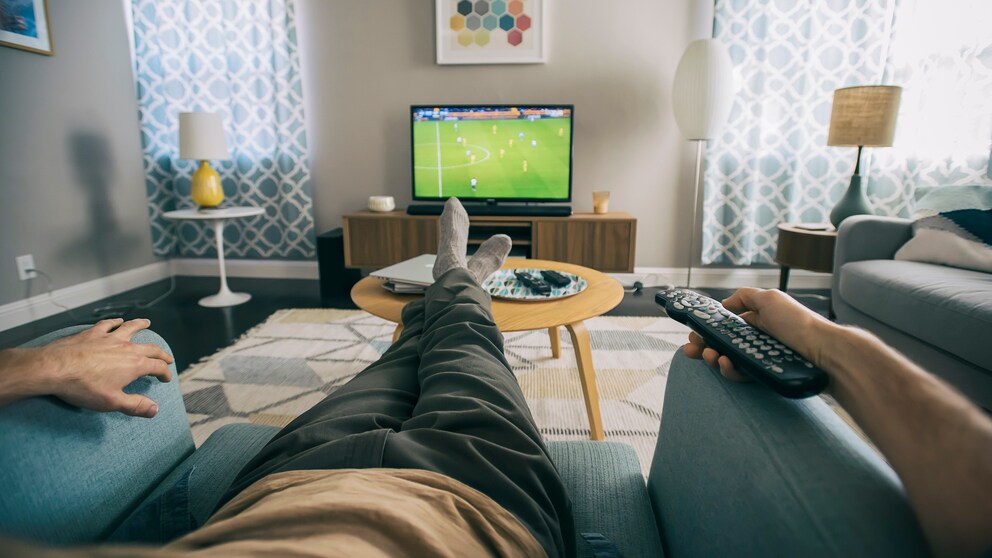
When the television conquered the living room in 1952, it quickly became the nation’s mass medium. Cozy TV evenings with the family made the then-heavy apparatus the attraction of the entire house. The love for watching TV went so far that people even arranged all the furniture, like cabinets, sofas, and armchairs, around the technical device. Thus, the TV was placed centrally on the wall—and this remained the case for many decades. However, because our living environment is quite different today, it is no longer advisable or timely to position the TV centrally and prominently in the room.
Digital Devices in Abundance
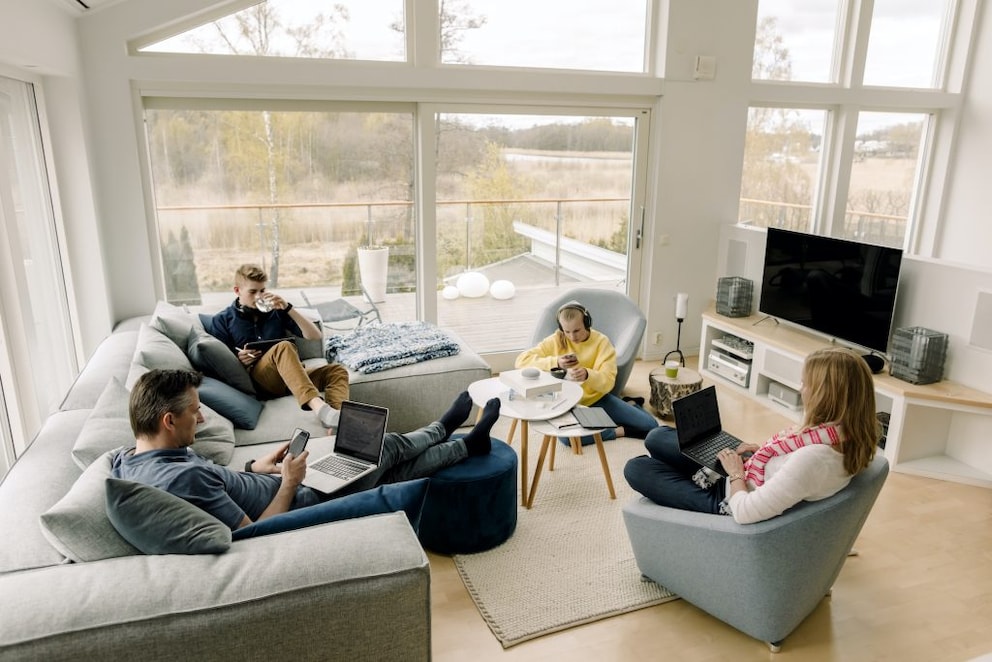
For many years, the television had no other technical competition. The first computers, which emerged in the ’80s and ’90s, went straight to the study or hobby room. It wasn’t until the digital world entered our lives in the form of smartphones, tablets, and the like that we began to look at large and small screens almost constantly. Eight hours of (home) office work, checking Instagram in between, and chilling in front of Netflix in the evening—it’s clearly too much sensory overload in one day. And because this is proven not to be particularly good for our well-being, the TV no longer needs to be placed centrally in the living room. It would be better to move the TV experience to a secondary location, creating more space for real “offline” interactions with family and friends.
Also interesting: 6 Tips for Properly Positioning Furniture in a Room

6 Common Mistakes When Setting Up a Television

Setting Up Your Living Room: 3.5 Mistakes Almost Everyone Makes
When the TV Takes Up Too Much Space
In its early days, the TV set was a small, boxy piece of furniture on legs. Later, the TV was placed centrally in the wall unit. Even when the era of these furniture behemoths ended and modular systems became popular, the TV still occupied a central spot in the room. Only, over time, it grew larger for an ostensibly better viewing experience.
Today, flat screens with diagonals of up to 165 cm dominate the living room wall. This delights cinephiles who fulfill their dream of a home theater, but it detracts from a cozy, relaxing atmosphere. TVs now have such extreme dimensions that they overwhelm the room’s dimensions and proportions, dominating the space. The rest of the living room furniture is often kept “small.” Sofas, armchairs, and storage solutions are placed in rather improvised spots in the room.
Also interesting: 5 Practical Ideas to Hide the TV
Comfort Over TV Mania
Because the TV once dictated the layout of the living room, all other furniture was arranged around it. The sofa was placed where one had the best view of the screen. Armchairs, coffee tables, and other small furniture gathered around it. This happened in many households and was rarely questioned. In some living rooms, the setup remains the same to this day.
The question is, do we still feel comfortable with this arrangement? Perhaps the seating position on the sofa is subject to an unpleasant draft because the central placement of the TV is often right between the window and the room door. Or maybe the view isn’t particularly appealing when the TV is off? Often, the window with a view is too far away, and all the pictures are on the wall behind the sofa. All of this doesn’t have to be the case anymore! Nowadays, there are plenty of ideas for arranging a room so that the TV isn’t centrally placed, yet still easily usable.