


February 16, 2026, 10:10 am | Read time: 3 minutes
Who doesn’t know the feeling: The sofa is still good, the table is essentially timeless, yet the apartment somehow doesn’t feel harmonious. Often, the eye automatically turns to new furniture. But before diving into new and expensive purchases, it’s worth taking a closer look upward. Few design elements are as underestimated as lighting. Good lighting significantly influences how we perceive, use, and feel about spaces.
Lighting Shapes Spaces–Furniture Only Their Surface
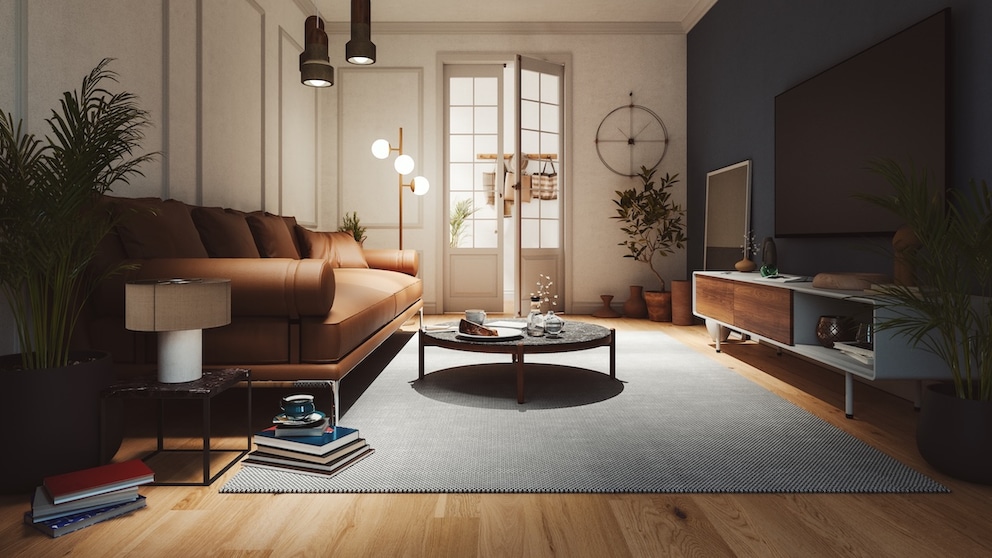
Lighting is not an accessory; it’s architecture. It determines whether a room feels spacious or cramped, warm or cool, calm or restless. Even the most beautiful furniture loses its impact if poorly lit. Colors appear flatter, materials heavier, and proportions become distorted. A dark room with design classics quickly feels dreary. A well-lit room with simple furniture can, on the other hand, appear high-quality.
Targeted lighting can create zones, emphasize sightlines, or visually alter room heights. A floor lamp next to the sofa can structure an open living space, while indirect wall lighting can make low ceilings appear higher. Furniture remains static, while lighting works.
Atmosphere Beats Furnishings
New furniture is visible, but lighting is subtler and emotionally stronger. Warm, dimmed light in the evening provides comfort, while bright, directed light promotes concentration and activity. Our well-being responds immediately to lighting moods, often without us consciously noticing.
An apartment with a well-thought-out lighting concept adapts to the daily routine: activating in the morning, functional during the day, relaxing in the evening. Relying solely on a central ceiling light misses this potential. Multiple light sources at different heights create depth and a homely atmosphere, regardless of whether the sofa is new or ten years old.
Good Lighting Makes Materials Visible
Wood, fabric, stone, or metal only reveal their true effect through the right lighting. A matte surface thrives on soft diffused light, while glossy materials need targeted accents. Without suitable lighting, high-quality furniture quickly looks arbitrary. A simple shelf can suddenly become a stage with a small spotlight rail, and an old wooden table appears lively and noble under warm light. Lighting is the translator between material and eye, deciding whether quality is perceived at all.
What Does Dark Interior Design Do to the Human Brain?

6 Trends That Will Enhance Living Rooms in 2024
Flexibility Instead of Replacement
Replacing furniture is expensive, cumbersome, and not very sustainable. Lighting, on the other hand, can be changed and adapted relatively easily. New lamps, different light colors, or smart controls can give a room a completely new look without replacing a single chair.
Combined lighting concepts are particularly flexible: basic lighting for orientation, accent lighting for atmosphere, and task lighting for specific activities. This way, a room can take on multiple roles: home office during the day, retreat in the evening—all without moving or replacing furniture.
Lighting Influences More Than Just Living
Besides its aesthetic impact, lighting also has a physiological dimension. It affects our biorhythm, concentration, and even mood. Poor lighting can cause fatigue, headaches, or restlessness. Good lighting, on the other hand, supports health and productivity. This aspect is especially important in times of home office. Investing here means investing not only in design but in quality of life.