


January 19, 2026, 5:34 am | Read time: 6 minutes
The washing machine is indispensable in the household. It saves time, effort, and reliably ensures clean laundry. However, as practical as it is, not everything dirty truly belongs in the drum. Some items can be damaged by the wash cycle, lose their function, or even harm the washing machine itself. These six things should not be cleaned in the washing machine.
1. Pillows with Foam Filling
Foam or memory foam pillows absorb a lot of water in the washing machine, becoming heavy and quickly losing their shape. During spinning, the material can tear or become permanently deformed, so the pillow no longer provides proper support.
Another issue is drying: Foam releases moisture very slowly. Even if the pillow appears dry on the outside, residual moisture can remain inside, creating an ideal breeding ground for mold and unpleasant odors.
Therefore, these types of pillows should not be cleaned in the washing machine. Instead, regularly airing them out and gently beating them is recommended. Spot cleaning with a damp cloth can also be useful. If needed, the removable cover can be washed. This way, the pillow remains hygienic without losing its shape and function.
2. Shoes
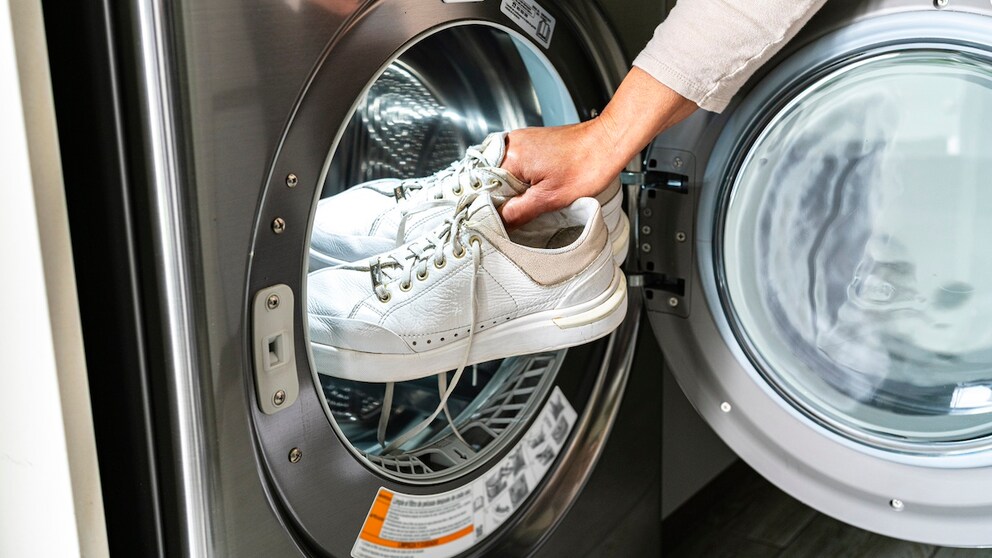
Few topics in washing are as passionately debated as shoes in the washing machine. For some, it’s a quick and convenient solution; for others, it’s an absolute taboo. The truth often lies somewhere in between. Whether a shoe is suitable for the washing machine depends heavily on its material and construction.
While simple sneakers made of canvas or mesh usually survive a gentle wash cycle in a laundry bag unscathed, leather shoes are extremely sensitive to water, heat, and mechanical stress. The leather can swell, harden, or crack, affecting the fit and causing glued areas to come apart. It’s especially critical with sports shoes with cleats or spikes, such as soccer, golf, or track shoes. The hard elements can hit the drum uncontrollably during the wash cycle, damaging not only the shoe but also the washing machine. Broken spikes, bent cleats, or scratched drum surfaces are not uncommon. Additionally, metal parts can come loose and damage other laundry items.
Moreover, sports shoes often consist of material combinations: plastics, foams, adhesives, and textile elements come together. This mix is highly unsuitable for the washing machine. Even if the shoe looks clean on the outside, its cushioning, stability, and lifespan suffer significantly.
If you want to wear your shoes for a long time, it’s better to opt for gentler alternatives: beating, brushing, cleaning with a damp cloth, or using special shoe cleaners if necessary. Although the quick wash cycle is tempting, it can quickly lead to having to part with your shoes sooner than expected. Therefore, shoes should not be cleaned in the washing machine.
Also interesting: 7 Common Mistakes When Loading and Operating the Washing Machine
3. Textiles with Pet Hair
Textiles heavily covered with pet hair often pose an underestimated challenge for the washing machine. Blankets, pillows, or even dog beds may look clean after the wash cycle, but the hairs often just change places. Instead of being rinsed out, they collect in the lint filter, in the hoses, or stick to the drum. Clogged filters in the washing machine impair water drainage and can lead to error messages or damage to the machine. Additionally, damp pet hair can easily combine with detergent residues and develop unpleasant odors. Especially for dog blankets or cat baskets, it’s advisable to thoroughly remove the hair beforehand, using a lint roller, a special brush, or a vacuum cleaner.
Alternatively, it may be wise to clean heavily haired textiles separately or avoid the washing machine altogether and beat or brush them out in the open. This way, not only does the laundry remain hair-free, but the washing machine also stays functional longer.
4. Clothing Made of Leather or Delicate Natural Fibers
Clothing made of leather, suede, or velour may seem robust, but in reality, it is extremely sensitive. A wash cycle in the machine takes a heavy toll on the material: Leather loses its natural oils due to water and detergent, becomes hard, brittle, and can shrink unevenly after drying. What once fit smoothly now resembles a stiff armor rather than a comfortable garment.
Delicate natural fibers like wool, silk, linen, or cashmere also react unpredictably to the conditions in the washing machine. Heat, friction, and spinning can cause wool sweaters to shrink, felt, or lose their shape. Silk quickly loses its luster, becomes dull, or gets water stains that are difficult to remove. Additionally, many natural fibers, while natural, are not automatically easy to care for. They react sensitively to incorrect temperatures and aggressive detergents. Even a supposedly gentle wash cycle can be enough to permanently damage the material.
Also interesting: How to Wash and Iron Silk Properly – The Most Important Care Tips
Instead, a particularly careful approach is recommended: airing out, gentle brushing, or a delicate hand wash with special cleaning products. For high-quality or heavily soiled items, professional cleaning is usually the safest choice. Especially with leather and fine natural fibers, less water is often more.

Does a Plastic Bag Help Against Lint and Pet Hair in the Washing Machine?

Why the Last Minute of the Washing Machine Takes So Long
5. Items Made of Rubber or Latex
Anti-slip mats made of rubber, bathtub toys, or latex items do not tolerate heat or spinning well. They can warp, become porous, or even melt. Therefore, such items should not be cleaned in the washing machine. A much gentler option is cleaning with warm water and mild detergent.
6. Clothing with Highly Flammable Residues
Some DIY enthusiasts may have quickly tossed an oil-stained overall into the laundry after a long day in the garage. The result is often a pungent odor that clings stubbornly to the drum and remains noticeable even after several wash cycles. In particularly severe cases, the washing machine can even be damaged or become unusable.
Work clothes, cleaning rags, or old clothes soaked with oil, gasoline, thinners, paints, or other solvents should not be cleaned in the washing machine. What may initially appear as a stubborn stain can quickly become a real safety risk inside the machine. The combination of warm water, movement, and heat during spinning can create easily flammable vapors, which in the worst case can lead to a fire.
Such textiles should therefore be thoroughly aired out, treated by hand with suitable special cleaners, or—if heavily soaked—properly disposed of. After all, the washing machine is designed for dirt and everyday stains, not for highly flammable chemical residues. Here, safety takes precedence over cleanliness.