


July 15, 2026, 10:31 am | Read time: 3 minutes
As soon as dark clouds gather, they seem to be everywhere: thunderbugs. These tiny black insects often crawl in large numbers on plants, windows—and even on people. While they aren’t dangerous, they are certainly annoying. But is there more to their appearance than mere coincidence? Do thunderbugs really signal an approaching storm? myHOMEBOOK investigated.
What Exactly Are Thunderbugs?
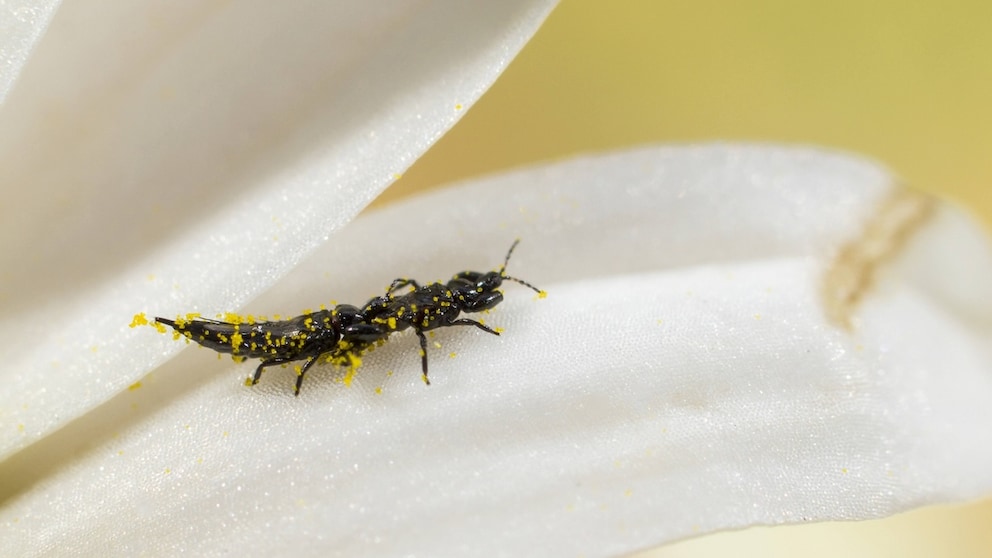
Thunderbugs are also known as thrips or thunderflies. Biologically speaking, they are not flies but rather thrips. Their wings have long fringes, which help them stay airborne. According to the German Environment Agency, there are about 5,500 species worldwide, with around 210 in Germany.
Thunderbugs feed on plant sap or aphids and mites. Depending on the species, they develop either above or below ground. The German Environment Agency notes that these insects are not particularly good fliers, so they are carried by the wind, allowing them to travel hundreds of kilometers.

Spiders in your home in the fall! How do you keep them away?

These Plants Are the Best “Bee Magnets,” According to Scientists
Can Thunderbugs Really Predict Storms?
Some may have noticed that thunderbugs often appear when a storm is brewing. It’s as if these tiny insects know something is forming in the sky and can predict it. The question of whether thunderbugs actually announce storms, or if there is a connection between their increased presence and the weather, is addressed by thrips expert and insect researcher Dr. Manfred R. Ulitzka on his website.
The expert explains that the flight behavior of thunderbugs is influenced by various factors such as light, wind, air pressure, humidity, and temperature. On mild summer days with temperatures of at least 20 degrees Celsius, some species embark on what are known as swarm flights, according to the expert. Naturally, there may be a certain likelihood of thunderstorms on such days, making the phenomenon of mass appearances of the insects seem linked to storms, he adds.
But that’s not entirely the case. Rather, electrical charges in the air influence the behavior of thrips. The mass appearance of the insects is not initiated by the storm, the insect researcher continues. Instead, the insects try to reach the ground and land, which is why they become more noticeable.
Changes in the electric field strength in the air are the sole triggers of this behavior, he further explains. During a thunderstorm, the electric field strength in the air increases. Normally, it is about 0.1 kilovolts per meter, but during thunderstorms, it can reach up to 50 kV/m. According to Dr. Manfred R. Ulitzka, insects of small body size are particularly affected by changes in electric field strength and cease all flight activity at around 8 kV/m.
Why Do Thunderbugs Land on People?
Thunderbugs seek shelter when the electric field strength is elevated and try to reach the ground. There are various reasons why they land on people. According to the insect researcher, they are mainly attracted to yellow and white clothing. In humid weather, people often sweat, and the insects, according to the expert, absorb the sweat and can even penetrate the skin.
This can result in itching or, in sensitive individuals, inflammation. However, actual bloodsucking has only been observed in a few species so far. It is more or less by chance that these insects land on us.