


October 29, 2026, 5:34 am | Read time: 3 minutes
If you have bamboo in your garden, you’ll need to frequently trim the fast-growing plant. Over time, this can result in some thick, woody stalks. Instead of disposing of them, you might consider using them as firewood in a fireplace or wood stove. However, bamboo is not intended for this purpose. Regardless of legal considerations, there’s a good reason not to throw the stalks into the fire.
Can You Burn Bamboo in a Fireplace?
Just because bamboo stalks can become quite woody doesn’t make them classic firewood. This is crucial for use in a home fireplace or wood stove.
“According to the 1st Federal Immission Control Ordinance (1. BImSchV), bamboo is not an approved fuel for a typical fireplace or open hearth that uses logs,” explains Iris Dohmen from the Federal Association of Chimney Sweeps when asked by myHOMEBOOK.
The key difference lies in the plant itself. Although bamboo may look like wood due to its firm and woody stalks, botanically it belongs to the grasses. Therefore, it cannot simply be used as firewood in a stove designed for logs.
Why Bamboo Stalks Can Be Dangerous When Burned
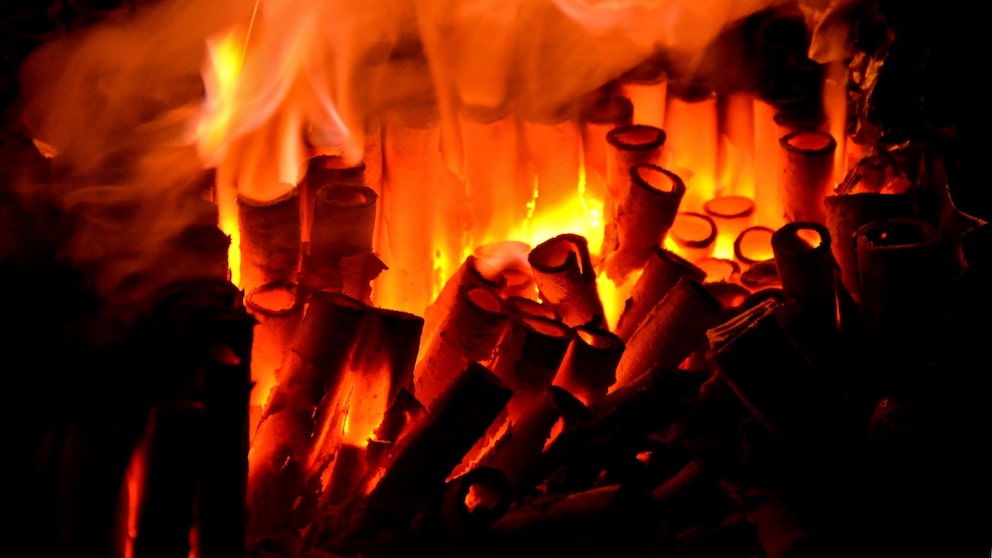
It’s not just the lack of approval that argues against using bamboo in a fireplace. The unique structure of the stalks can become problematic when heated. Bamboo stalks are divided into sections, which can contain enclosed cavities.
“Whole bamboo stalks can pose a technical risk. The nodes can form enclosed cavities. When heated, pressure and steam can build up inside, causing the stalks to burst with a bang,” explains Dohmen. The bursting is not only loud. “Glowing embers and burning particles can be ejected,” warns the expert.
Also interesting: These 9 Mistakes to Avoid When Heating with Wood
Does It Matter If Bamboo Is Fresh or Dry?
The condition of the plant does play a role in its burning behavior. Freshly cut stalks still contain a relatively high amount of moisture. “Fresh bamboo contains a lot of moisture, which reduces the usable energy yield and can promote incomplete combustion,” says Dohmen.
Even dead bamboo stalks are not necessarily dry enough. For the crucial question of whether they can be burned in a log stove, this ultimately doesn’t matter. “The drying state does not change the lack of approval in a typical log stove,” the expert clarifies.
Don’t Throw It Away! How to Clean Your Fireplace Glass
Energy Crisis Sparks High Demand for Wood Stoves
What Consequences Can Bamboo Have for the Fireplace and Chimney?
Burning bamboo can also produce residues that are problematic for the fireplace and chimney. “Poor combustion can lead to soot and combustible deposits, increasing the risk of a chimney fire,” explains Dohmen.
Additionally, possible residues from the plant’s composition can occur. “Depending on the type of bamboo, ash and mineral components can also promote deposits or corrosion.”
Bamboo not only differs botanically from classic firewood. Its burning behavior and potential residues also argue against using it as a firewood substitute.
What Chimney Sweeps Recommend
If you have many bamboo stalks left after a heavy pruning, you should not dispose of them in the fireplace. Iris Dohmen advises sticking to the fuels intended for the respective stove: “Our advice from the chimney sweep trade: Use only the fuels intended for your stove. Bamboo cuttings are better off at the local green waste collection.”