

October 27, 2021, 11:41 am | Read time: 5 minutes
For particularly stubborn stains, many people turn to special removers that are supposed to combat them more effectively. In addition to chemical cleaners, natural options are also available, but which performs better in comparison?
For some stains, a simple wash isn’t enough to get rid of them. They should ideally be treated immediately after they occur with either a chemical or natural stain remover. Both promise to clean laundry gently even at low temperatures, but based on different ingredients. A practical test is set to show whether one can outperform the other.
Natural Stain Remover by Everdrop
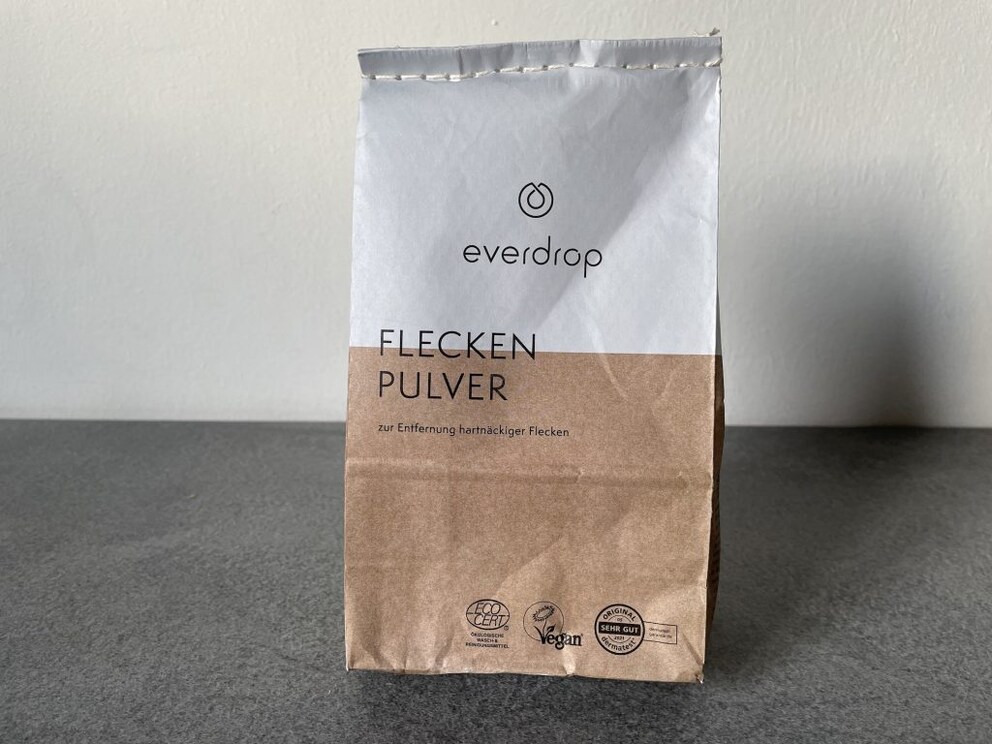
The vegan stain powder with active oxygen is, according to the manufacturer, free from chlorine, microplastics, fragrances, and dyes. The ingredients are easily biodegradable and 97 percent of natural origin. The surfactants are based on plant-based raw materials and are particularly gentle, as shown by the Dermatest seal.
The packaging is made of paper and can be disposed of in the recycling bin. Two additional certifications provide more insight into the cleaner’s sustainability: the Ecocert seal and the Vegan Flower.
Products certified by Ecocert must not cause avoidable waste and wastewater. Additionally, there is a distinction between synthetic and natural ingredients. The Vegan Flower awards products that avoid animal components and/or animal testing in their production. They must also not contain animal parts, animal by-products, or raw materials derived from animals.
How and Against What Should the Natural Stain Remover Help?
The powder is supposed to work at a water temperature of 30 degrees and against stains caused by fruit, vegetables, coffee, red wine, tea, grease, sauce, grass, blood, or even saliva. It also prevents a gray haze. However, it should not be used on wool or silk laundry.
It can be used as an additive to detergent, for pre-treatment, or for soaking laundry. It is suitable for white, bleach-safe, and colorfast textiles, but the powder should always be tested on an inconspicuous area first. If you want to add it to the wash, 10 to 20 milliliters are sufficient, depending on the degree of soiling. For pre-treatment, mix five milliliters with 15 milliliters of water, rub it into the stain, and let it sit for a maximum of ten minutes. Then wash the textile as usual. To soak a garment for a few hours, dissolve 10 to 20 milliliters in four liters of warm water.
The Practical Test
To test the stain powder, some coffee was spilled on a cotton cloth. A mixture of 5 ml of powder and 15 ml of water was then applied to the stain and rubbed in. After ten minutes, the pre-treated cloth was finally placed in the washing machine at 30 degrees. The result: The cloth came out clean and without coffee residues. Since the powder contains no fragrances, the result was odor-neutral.
Also interesting: Simple tips and tricks on how to remove stubborn stains from your carpet

A Household Remedy That You Can Use to Remove Even Old Stains

What Are Laundry Detergent Sheets?
Chemical Stain Remover by Vanish
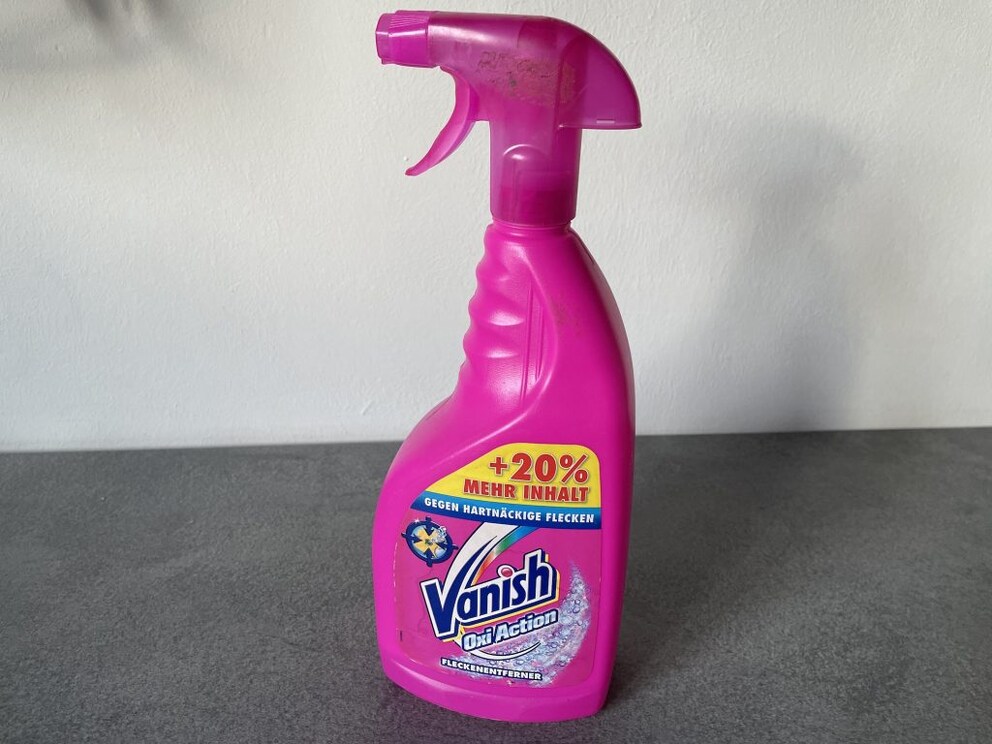
The chemical stain remover, like the natural one, is free from chlorine-based bleaches. Instead, it consists of 30 percent oxygen-based bleaches. It also contains sodium percarbonate, which releases active oxygen, enzymes that break down stains, anionic and nonionic surfactants for gentle stain removal, sodium carbonate for improved deep cleaning, tetraacetylethylenediamine, which enables stain removal at low temperatures, zeolite for softening water, and fragrances.
How and Against What Should the Chemical Stain Remover Help?
The spray is supposed to be color-safe at 30 degrees for colorful and white textiles made of cotton and polyester. They should also be suitable for chemical cleaning and marked accordingly. It’s best to always test it on an inconspicuous area first to be sure. The spray must be sprayed directly onto the stain, lightly rubbed in, and then left to work for a maximum of five minutes. After that, the garment is washed as usual.
The Practical Test
Just like with the natural stain remover, some coffee was spilled on a cotton cloth for the chemical one. The spray was then sprayed directly onto the stain and rubbed in. After five minutes of exposure time, the wash at 30 degrees followed. This cloth also came out clean and without coffee residues from the machine. It smelled slightly of fresh laundry, as the product is infused with fragrances.
The Conclusion
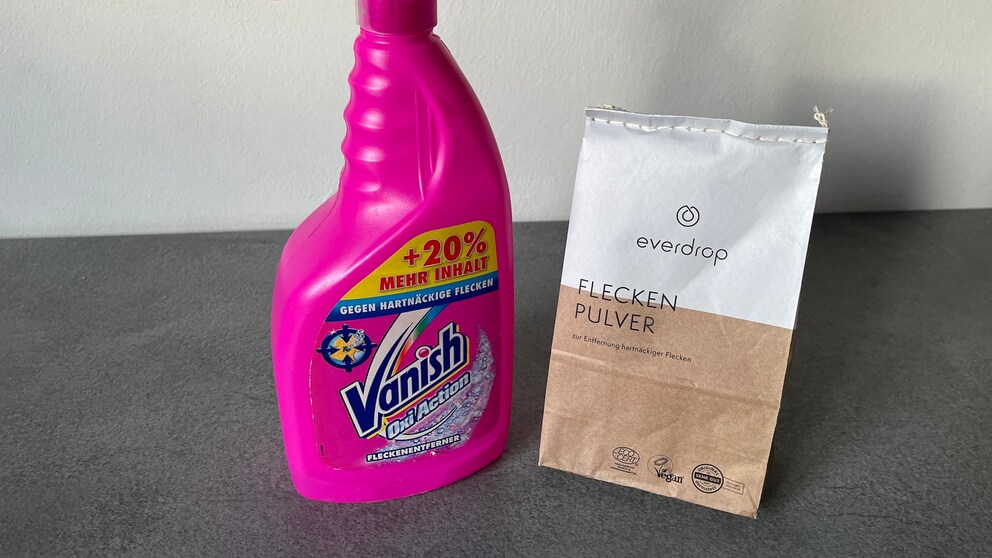
Even in terms of packaging, a significant difference can be noted in terms of sustainability. The natural stain remover comes in a paper bag, while the chemical one is in a plastic spray bottle. The bag can be disposed of in the recycling bin, while the bottle ends up in the plastic waste.
The application method of both the chemical and natural stain removers is the same. The advantage of the natural product is that it has a broader range of applications than the chemical one, which is particularly recommended for acute stain treatment.
Now to the most interesting part–the effectiveness. Both products keep their promise, as they combat the coffee stain quickly, effectively, and completely. In this regard, no “better” product can be identified; both work equally well. The aspect of environmental friendliness or sustainability remains, where the stain powder performs better due to its biodegradable and mostly natural ingredients.