


September 27, 2025, 5:25 am | Read time: 4 minutes
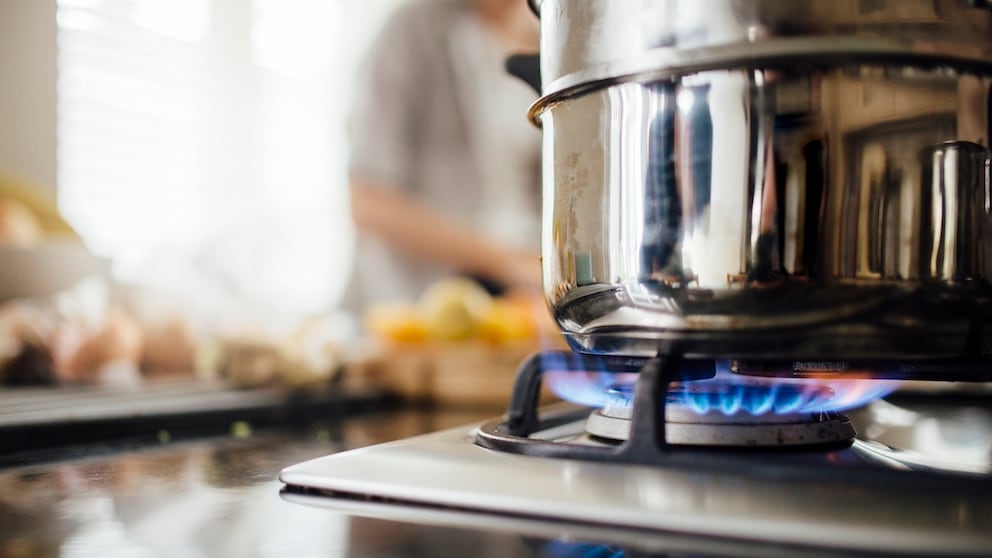
The pros cook with gas. Direct heat control is one of the frequently used advantages of this technology. If you currently have an electric stove with a ceramic cooktop in your kitchen, you might be considering switching to gas. But is that even possible? And what should you keep in mind?
As with electrical installations, setting up gas stoves is definitely a job for a professional. A new gas connection must be installed by a technician. There is one exception: if a so-called gas socket is already present in the kitchen. This allows consumers to connect without tools. However, it is still advisable to consult a professional company. They will also take responsibility for ensuring everything is sealed properly.
Converting to a Gas Stove—The Structural Requirements
It’s obvious, but it needs to be emphasized here. A prerequisite is a gas connection near the stove. If this is missing from the house, there are two options:
- The connection to the city network is first established. However, there are still no lines in the house. The investment of several thousand euros is certainly not worth it for the stove alone.
- One option is to use a standard bottle of liquefied gas, which is connected directly to the stove.
If you’re considering switching to liquefied gas, keep in mind that a standard bottle weighs 11 kilograms and needs to be moved. Additionally, it must be clarified in advance (with the fire department, landlord) whether operation and especially storage are legally permissible. And, of course, the gas supply in the bottles is finite. Depending on cooking habits and usage, the bottle may run low after a few weeks and need to be replaced. Larger containers must be stored separately for fire safety reasons.
Also important: For self-protection and due to fire safety regulations, a kitchen with an open gas stove must be at least 20 cubic meters in size. Additionally, a window or an appropriate ventilation system is required.
Why? On one hand, the flames need an adequate air supply to burn. On the other hand, they also emit exhaust gases into the air. The latter point is crucial for maintaining your health. Household stoves do not have their own exhaust system. This makes it clear: A suitable connection or solution is not something that can be done “just like that.”
Also interesting: What Do Cooktops With Integrated Exhaust Fans Offer?
Can You Replace a Ceramic Cooktop With an Induction Cooktop?

3 Alternatives to Wood-Burning Fireplaces Compared
The Installation Work
Gas stoves are available as freestanding units, which stand next to a kitchen unit and combine stove and oven in one housing. Or they are integrated into a kitchen unit as a built-in appliance. If an electric stove was previously installed in the same spot and there is a gas connection, the appliance itself should fit.
A challenge can be the cutout in the countertop. If the previously used cooktop was smaller than the new one, the problem can be solved by careful sawing. The situation is different in the reverse case. The opening would need to be reduced with profiles to ensure everything fits.
Cooking with gas involves dealing with an open flame. This results in high temperatures in the immediate vicinity of the burners. For fire safety reasons, the safety distances to countertops and cabinets described in the installation and operating instructions must be strictly followed. There should be a distance of at least 65 centimeters between a range hood and a gas cooktop; otherwise, there is a risk of accumulated grease in the filter catching fire.
Cost Comparison Between Gas and Electric Stoves
In the direct comparison of acquisition and operating costs between gas and electric stoves, there is an interesting phenomenon. The cost per kilowatt-hour of gas is significantly less than the same amount of electricity. According to the Federal Statistical Office, households in Germany paid an average of 12.28 cents per kilowatt-hour of natural gas in the second half of 2024. Electricity cost consumers an average of 41.20 cents per kilowatt-hour during the same period. Gas is therefore (currently) cheaper.
However, when it comes to the purchase costs of the appliances, the situation is exactly the opposite, as a look at electronics and hardware stores reveals. Switching to gas for economic reasons alone is unlikely to be worthwhile—depending on how high the conversion costs are. Unless everything is ready for gas use at the connection site. But even then, a lot of energy must be consumed before the higher appliance costs are amortized.
If your primary concern when cooking is minimizing energy consumption, induction stoves are your best bet. They outperform traditional electric stoves with ceramic cooktops and gas. Cooking like the pros—this dream comes at a price.