


September 22, 2026, 11:18 am | Read time: 3 minutes
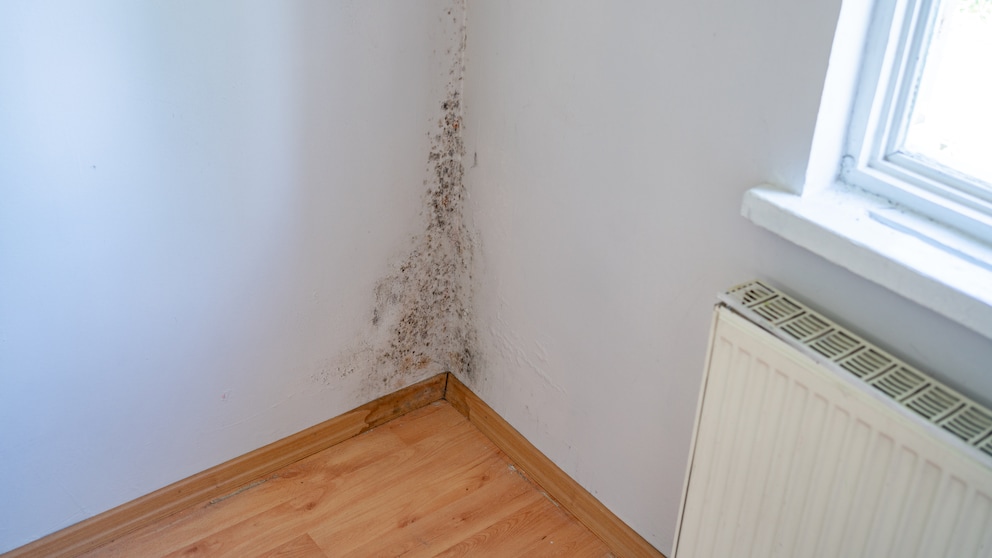
A cabinet stands directly against the wall. Months later, the shock: a dark spot on the wallpaper, right behind the furniture. Such mold cases are not uncommon. The reason almost always lies in the lack of space between the furniture and the wall. Upon request from myHOMEBOOK, the press office of the Consumer Center NRW explains what is important in this regard.
Follow myHOMEBOOK on WhatsApp now
If a bulky piece of furniture, such as a cabinet or a sofa, covers a large part of the wall, the air behind it can hardly circulate. As the Consumer Center NRW explains, the wall cools down at certain spots. Moisture from the air can then condense there. A cool wall surface provides the ideal breeding ground for mold.
This particularly affects exterior walls in old buildings or poorly insulated structures. In these areas, the surface temperature in winter is significantly below the room temperature.
How Much Space Is Needed
For interior walls, the distance of a cabinet, according to the Consumer Center NRW, does not matter as long as there is a heated room on the other side. It’s different for interior walls adjacent to unheated rooms or stairwells. Here, the press office recommends some space to allow air circulation.
For exterior walls, a clear spacing rule applies. According to the Consumer Center NRW, there should be a gap of about eight to ten centimeters between the back of the furniture and the wall. For poorly insulated walls or large, closed furniture pieces, the gap should be even larger, in some cases up to 20 centimeters. Only then can the heating air reach the wall and keep it warm.
Also interesting: How to properly remove mold in the apartment

Does Thermal Insulation Really Lead to More Mold Indoors?
Is putting reflective foil behind the heater worthwhile?
The Role of the Furniture Piece
Not every piece of furniture requires the same attention. Open bases, along with the minimum distance, allow more air circulation, explains the Consumer Center NRW. Closed bases, on the other hand, block this path. Here, the wall distance is even more crucial.
For beds against exterior walls, the press office advises against filling the space under the bed with storage boxes or drawers. Such furniture blocks air exchange from below. Large cabinets also do not belong against exterior walls or under poorly insulated sloped ceilings.
Recognizing Early Warning Signs
Mold behind furniture remains invisible for a long time. The first warning sign, according to the Consumer Center NRW, is musty room air or a moldy smell. Recurring respiratory problems can also indicate a hidden infestation, according to the press office. Their tip: regularly check behind large cabinets or examine the wallpaper on exterior walls.
However, distance alone is not enough. Room air also plays a role. According to the Federal Environment Agency, the optimal relative humidity in living spaces is between 40 and 60 percent. If it consistently rises above 60 percent, the risk of mold increases significantly, even in areas with sufficient wall distance. Small digital hygrometers provide information about the room’s humidity. Regular shock ventilation with wide-open windows helps against rising humidity.
If a spot or a noticeable smell already appears, professional assessment can help. This is especially true if the infestation keeps occurring despite regular ventilation and sufficient wall distance of the furniture. In such cases, a structural defect is often behind it, such as a thermal bridge or a leak in the masonry.
Contact points for a professional assessment are offered by the State Network for Mold Advice NRW. In addition to a list of experts, there are tips for early detection of mold causes.