


May 16, 2026, 10:56 am | Read time: 4 minutes
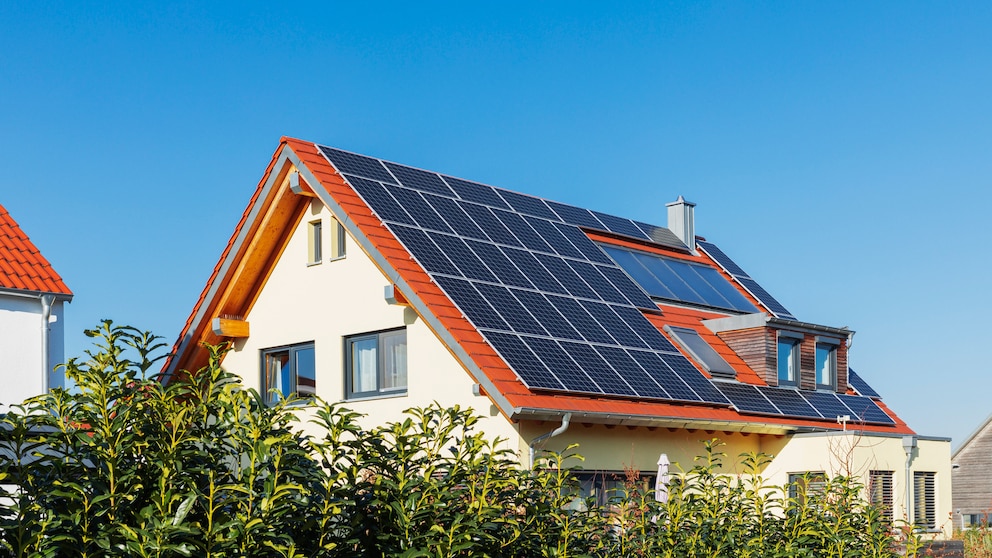
The energy of the sun is always available. That’s generally true, except when the power grid fails. This may sound absurd, but there are reasons for it. Why a PV system doesn’t necessarily continue to produce electricity during a power outage is something myHOMEBOOK discussed with the Federal Association of the Solar Trade in Berlin.
The public often believes that a photovoltaic system is the best protection during a power outage. After all, solar panels would continue to convert solar energy into electricity even during an outage. “That’s not always the case, as most PV systems are designed to automatically shut down during a power outage for safety reasons,” explains Lucas Flügel, spokesperson for the Federal Association of the Solar Trade when asked by myHOMEBOOK. He provides the reason: “This is to protect network technicians working on the public power grid.”
Follow myHOMEBOOK on WhatsApp now
An Additional Emergency Power Solution Is Important
Without an appropriate emergency power solution, the house or apartment remains without electrical energy despite the sunshine. At this point, it’s necessary to distinguish between different terms related to emergency power supply.
- Basic Emergency Power: At the inverter, the device that converts solar energy into usable electricity, or at the storage unit, there is a dedicated outlet. If the grid fails, smaller devices can be manually plugged in here. Downside: The house lights remain off, and the heating doesn’t continue. It’s a pure “emergency solution” for small devices.
- Backup Power: In this case, if the public power grid fails, the entire house is supplied via an internal storage network. An automatic switching device disconnects the house from the grid, allowing the storage to take over the internal supply.
- Off-Grid Operation: A true off-grid system is not connected to the public power grid at all. The industry refers to this as off-grid. Such a system is rare in Germany for residential homes, as a 100% supply in winter requires storage and PV areas that significantly exceed the usual scope.
“For private households, a system with basic emergency power is usually sufficient to maintain the most important functions,” says the spokesperson from the Federal Association of the Solar Trade. Coupled with an additional storage solution, a household is more than secure if the power from the public grid stops flowing. Germany has one of the most reliable power grids internationally. Outages usually last only a few minutes.
Solar System with Battery Storage: Key Questions and Answers
Not Just Buying – You Can Also Rent Solar Panels
Consider Solar Recharging Function
To ensure such a system functions internally in case of doubt, a few technical prerequisites for the PV system must be considered. “An important feature is a switching device that safely disconnects the house from the public grid during a power outage. This is the only way to prevent electricity from being fed back into the grid uncontrollably.”
Lucas Flügel from the Federal Association of the Solar Trade also recommends a system capable of recharging the power storage via the photovoltaic system even during a power outage. If there are exceptionally long outages, you remain significantly more independent as long as the sun shines.
Flügel offers an additional tip: “When planning such a system, the power storage with emergency power function should have solar recharging capability. This way, the storage can be recharged via the PV system when the sun is shining.”
Also interesting: PV system not performing well? Check for compensation claims
Conventional Storage Is Usually Enough
Those who own such a system no longer need to worry about the duration of a power outage. However, even conventional PV systems can manage without external power supply for a certain period during an outage, calculates the spokesperson from the Federal Association of the Solar Trade: “The bridging time of a home storage unit with a typical model of 10 kilowatt-hours and frugal use is typically between 24 and 48 hours. A family of four consumes an average of 13 kilowatt-hours per day.” Therefore, during the outage, power consumption should be reduced to essential appliances like the refrigerator and lights.
With constantly rising energy prices, many private households are switching to solar energy. In any case, a professional should be consulted before installation. They can accurately calculate the cost of such a system. Additionally, the system can be optimally adapted to individual needs in terms of size and necessary technology. This way, costs remain manageable, and the internal power supply continues to function even if the public grid temporarily fails.