


December 15, 2025, 4:29 pm | Read time: 3 minutes
By 2032, all households in Germany must be equipped with smart meters. But what can network operators actually charge for them? A decision by the Dresden Higher Regional Court provides clarity–and reveals an excessive fee that customers were expected to pay.
Municipal Utilities Exceeded Legal Price Limit
In a case before the Dresden Higher Regional Court, the practice of three Saxon network operators was examined. They wanted to install smart meters for their customers now–but at significantly inflated prices. Two of the providers relented after a lawsuit by the Saxony Consumer Center and lowered their fees. However, one company held firm: Stadtwerke Olbernhau continued to demand 217.53 euros.
Fee Cap for Smart Meters
The court ruled that this demand violated current law. According to Section 35, Paragraph 1, No. 1 of the Metering Point Operation Act (MsbG), the permissible cap for such a fee is 100 euros. At the time of the warning, the municipal utility’s price list violated this legal requirement.
“If the metering point operator demands higher fees, they must justify the excess, for example, through calculations,” explains Micaela Schwanenberg, legal expert at the Saxony Consumer Center. This gives consumers more legal certainty. “The Higher Regional Court has clarified that providers cannot simply set their prices arbitrarily and–as in the case of Stadtwerke Olbernhau–justify this with higher cost burdens,” Schwanenberg states.
The Advantages of Smart Meters
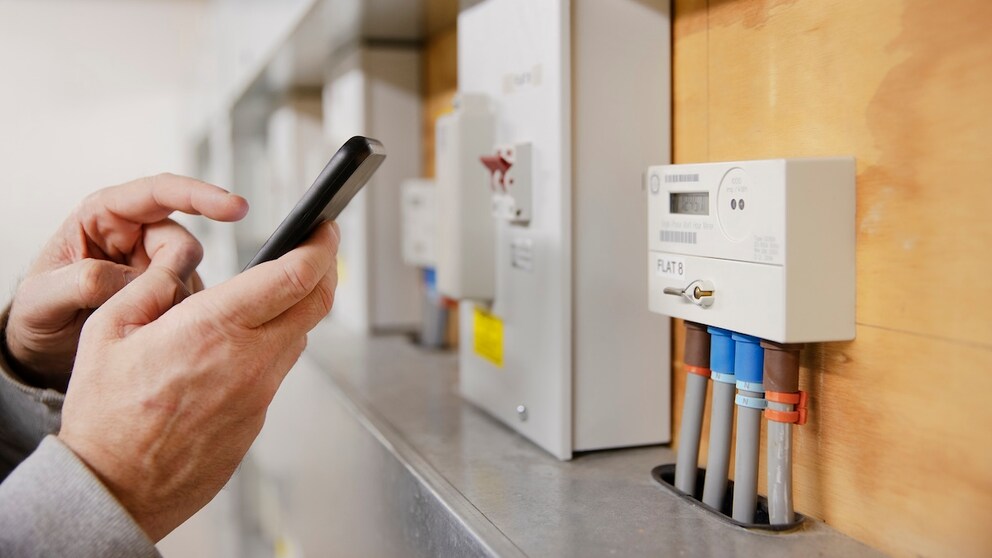
“Smart meters are intelligent measurement systems consisting of a digital meter and a communication module,” explains Alexander Steinfeldt from the advisory organization co2online. They allow households to better utilize the power grid. This enables more efficient integration of renewable energy and better meets the increasing electricity demand from e-cars and heat pumps. Customers with a dynamic electricity tariff also benefit from a smart meter.
The devices automatically transmit consumption data to the network operator or electricity provider. According to Steinfeldt, they allow “better coordination of generation and consumption.” Manual reading and transmission of data are completely eliminated.
What Homeowners Should Know About Connecting to the District Heating Network
Digital Electricity Meters to Become Mandatory in 2025
Who Is Already Required to Have Smart Meters
The legally mandated deadline for the widespread introduction of smart meters ends in 2032. However, certain households must already be equipped with such a system. These include:
- Households with high electricity consumption: Those who consume more than 6,000 kilowatt-hours annually must use a smart meter. This is based on the average consumption of the past three years.
- Own electricity generation: Operators of a photovoltaic system with more than seven kilowatts of power are also affected.
- Large consumers with control options: Households that operate a heat pump or a wall box for electric cars must also have an intelligent metering system installed. In these cases, the network operator may reduce electricity supply in certain situations to avoid overloads. In return, consumers receive a reduction in network charges.
Who Is Responsible for Installation
Typically, local network operators handle the installation of smart meters. They also decide who will be equipped with such a device during the transition period. Consumers have no right to object–they cannot avoid the installation. However, consumers can switch to an alternative metering point operator.